How to Repair Scuffed Matte Black Wheels Without Repainting
Start by cleaning your matte black wheels with a pH-neutral cleaner and soft brush to remove brake dust and grime. Inspect scuffs using a 45-degree flashlight; if no metal is exposed and the scratch doesn’t catch your fingernail, it’s likely repairable. Apply matching matte black touch-up paint in thin, even coats using a fine brush. Let each coat dry 15–20 minutes. After 24 hours, seal with a matte-specific clear coat sprayed at 25–30 PSI to preserve texture and prevent gloss spots. This protects against UV fade and maintains the original 10–15 gloss units. Proper technique guarantees invisible blending-discover how to perfect the finish with professional tips that guarantee lasting results.
Notable Insights
- Clean matte black wheels thoroughly with a pH-neutral cleaner to remove contaminants before assessing or repairing scuffs.
- Inspect scuffs using a flashlight and touch test; only surface-level scratches without exposed metal are suitable for DIY repair.
- Use isopropyl alcohol to clean the scratched area, ensuring no grease interferes with touch-up paint adhesion.
- Apply matching matte black touch-up paint in thin, even coats with a fine applicator to blend with the original finish.
- After 24 hours, seal the repaired area with a matte-specific clear coat to prevent shine and protect against UV damage.
Clean Your Matte Black Wheels First
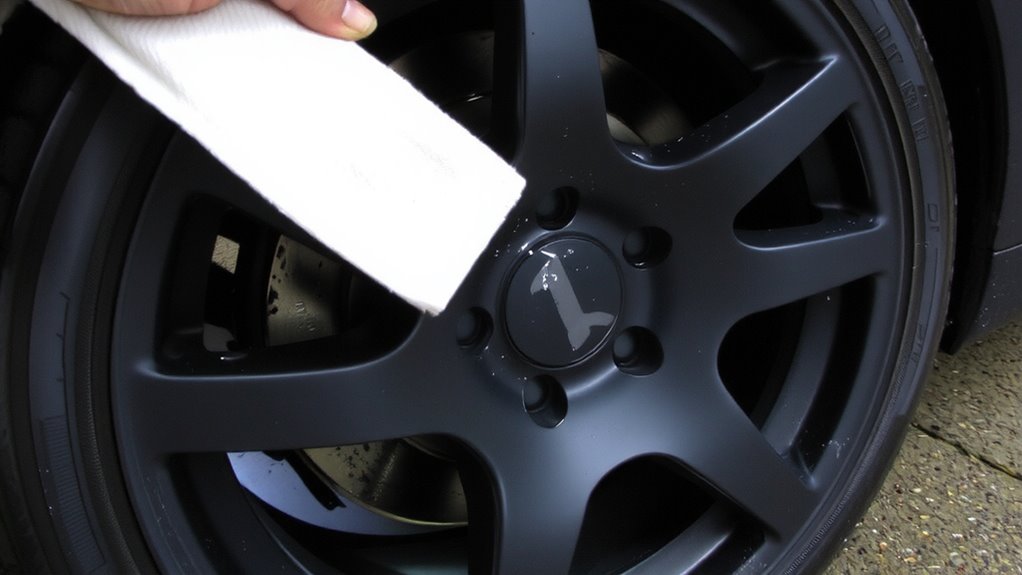
Before you begin repairing scuffed matte black wheels, you’ll need to clean them thoroughly to guarantee the best results. Proper wheel cleaning removes brake dust, road grime, and oils that interfere with adhesion. Start by rinsing wheels with water to loosen debris. Apply a pH-neutral wheel cleaner-avoid acidic formulas, which can damage matte finishes. Use a soft-bristle brush to gently agitate the surface, focusing on spoke curves and behind the spokes. Rinse thoroughly and dry with a microfiber towel. Surface prep is critical: any residue compromises repair effectiveness. Never use polish or sealants during this phase-they alter surface energy and hinder bonding. For ideal results, work in a shaded, dust-free area with temperatures between 60°F and 80°F. Complete cleaning guarantees the matte coating adheres uniformly, mimicking factory specifications for texture and sheen. For tough buildup, consider using one of the best auto wheel cleaners that are specifically formulated for sensitive finishes.
Assess Scuffs: Can You Fix It Yourself?
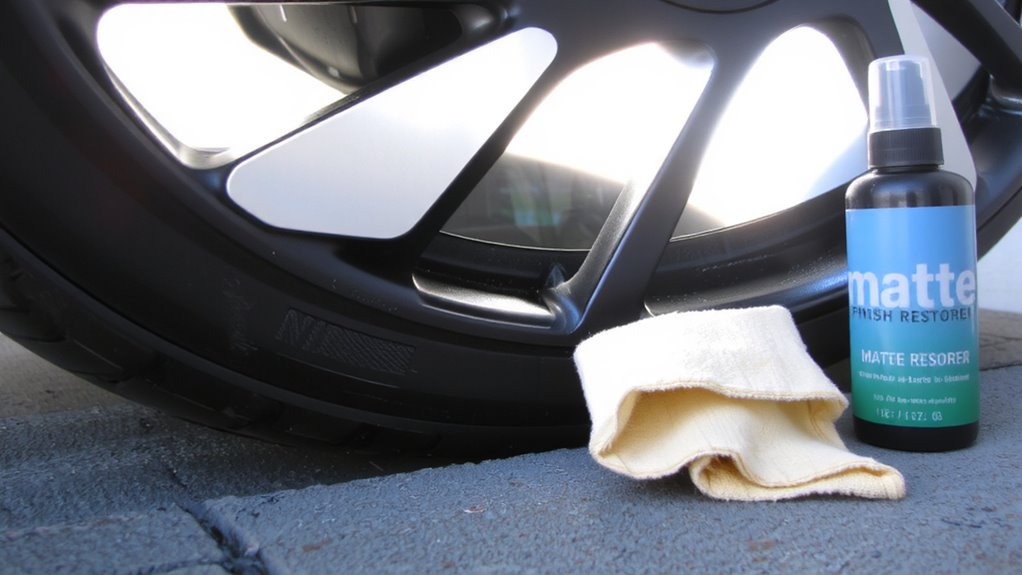
You’ve cleaned the wheels properly, and now it’s time to check how bad the scuffs really are. A thorough DIY inspection helps determine if repair is feasible without repainting. Use a flashlight at a 45-degree angle to reveal depth and extent. Perform a surface evaluation by running a finger over the damaged area-no catch means it’s likely superficial.
| Damage Type | Repairable at Home? |
|---|---|
| Surface scratches (no metal exposed) | Yes |
| Scuffs penetrating clear coat | No |
| Rim curb rash with chipped edges | No |
| Faded matte finish only | Yes |
Shallow blemishes respond well to correction. Deeper damage compromises integrity and finish matching. Assess each wheel individually. When in doubt, consult a professional. Accurate evaluation prevents further damage and costly mistakes. Match your findings to the chart above for clarity.
Fix Light Scratches With Matte Touch-Up Paint
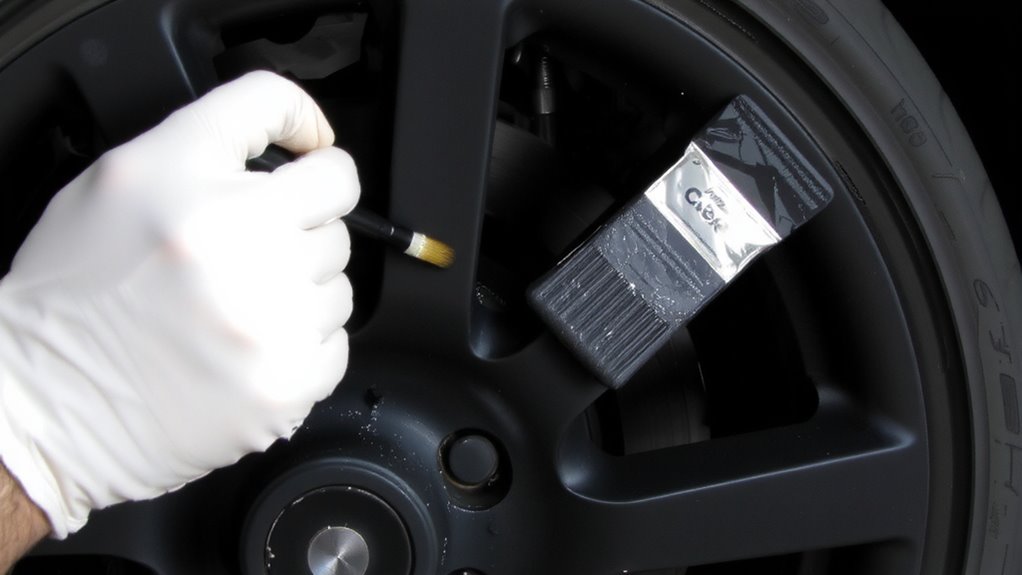
A quality matte touch-up paint repair starts with the right product and proper surface prep. Use isopropyl alcohol to clean the scratch area, removing grease and contaminants. Select a matte black touch-up paint matching your wheel’s exact finish-gloss level and pigment-verified through manufacturer codes or paint match apps. Apply using precise touch up techniques: a fine brush or pen applicator allows control for thin, even layers. Let each coat dry 15–20 minutes before evaluating coverage. Avoid over-applying; excess paint raises the surface and distorts the matte texture. Most repairs require 2–3 coats. Use steady, linear strokes aligned with the wheel’s contour to maintain uniformity. Cure time is typically 24 hours for full hardness. Proper paint matching and methodical application prevent color shifts and gloss spots, ensuring a seamless repair that resists chipping under normal conditions.
Blend the Repair With Matte Clear Coat
After completing the touch-up paint application and allowing it to fully cure for 24 hours, sealing the repair with a matte clear coat guarantees long-term durability and a seamless finish. You must use a clear coat specifically formulated for matte surfaces to maintain texture consistency. Apply two thin, even layers with a low-pressure spray gun set at 25–30 PSI, waiting 15 minutes between coats. Proper surface blending assures the repaired zone matches the surrounding finish without shine variation. Maintain a 10-inch spray distance to prevent orange peel or runs. The clear coat contains matte agents that preserve the original wheel’s 10–15 gloss units (GU) reading. This step locks in color matching by protecting against UV fade and environmental contaminants. Full cure takes 48 hours. Avoid washing the wheel during this period. Consistent application assures invisible repairs.
Remove Scuffs Using a Non-Abrasive Pad
Now shift focus to surface preparation by addressing visible scuffs before any coating application. Use a non-abrasive microfiber pad to avoid altering the wheel texture. These pad types are engineered to lift light scuffs without generating heat or removing material. Apply light pressure in circular motions for 30–45 seconds per affected area. Non-abrasive pads typically measure 4–6 inches in diameter and have a foam density rating of 25–30 ILD (indentation load deflection), ensuring surface conformity without marring. Unlike wool or foam cutting pads, microfiber won’t create gloss spots on matte finishes. Always work on clean, dry surfaces to prevent debris from embedding into the wheel texture. Confirm compatibility with matte surfaces by testing on a small, inconspicuous area first. This step preserves the factory-matte finish while preparing the substrate for further treatment. For optimal results, use microfiber towels for cars that are specifically designed to be lint-free and highly absorbent.
Keep Wheels Looking Matte With Safe Maintenance
Since preserving the integrity of a matte finish depends on consistent and compatible care, you’ll want to use cleaning products specifically formulated for matte surfaces-never apply glossy or petroleum-based dressings, as these can permanently alter the wheel’s low-sheen appearance. Wheel protection is essential; apply a matte-safe sealant every three months to resist brake dust and road grime. These sealants use silica-based polymers that bond to the surface without altering texture or reflectivity. Regular inspection helps detect early signs of damage, like micro-scratches or coating wear, particularly along the rim edge. Check under diffuse lighting to avoid glare that masks surface flaws. Clean wheels weekly with a pH-neutral shampoo and a microfiber mitt to prevent marring. Avoid high-pressure washes above 1,200 psi, which can degrade matte coatings over time. Proper maintenance preserves depth and uniformity, keeping your matte black wheels looking factory-fresh without refinishing.
On a final note
You’ve restored your matte black wheels without repainting. Light scuffs respond to matte touch-up paint with a 0.5mm applicator tip for precision. Use non-abrasive microfiber pads with 0.1mm grit to avoid shine. Finish with water-based matte clear coat, 2.5 mils thick, for seamless blending. Maintain with pH-neutral cleaners to preserve texture. This method preserves OEM surface integrity and avoids overspray, cost, and downtime.