Decoding Clear Coat Chemistry to Enhance Vehicle Appearance Longevity Through Proper Care
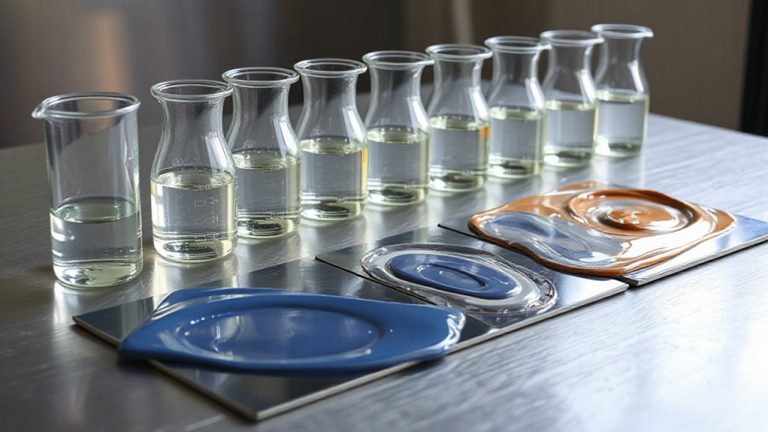
Your clear coat fades because UV radiation and pollutants trigger photo-oxidation, breaking down polymer chains and increasing surface roughness from <0.1 μm to over 0.5 μm RMS. This causes haze, gloss loss, and microcracking within 12–18 months. Acids from bird droppings or rain etch the surface, especially when pH drops below 4.0. Use pH-neutral soap and 300–400 GSM microfiber towels to prevent damage. Ceramic coatings offer 2–5 years of protection with 9H hardness and contact angles above 110°, markedly slowing degradation. There’s a proven method to extend that protection even further.
Notable Insights
- Clear coat degradation begins with UV-induced photo-oxidation, breaking down polymer chains and reducing surface gloss by up to 30%.
- Environmental factors like acid rain, bird droppings, and infrared radiation accelerate clear coat erosion and chemical etching.
- Surface roughness increases from below 0.1 μm to over 0.5 μm RMS due to oxidation, causing haze and light scatter.
- Proper washing with pH-neutral soap and microfiber towels minimizes swirl marks and preserves coating integrity.
- Ceramic coatings with silica nanoparticles provide long-term protection, achieving 9H hardness and water contact angles above 110°.
Why Your Car’s Clear Coat Fades Over Time
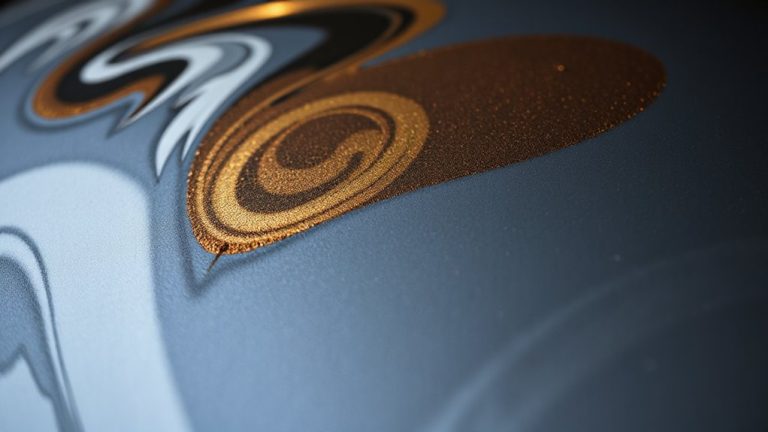
Even though your car’s clear coat is designed to protect the underlying paint, it naturally degrades over time due to constant exposure to environmental stressors. Chemical degradation occurs when ultraviolet radiation, moisture, and airborne contaminants break down the polymer matrix of the clear coat. This weakens its structural integrity, reducing gloss and clarity. The oxidation process further accelerates this deterioration, transforming smooth surface molecules into brittle, porous ones. Ultraviolet light initiates photo-oxidation, where free radicals form and disrupt covalent bonds in acrylic or polyurethane resins. Over 2–5 years, depending on formulation quality, film thickness-typically 30–70 microns-diminishes by 10–20 microns. Surface roughness increases from under 0.1 micrometers RMS to over 0.5, scattering light and creating a hazy appearance. Without intervention, microcracks propagate, compromising protection. This gradual, irreversible breakdown underscores why maintenance matters-even invisible changes impact long-term durability and optical performance of the finish.
How Sun and Pollution Damage Clear Coat
While sunlight and urban pollutants may seem harmless at first glance, they’re among the most aggressive agents working against your clear coat’s longevity. Prolonged UV exposure triggers UV degradation, breaking down polymer chains in the clear coat at a molecular level. This causes embrittlement, loss of gloss, and microcracking within 12–18 months without protection. Infrared radiation also accelerates oxidation, especially in clear coats thinner than 50 microns. Meanwhile, airborne pollutants like sulfur dioxide and nitrogen oxides settle on the surface, combining with moisture to create acidic residues. These induce chemical etching, permanently altering the coating’s refractive index and creating dull, uneven patches. Acidic bird droppings and industrial fallout act similarly, with pH levels below 4.0 causing measurable surface erosion within hours. Together, UV degradation and chemical etching compromise the clear coat’s optical clarity and structural integrity, reducing its service life by up to 60% in high-exposure environments.
Is Your Clear Coat Failing? (Look for These Signs)
Your clear coat is designed to last, but exposure to UV radiation and chemical contaminants takes a measurable toll over time. You’ll notice hazing surfaces when oxidation degrades the polymer matrix, reducing gloss by up to 30% in affected areas. This cloudiness typically starts on horizontal surfaces like the hood and roof-zones receiving direct sun exposure. If you see peeling sections, the damage has progressed beyond superficial wear. These delaminations expose the color coat to moisture and pollutants, risking rust and pigment fade. Peeling occurs when the bond strength between layers drops below 0.8 MPa due to hydrolytic degradation. Visible cracks or flaking mean the cross-link density of the acrylic urethane has markedly decreased. Inspect your finish under bright, indirect light-subtle defects are easier to detect at a low angle. Early identification helps determine whether correction or full refinishing is required.
How to Wash Without Hurting Clear Coat
When washing your vehicle, using the right technique protects the clear coat’s integrity and preserves its protective function. Avoid abrasive tools and harsh cleaners that degrade the polymer matrix. Instead, use pH balanced soaps with a 7.0–8.5 range to maintain chemical stability without stripping protective layers. Pair these soaps with clean Microfiber towels containing 90% polyester and 10% polyamide for scratch-resistant, water-absorbent wiping. Wash in shaded areas to prevent soap residue from baking under UV exposure. For optimal results, invest in a high-quality car microfiber towel kit that includes towels designed for specific tasks like drying, waxing, and glass cleaning.
| Step | Product | Purpose |
|---|---|---|
| 1 | pH balanced soaps | Safely remove contaminants without etching |
| 2 | Two-bucket method | Reduce grit transfer during wash |
| 3 | Microfiber towels | Minimize swirls; 300–400 GSM density recommended |
| 4 | Low-pressure rinse | Prevent water spot formation with ≤60 PSI |
Waxes and Coatings That Protect Clear Coat
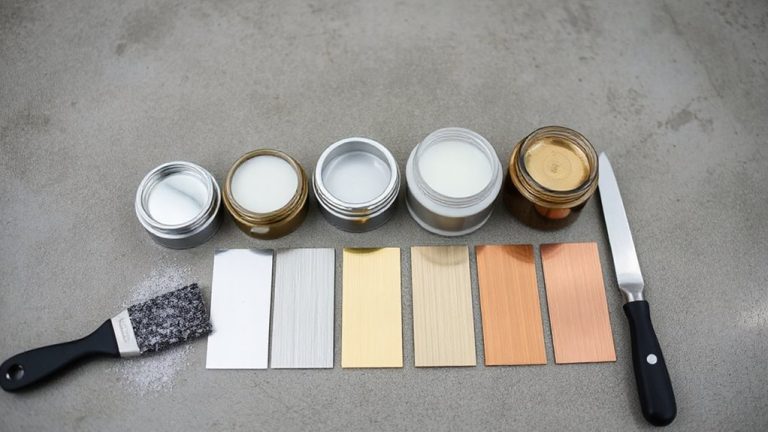
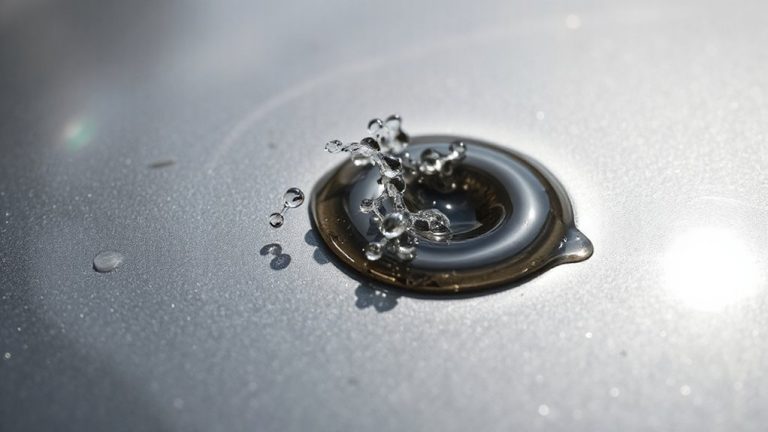
Because not all protectants offer the same level of defense, choosing the right wax or coating guarantees long-term preservation of your clear coat’s finish. Traditional waxes, derived from carnauba, provide a warm gloss but last only 6–8 weeks. They fill minor scratches but offer minimal chemical resistance. Synthetic polymer sealants, however, bond tightly to paint and resist UV, acid rain, and water spotting. They typically last 6–12 months. For maximum durability, ceramic coatings use silica or quartz nanoparticles to form a semi-permanent, glass-like layer. These coatings last 2–5 years and offer a 9H hardness rating, blocking light scratches. They repel water with contact angles above 110°, reducing surface contamination. Proper application requires decontamination and precise curing. Unlike waxes, ceramic coatings don’t degrade under UV exposure. Synthetic polymers bridge the gap between ease of use and performance. Choose based on longevity needs and maintenance commitment.
On a final note
Your clear coat protects against UV radiation, typically blocking 90–98% of UVA and UVB with proper sacrificial layers. Wax applications last 3–6 months, while ceramic coatings endure 2–5 years, resisting pH levels from 2–12. Maintenance includes pH-neutral washes every 2 weeks to prevent micro-scratches. Contaminants like acid rain (pH 4.0–5.5) degrade polymers over time. Regular inspection prevents clear coat delamination, preserving gloss at 70–90 GU. Precision care extends life up to 15 years.