Understanding Surfactant Action in Soap Formulas for Effective Auto Detailing
You rely on surfactants to lift dirt without scratching paint. These molecules have hydrophilic heads and hydrophobic tails, reducing water’s surface tension from 72 mN/m to under 30 mN/m. This lets water spread evenly and penetrate grime. At 10–15% concentration, nonionic surfactants like alkyl ethoxylates (HLB 12–15) encapsulate oil in micelles, safely suspending debris. Unlike anionic types, they won’t strip wax or harm sealants. For best results, use a pH-neutral formula with biodegradable, eco-certified surfactants. The right blend guarantees protection stays intact while cleaning deep. There’s more to optimizing your wash than just picking a soap.
Notable Insights
- Surfactants lower water’s surface tension, enabling it to spread and lift oily grime from painted surfaces.
- Hydrophobic tails trap dirt while hydrophilic heads face outward, forming micelles that suspend soil for removal.
- Nonionic surfactants are wax-safe, lacking charge that could strip protective coatings during cleaning.
- Effective car wash soaps use 10–15% surfactant concentration to balance cleaning power and surface protection.
- Optimal formulas maintain pH 6.5–8.5 and combine nonionic and anionic surfactants for foam stability and performance.
How Surfactants Boost Car Wash Soap Performance
While water alone can’t effectively remove oily residues from your car’s surface, surfact advances how cleaning works by reducing surface tension. These molecules have hydrophilic heads and hydrophobic tails, allowing them to interact with both water and oil. This dual affinity enables surfactants to lift grime from paintwork. Foam stability is enhanced by surfactant concentration, typically 5–15% in professional formulas, ensuring even coverage and prolonged cleaning action. Stable foam also helps suspend dislodged particles, minimizing redeposit. Water hardness affects performance; high mineral content can deactivate some surfactants. Chelating agents like EDTA are added at 0.1–0.5% to sequester calcium and magnesium ions. This preserves surfactant efficiency in hard water conditions. Balanced formulations maintain ideal pH between 6.5 and 8.5, protecting wax and clear coat. You get consistent cleaning across varying water sources without sacrificing lather or soil removal.
How Surfactants Remove Dirt Without Scratching Paint
When surfactants lift dirt from your car’s paint, they do so without abrasion by surrounding soil particles and isolating them from the surface. This process relies on micelle formation, where surfactant molecules arrange around grime with their hydrophobic tails inward and hydrophilic heads outward. Lowering surface tension allows water to spread evenly and penetrate dirt layers effectively. Instead of scrubbing, the encapsulated dirt is suspended in solution, preventing re-deposition and minimizing scratch risk.
| Mechanism | Effect on Paint Surface |
|---|---|
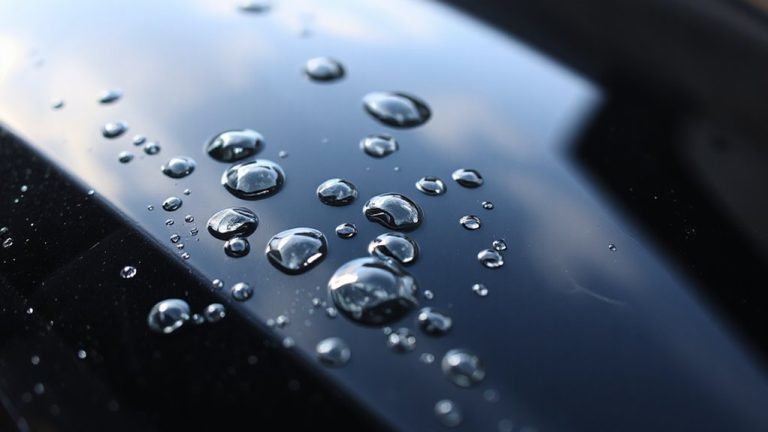
| Surface tension reduction | Improves wetting; contact angle drops below 30° |
| Micelle formation | Traps oil and particulates |
| Emulsification | Keeps soil dispersed in solution |
| Hydrophilic outer layer | Prevents redeposition |
| Non-ionic action | Gentle cleaning without etching |
You get effective soil removal while preserving wax and clear coat integrity. Surfactants work chemically, not mechanically.
Anionic vs Nonionic: Which Surfactant Is Wax-Safe?
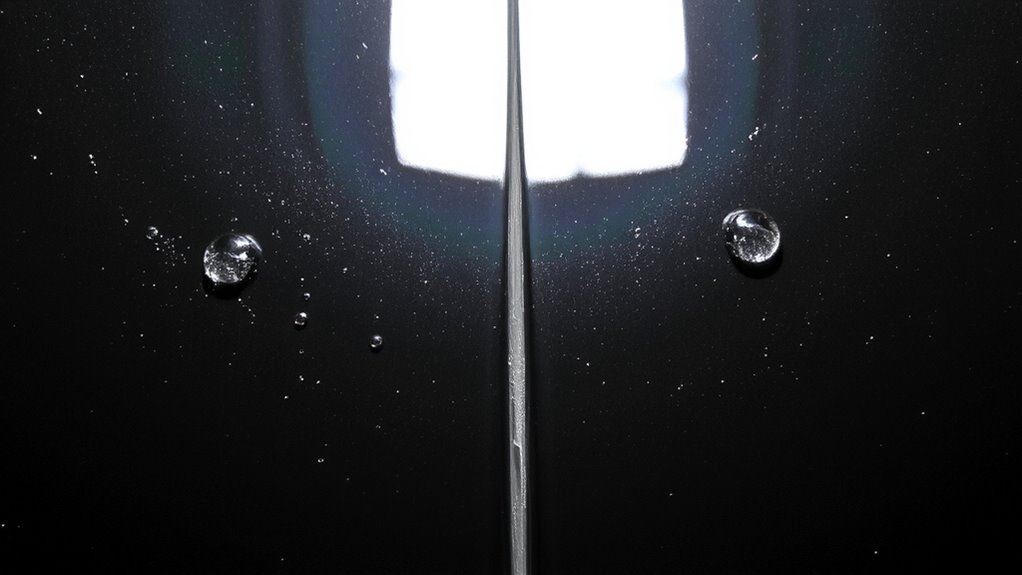
Your car’s wax protection hinges on choosing the right surfactant type. Anionic surfactants are highly effective at lifting dirt but can compromise wax integrity due to their strong negative charge, which may bond with and strip wax layers. In contrast, nonionic surfactants lack electrical charge, making them gentler and more compatible with waxy surfaces. This guarantees superior surfactant compatibility, preserving wax integrity over time. Nonionics, like alkyl ethoxylates, have HLB values between 12–15, optimizing them for emulsifying oils without dissolving protective coatings. Anionics, such as alkyl sulfates, excel in heavy cleaning but can reduce wax longevity by up to 40% with repeated use. For regular maintenance, nonionic formulations are wax-safe and minimize degradation. You’ll maintain hydrophobic properties longer, guaranteeing water breaks cleanly. Always check product labels for nonionic dominance when preserving waxed finishes.
Matching Surfactants to Paint Type and Protection Level
Since paint composition and protective coatings vary considerably in chemistry and durability, selecting the appropriate surfactant requires matching its properties to both the paint type and existing protection layer. You need to assess paint compatibility before choosing any cleaning agent. Soft clear coats demand mild, nonionic surfactants with HLB values between 12–15 to prevent stripping. Hard, ceramic-coated surfaces tolerate slightly more aggressive, neutral-pH anionic types. Your decision must account for protection sensitivity-waxes react poorly to high-surfactant concentrations above 10%. Sealants withstand up to 15% active surfactant but degrade with repeated exposure to ethoxylated alcohols. Always use the mildest effective formula. For example, a pH 7.5 blend with 8% nonionic surfactant preserves most protective layers. Stronger formulas, like those with >20% active content, risk film removal. Think of it like using the right key-too forceful, and you damage the lock.
Choosing the Best Surfactant-Based Car Wash Soap
What makes one surfactant-based car wash soap better than another? It comes down to pH balance, biodegradability, and surfactant concentration. A neutral pH (around 7) protects wax and sealants, while extreme pH levels (below 5 or above 9) risk damaging clear coats. Biodegradability guarantees environmental safety, with top-tier soaps breaking down over 90% within 28 days. Check the label for eco-certifications and surfactant type-nonionic and anionic blends offer maximum cleaning with minimal foam collapse. For optimal results, choose best car shampoo formulations that balance these factors without compromising cleaning power.
| Feature | Ideal Value |
|---|---|
| pH balance | 6.5–7.5 |
| Biodegradability | >90% in 28 days |
| Surfactant concentration | 10–15% active content |
You want effective soil lift without stripping protection. A well-balanced formula preserves your paint’s finish and the planet’s health-precision matters.
On a final note
You now understand how surfactants enhance car wash performance by lowering surface tension, typically to 28–32 dynes/cm, allowing water to spread evenly. They encapsulate dirt, preventing paint marring during rinsing. Anionic surfactants offer strong cleaning but may strip wax; nonionics are gentler, safer for sealants. Choose pH-neutral (6.5–7.5) formulas with sodium lauryl sulfate or alcohol ethoxylates. Match to your paint’s protection level for best results.