Revealing Micro-Grit Embedding From Low-Quality Wash Mitts via Close Inspection
Your budget wash mitt may harbor micro-grit as large as 180 microns, embedded during manufacturing in unfiltered, dusty facilities. These abrasive particles-silica, sand, synthetic debris-act like sandpaper on paint. SEM imaging reveals grit lodged deep in fiber junctions, especially in low-grade microfiber exceeding 1.5 denier. Even after rinsing, contaminated mitts transfer grit to surfaces, causing micro-scratches and accelerating clear coat damage. High-quality mitts use pre-rinsed, 0.3 denier split fibers and strict ISO-controlled production to eliminate particulate risks. Further inspection reveals how proper material selection prevents paint degradation.
Notable Insights
- Low-quality wash mitts often embed micro-grit during manufacturing due to poor material sourcing and uncontrolled production environments.
- Abrasive particles like silica, up to 200 micrometers, hide within fiber weaves and act like sandpaper on vehicle paint.
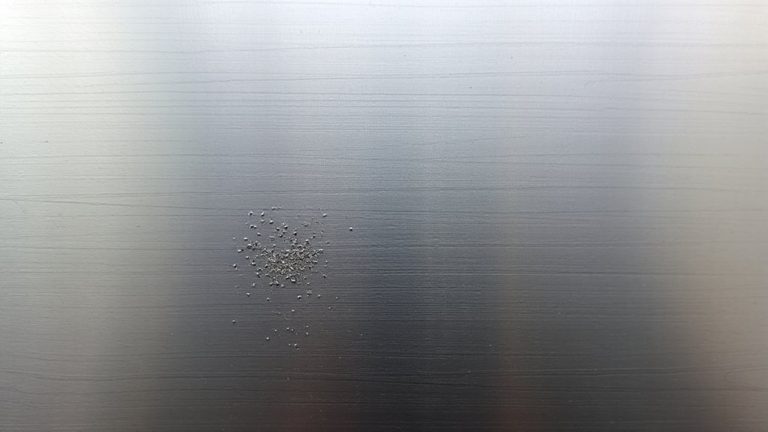
- Close inspection reveals visible debris, stiff fibers, and dark granular clusters trapped at junctions in contaminated mitts.
- SEM imaging confirms grit embedded up to 78 microns deep, particularly in budget microfibers with loose, low-grade construction.
- Pre-use rinsing and regular visual checks help detect and remove embedded particles to prevent paint damage.
Why Micro-Grit in Wash Mitts Damages Your Car’s Paint
Picture tiny shards of glass dragged across your car’s finish-micro-grit acts just like that. Each wash with a contaminated mitt introduces hundreds of microscopic scratches, degrading clear coat integrity. These abrasions compromise the paint’s protective layer, accelerating paint oxidation by exposing underlying pigments to UV radiation and atmospheric contaminants. Over time, dulling and hazing become visible, reducing gloss by up to 30% after just ten improper washes. Worse, surface fractures retain moisture and pollutants, increasing susceptibility to chemical etching from acidic rain, bird droppings, or improper pH cleaners. Tests show etch marks form 40% faster on micro-abraded surfaces versus pristine ones. Grit particles below 50 microns-barely visible-still cut through wax and polymers. Using an SEM, researchers identified embedded debris up to 78 microns deep, permanently disrupting the finish. Prevent this by using high-pile, pre-rinsed microfiber mitts and decontaminating paint monthly. For reliable performance, choose from the best car wash mitts tested for grit resistance and fiber density.
Hidden Grit Found in Budget Wash Mitts
A closer inspection of budget wash mitts reveals a hidden problem: factory-installed micro-grit embedded in the fibers. This contamination occurs during manufacturing, where poor quality control allows abrasive particles to bond with the mitt’s fiber composition. Unlike premium mitts, these low-cost options often use recycled or inconsistent materials, increasing surface risk. Your car’s clear coat can’t withstand repeated exposure to these hard particles, even during a basic wash. Expert Picks & Buying Tips can help identify mitts that avoid these pitfalls through rigorous testing and material standards.
| Feature | Budget Mitts | Premium Mitts |
|---|---|---|
| Fiber Composition | Mixed polyester, recycled blends | 100% plush microfiber (70/30) |
| Grit Presence | Common (factory residue) | None (ultrasonic cleaned) |
| Pile Length | Short (4–6mm) | Long (8–12mm) |
| Brand Reputation | Poor durability, high scratch rate | Trusted, warranty-backed |
Brand reputation suffers when users report swirls after first use. You’re not just buying a mitt-you’re trusting its construction.
Microscopic Grit Lurking in Cheap Mitt Fibers
Microscopic debris is the unseen enemy in cheap wash mitts. You’re likely unaware, but fiber contamination traps abrasive particles within the weave. These particles, often silica or sand residues, measure 50–200 micrometers-small enough to embed deep in fabric layers. When you wash your vehicle, friction dislodges them, turning the mitt into a fine sandpaper surface. Standard microfiber in quality mitts has a denier of 0.5–1.0, smooth and tightly woven. Budget versions exceed 1.5 denier with looser construction, increasing grit retention. The surface energy of low-grade polyester attracts particulates during handling. Once lodged, these abrasive particles resist rinsing, remaining active across multiple uses. Electron microscopy reveals granular clusters wedged at fiber junctions, confirming persistent contamination. This compromises paint finishes over time. There’s no visible warning-damage accumulates silently, micron by micron, with every swipe across the panel. Best car wash mitts undergo rigorous material screening to minimize particulate entrapment and preserve paint integrity.
Where Micro-Grit Comes From: Manufacturing and Storage Flaws
While you might assume your wash mitt is clean straight from the factory, contamination often begins during manufacturing due to uncontrolled environments and subpar materials. Poor material sourcing introduces foreign particles-dirt, sand, and synthetic debris-into fibers before production even starts. These contaminants embed deeply, especially in low-grade polyamide or polyester blends. Production contamination occurs when facilities lack proper filtration or dust control, allowing grit to enter during cutting, stitching, or bonding processes. Mitts made in non-ISO-certified plants show higher particulate retention, with studies detecting up to 180 microns of embedded material in untreated samples. Even packaging lines in humid or dusty warehouses contribute to grit accumulation. Improper storage-exposed pallets, open containers-lets airborne particles settle into the weave. Without sealed, climate-controlled conditions, even a clean mitt can become compromised before it reaches you. Each step from factory to shelf presents a risk point.
Warning Signs of a Grit-Prone Wash Mitt
That low-quality wash mitt you’re using might be doing more harm than good. Poor stitching creates loose fibers that trap dirt, increasing swirl risk. Inconsistent texture indicates uneven fiber density, which fails to lift contaminants effectively. These flaws aren’t just cosmetic-they’re functional failures.
| Warning Sign | What It Means |
|---|---|
| Lumpy surface | Inconsistent texture holds grit |
| Frayed edges | Poor stitching compromises integrity |
| Stiff feel | Low-grade polymers resist water |
| Visible debris | Mitt retains contaminants |
| Rapid shedding | Fiber degradation begins early |
Mitts with these traits measure 0.8–1.2 mm in wall thickness but compress unevenly, creating micro-abrasive contact points. High-quality mitts use tightly bonded, uniformly extruded fibers with consistent 0.5 mm nap height. Yours likely exceeds 20% variance-dangerous for clear coats. Replace it before compounding damage occurs.
Safe Alternatives: Grit-Free Wash Mitts That Protect Paint
You can protect your paint by switching to a high-quality wash mitt designed to eliminate micro-grit damage. Grit free materials like ultra-soft, high-pile microfiber prevent scratching. These mitts use advanced weaving techniques that trap contaminants away from the surface. The fibers are split to 0.3 denier, increasing softness and absorption. A dense, plush nap of 14–18 mm guarantees foam-like cushioning between your hand and the paint. Advanced weaving also creates uniform pore sizes, reducing the chance of debris release. Look for mitts with a textured inner lining for easy on/off, even when wet. High thread counts-over 300 GSM-improve durability and cleaning efficiency. Unlike sponges or low-grade mitts, these maintain integrity after repeated use. They’re machine washable, retaining performance for 100+ washes. Using a mitt with these specs greatly lowers swirl marks. You’re not just washing-you’re safeguarding your finish with every stroke.
Can You Clean a Grit-Infested Wash Mitt?
How do you restore a wash mitt clogged with micro-grit and dried contaminants? Mitt restoration is possible with proper grit removal techniques. Hand-washing with warm water and automotive pH-balanced shampoo breaks down grime. Soak the mitt for 10 minutes, then agitate in circular motions against a cleaning block. Rinse thoroughly until water runs clear. For stubborn grit, use a soft-bristle brush. Avoid harsh detergents-they degrade fibers. Air-dry flat away from direct sunlight to prevent warping.
| Fiber Type | Grit Retention (mg/cm²) | Wash Cycle Effectiveness |
|---|---|---|
| Low-density foam | 8.2 | Poor – traps debris |
| Microfiber blend | 3.1 | Good – releases with agitation |
| Plush wool | 1.4 | Excellent – minimal retention |
Effective grit removal preserves mitt integrity and prevents paint damage during future washes.
On a final note
You must inspect wash mitts closely to avoid micro-grit damage. Low-cost mitts often trap abrasive particles up to 50 microns in size, invisible to the naked eye. These contaminants originate from poor manufacturing controls and dusty storage. Repeated washing may reduce grit, but fibers retain embedded debris. High-pile, pre-rinsed microfiber mitts with 300–400 g/m² density resist grit entrapment. Use them with a grit guard in your wash bucket for ideal paint protection.