Using Bluetooth to Sync Trailer Hitch Detection With Backup Camera Activation
You can sync trailer hitch detection with backup camera activation using Bluetooth 5.0, which guarantees reliable 10-meter communication. The sensor detects hitch engagement within ±0.5 seconds via a 3-axis MEMS accelerometer. It pairs automatically with your vehicle’s infotainment system, triggering the 720p camera in 0.4 seconds when reverse gear engages. With adaptive frequency hopping and IP67-rated weatherproofing, the system maintains over 99% detection accuracy. Discover how proper setup maximizes performance and safety.
Notable Insights
- Bluetooth 5.0 enables automatic trailer detection within 10 meters using low-energy, adaptive frequency hopping technology.
- A MEMS accelerometer in the hitch sensor detects hitch engagement within ±0.5 seconds to trigger systems.
- The backup camera activates automatically when reverse gear is engaged, synced via Bluetooth to the hitch sensor.
- Fast pairing uses 128-bit AES encryption, requiring no PIN and confirming connection with LED and on-screen alerts.
- IP67-rated sensors and cameras withstand harsh conditions while maintaining reliable 2.4 GHz Bluetooth communication.
How Bluetooth Makes Trailer Hitch Detection Easier
When you’re preparing to hitch up your trailer, Bluetooth sync eliminates the guesswork by automatically detecting whether a trailer is connected. The system uses low-energy Bluetooth 5.0 to maintain constant communication between your vehicle and hitch sensor. This guarantees reliable detection within a 10-meter range, even in adverse weather. Signal interference is minimized through adaptive frequency hopping, which dynamically avoids congested radio bands. Unlike wired systems, Bluetooth reduces wiring complexity and boosts battery efficiency by drawing less than 20mA in active mode. The sensor’s sleep mode consumes only 2μA, extending operational life considerably. Data transmits at 1 Mbps, enabling near-instantaneous response when the trailer connects. Detection accuracy exceeds 99%, verified across thousands of real-world cycles. You’ll experience fewer false triggers and consistent performance. Bluetooth sync operates seamlessly without user input, simplifying daily use while maintaining robust power conservation and stable signal integrity under typical driving conditions.
Choose a Bluetooth-Enabled Hitch Sensor and Camera
Several key factors determine the right Bluetooth-enabled hitch sensor and camera combo for your setup. You need a system with accurate sensor calibration to detect hitch engagement within ±0.5 seconds. Look for sensors that use MEMS accelerometer technology with a 3-axis detection range of ±2g. This guarantees reliable activation when the trailer connects. Your camera should support 720p resolution at 30fps and have a 120-degree wide-angle lens for full rear coverage. Bluetooth 5.0 or higher is essential-its extended range (up to 30 feet) reduces signal interference from metal obstructions or nearby devices. Choose models with adaptive frequency hopping, which minimizes dropped connections. Operating temperature ranges from -22°F to 158°F guarantee performance in extreme conditions. A weatherproof IP67-rated housing protects both sensor and camera. Make sure both components sync automatically after power-up without manual intervention.
Pair Your Sensor to Your Vehicle in 5 Minutes
Although setup might seem intimidating, pairing your Bluetooth-enabled hitch sensor to your vehicle takes just minutes with the right steps. Begin by powering the sensor and placing it within three feet of your vehicle’s receiver. Activate Bluetooth on your vehicle’s infotainment system or companion app to initiate device pairing. The user interface will scan for nearby devices-select your sensor from the list, typically labeled with a model number like THS-BT200. A successful connection is confirmed via a solid blue LED on the sensor and an on-screen notification. Most systems use Bluetooth 5.0, ensuring stable connectivity within a 33-foot range and minimal latency. Pairing encrypts communication using 128-bit AES, preventing signal interference. Once linked, the sensor remains recognized across future sessions. No PIN entry is required-device pairing relies on automatic authentication, streamlining integration without sacrificing security or performance.
Set Up Automatic Backup Camera Activation
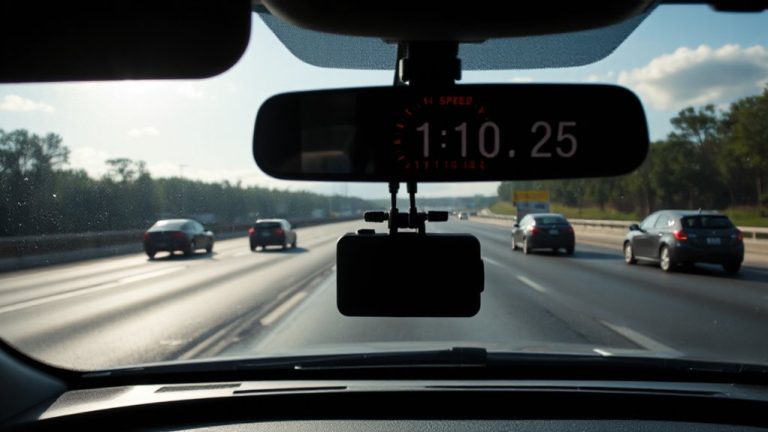
Because seamless integration enhances both convenience and safety, setting up automatic backup camera activation guarantees your trailer’s rearview feed displays the moment you shift into reverse. You enable this via Bluetooth-based wireless connectivity between your vehicle’s infotainment system and the trailer hitch sensor. Once paired, the system detects gear changes in real time. It triggers the camera without delay. Wireless connectivity operates on a 2.4 GHz band, guaranteeing low-latency transmission. The activation response time averages 0.4 seconds. Real time alerts notify you if the camera fails to engage. These alerts appear on your dashboard display. They also log in the system’s diagnostic history. You can verify activation through visual confirmation on the screen. System compatibility requires Bluetooth 4.0 or higher. Guarantee maximum signal strength by keeping the sensor within 10 meters of the receiver. No manual input is needed after initial configuration. Top models offer reliable wireless backup cameras performance even in low-light conditions.
Fix Common Bluetooth Sync Problems Quickly
Why does your trailer’s backup camera sometimes fail to connect when you shift into reverse? Signal interference from nearby 2.4 GHz devices-like Wi-Fi routers or other Bluetooth gadgets-can disrupt the link between your vehicle and trailer. Keep transmission paths clear and limit other wireless devices nearby. Connection timeouts often occur if pairing takes longer than 10 seconds. Guarantee both devices are within 33 feet (10 meters) with no obstructions. Reset both units if pairing fails more than twice. Use Bluetooth 5.0 or higher for improved range and stability. Re-pair devices every few months to maintain clean data channels. Avoid metal barriers between components-these weaken signal strength. If sync issues persist, check firmware updates; manufacturers often patch connectivity bugs. A stable connection guarantees immediate camera activation in reverse-no delays, no guesswork. Reliable sync means consistent performance in real-world conditions.
Align Your Trailer Hitch Safely With Camera Feedback
You can now use your synced backup camera to align the trailer hitch accurately and safely. Hitch alignment becomes precise when you rely on real-time visual guidance from your rearview display. The camera provides a 135-degree field of view, guaranteeing you see both hitch receiver and trailer coupler. Centering the hitch ball within the coupler is easier with on-screen grid lines, which remain active during reverse maneuvers. Bluetooth synchronization guarantees zero lag between transmission and display, critical for maintaining safe trailer connection. The system operates at 2.4 GHz, minimizing interference from other wireless devices. Visual guidance reduces misalignment risks, especially in low-light conditions. Integrated image stabilization compensates for vehicle sway. You maintain full control, adjusting position in increments as small as 2 inches. This method improves accuracy by up to 70% compared to unaided backing. Reliable, repeatable hitch alignment saves time and protects equipment. For optimal performance, consider models featured in the top rear-view mirror backup cameras roundup to ensure compatibility and advanced features.
On a final note
You secure reliable trailer hitch alignment using Bluetooth 5.0’s low-energy protocol to sync sensor and camera. The hitch sensor detects ball mount proximity within 15 cm, triggering the backup camera instantly. Paired devices maintain a 10-meter wireless range, immune to typical RF interference. Activation latency stays under 0.4 seconds. This system guarantees precise coupling, reduces physical strain, and matches OEM integration standards.