Understanding the Top Causes of Battery Failure in Vehicles
Your car battery fails due to parasitic drain, alternator issues, temperature extremes, corrosion, and age. A draw over 50 milliamps with the engine off can drain it overnight. Failing alternators supply less than 13.5V or over 15V, damaging the battery. Heat above 95°F cuts life in half, while cold reduces CCA output. Corrosion increases resistance, and cables loose over time. Most batteries last 3–5 years. Sustained voltage below 12.6V when off means trouble. Watch for hidden power users. You’ll learn how to find them next.
Notable Insights
- Parasitic drain from faulty switches or lights can deplete a battery when the vehicle is off, drawing excess current beyond the safe 50 milliamp threshold.
- A failing alternator disrupts battery charging, causing undercharging below 13V or overcharging above 15V, both of which damage battery health.
- High temperatures accelerate fluid loss and internal degradation, while extreme cold reduces cranking power by up to 60%.
- Corrosion on terminals creates resistance, leading to voltage drops that can prevent proper starting and reduce effective amperage.
- Batteries naturally degrade over time, losing capacity after 3–5 years, especially with frequent short trips or lack of maintenance charging.
What Drains Your Car Battery Overnight?
Why might your car battery be dead when you haven’t touched the vehicle all night? A common cause is parasitic drain from electrical systems that remain active. Faulty lights, such as interior or trunk lights, can stay on due to a defective switch, drawing 300–600 milliamps continuously. Even a small draw of 50 milliamps over 12 hours can deplete a standard 48-ampere-hour battery by 30%. Modern vehicles typically allow only 20–50 milliamps of drain after sleep mode. A defective switch in the glove box, door jamb, or lighting circuit often fails to break the circuit, causing unintended power use. Diagnosing this requires a multimeter to measure current draw. Remove the negative terminal, connect the meter in series, and observe readings. Sustained draws above 50 milliamps indicate an issue. Inspect circuits controlled by a defective switch, especially those tied to faulty lights. Rectifying the switch or replacing the bulb socket usually restores normal operation.
How a Failing Alternator Causes Battery Failure
Your car battery might survive the night just fine, but if the alternator isn’t doing its job, that same battery will still fail prematurely. The alternator charges the battery while the engine runs, maintaining a steady 13.5 to 14.5 volts. When it fails, voltage fluctuations occur-spiking or dropping outside this range. These fluctuations stress the battery’s internal components, degrading plates and connections over time. Power shortages happen when output falls below 13 volts, forcing the battery to supply power it can’t replenish. Without consistent charging, even a healthy battery drains faster than normal. Continuous undercharging leads to sulfation, where lead sulfate crystals harden on plates, reducing capacity. A failing alternator may also overcharge, exceeding 15 volts and boiling off electrolyte. Either way, the result is shortened battery life and unreliable starting-often without warning.
Why Extreme Temperatures Damage Car Batteries
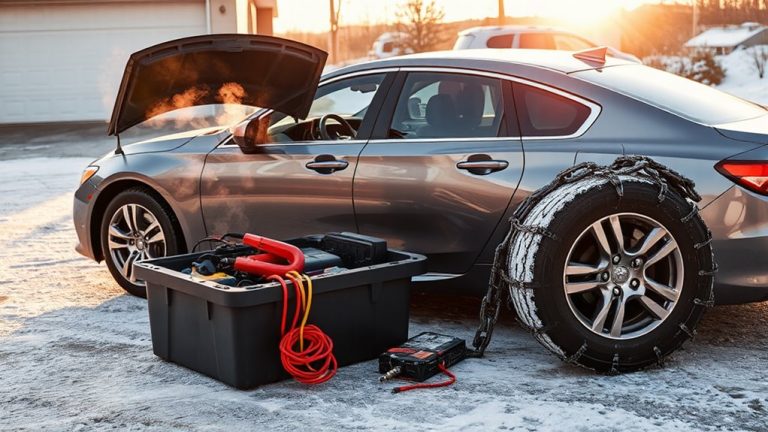
While both heat and cold strain your car battery, extreme temperatures accelerate wear in distinct but equally damaging ways. High heat causes thermal stress, speeding up chemical reactions inside the battery. At temps above 95°F (35°C), fluid evaporates and plates degrade, cutting battery life by up to 50%. Summer heat is a silent killer-batteries often fail weeks after peak exposure. In contrast, cold reduces cranking power dramatically. At 32°F (0°C), a healthy battery delivers only about 65% of its rated cold cranking amps (CCA). At -22°F (-30°C), that drops to 40%. Thickened engine oil increases resistance, demanding even more from weakened batteries. Cold cranking under these conditions pushes failing cells past their limit. Thermal stress from cycling between extremes causes internal warping and sulfation, reducing capacity and reliability over time.
How Corrosion and Loose Cables Lead to Failure
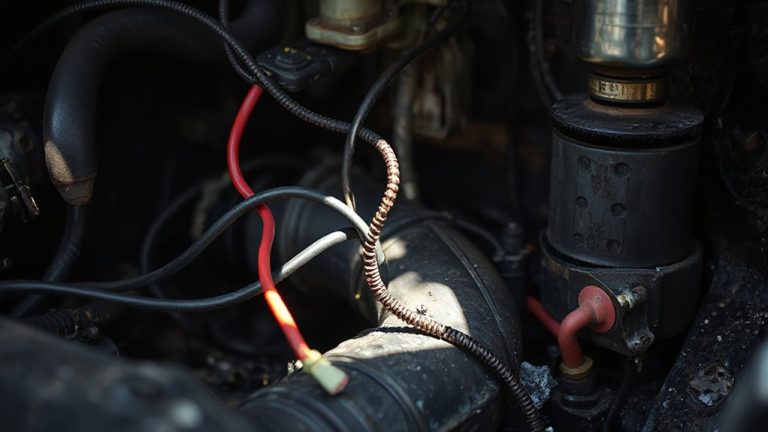
What good is a powerful battery if electricity can’t flow freely to the starter? Terminal corrosion creates a resistive barrier on battery posts, blocking current flow. Even small voltage drops-0.2V or more across a connection-can prevent the starter from engaging. White or greenish deposits around terminals indicate chemical reactions between lead posts and sulfuric acid vapors. You should inspect for this monthly. Cable oxidation occurs inside wire bundles, especially where moisture enters damaged insulation. It increases resistance, reducing effective amperage. A healthy battery delivers 400–600 CCA (cold cranking amps), but oxidation can cut output by 30% or more. Loose cables worsen the problem, creating intermittent contact and arcing. Guarantee terminal bolts are torqued to 5–8 ft-lbs. Clean terminals with a baking soda solution and wire brush. Use anti-corrosion gel to extend connection life. Reliable conductivity depends on tight, clean, corrosion-free connections. For car audio enthusiasts, adding a second battery for car audio can prevent voltage drops caused by high-power systems during operation.
How Long You Can Expect Your Battery to Last
Most car batteries last between three to five years, though lifespan depends heavily on usage and environmental conditions. Battery age is a primary factor in performance decline, with capacity diminishing over time due to internal chemical degradation. On average, a lead-acid battery loses about 20% of its original capacity after 36 months, reducing cranking power. Extreme temperatures accelerate wear-high heat increases fluid evaporation, while cold raises internal resistance. Manufacturing defects, though rare, can shorten life markedly; faulty plates or impurities in electrolyte lead to early failure. Quality batteries undergo rigorous QA testing, including load checks at 77°F (25°C) to guarantee compliance with CCA (Cold Cranking Amps) ratings. Even under ideal conditions, electrochemical aging is unavoidable. You’ll likely notice slow starts or dim lights before complete failure. Regular voltage checks at 12.6V (fully charged) help track health. Some vehicles integrate advanced battery management systems similar to how precise temperature control is critical in electric ranges for optimal performance.
What Causes Parasitic Drain in Your Vehicle
Ever wonder why your battery dies after just a few days of not driving? Parasitic drain could be the culprit. This occurs when electrical components draw power while the vehicle is off. A healthy system should draw under 50 milliamps; anything beyond 100 milliamps risks battery depletion. Faulty lights, like a dome or trunk light that stays on, can draw 300–500 milliamps continuously. That’s enough to drain a standard 48-ampere-hour battery in under 72 hours. Defective fuses may fail to interrupt circuits properly, allowing unintended current flow. A single shorted diode in an audio amplifier, for example, can pull 250 milliamps. Modern vehicles with always-on modules (e.g., keyless entry, clocks) are especially vulnerable. Use a multimeter to measure current draw across the negative terminal. Locate and fix rogue circuits promptly to prevent deep discharges that shorten battery life.
Habits That Prevent Battery Failure
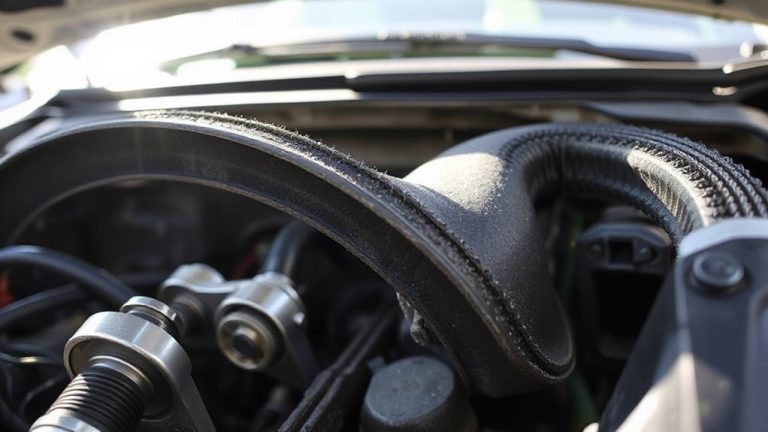
While modern vehicles are built to handle a range of electrical demands, your driving habits play a critical role in preserving battery life. Frequent short trips prevent proper charging, depriving the battery of the sustained voltage input needed to reach full charge. Aim for drives longer than 20 minutes to guarantee the alternator replenishes the battery effectively. Proper charging also means avoiding aftermarket electronics that draw power overnight. Regular inspection helps detect corrosion, loose terminals, or worn belts early. Check battery voltage monthly; a healthy reading ranges from 12.6 to 14.4 volts when off and running. Clean terminals reduce resistance, improving conductivity. If your vehicle sits unused, use a trickle charger to maintain charge levels. These habits extend battery lifespan, typically 3–5 years. Consistent maintenance prevents unexpected failure and guarantees reliable starts. Using a reliable car battery tester can help accurately assess the condition of your battery and identify potential issues before they lead to failure.
On a final note
Your car battery won’t last forever-most fail after 3–5 years. Weak charging from a failing alternator (should output 13.7–14.7 volts) accelerates decline. Extreme heat speeds electrolyte loss; cold reduces cranking power by up to 60%. Corrosion increases resistance, blocking full charge. Parasitic drain over 50 milliamps drains batteries overnight. Prevent failure: test voltage monthly, clean terminals, and secure cables to maintain 12.6-volt readiness.