Identifying Worn Sway Bar Links During Shock Inspection on a Mazda CX-9
You can spot worn sway bar links during shock inspection by checking for clunking noises and excessive play. Look for over 1/8 inch of free movement in the ball joint or torn rubber boots exposing internal parts. On your Mazda CX-9, inspect the front links behind each wheel and rear ones near the trailing arms. Measure bushing gaps-over 3mm indicates failure. Left-side links often wear faster due to road crown. Use a 14mm socket and torque to 51–66 ft-lbs. Further details reveal how this affects overall ride stability.
Notable Insights
- Inspect sway bar links located near control arms for clunking or excessive play during shock inspection.
- Check ball joints for more than 1/8 inch free travel, indicating wear.
- Look for cracked or torn rubber boots exposing joints to dirt and moisture.
- Test for side-to-side and up-down movement exceeding 1/16 inch at link ends.
- Use a borescope to examine bushing dryness or cracks, especially on left-side links.
What Worn Sway Bar Links Do to Your CX-9
While your CX-9 handles corners with confidence, worn sway bar links can undermine its stability by compromising the suspension’s ability to manage body roll. These components connect the sway bar to the control arms, ensuring balanced weight transfer during cornering. When degraded, you experience increased body roll-up to 15% more than with factory-spec links-because the sway bar can’t effectively resist lateral chassis movement. This leads to reduced handling precision, especially during aggressive maneuvers or highway lane changes. The OEM links use urethane bushings and forged steel brackets rated for 100,000 miles, but exposure to road salt and vibration accelerates wear. Without rigid connectivity, the front suspension reacts unevenly, causing vague steering feedback. You’ll notice the nose leans excessively in turns, disrupting tire contact and reducing grip. Maintaining tight link tolerances-factory spec is ±0.5 mm-is critical for consistent dynamics.
Look for These Signs of Failing Sway Bar Links
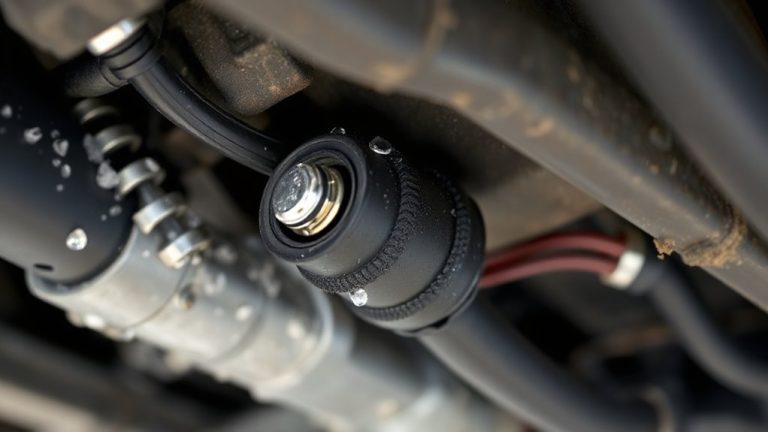
How can you tell when your CX-9’s sway bar links are failing? Listen for clunking noises when driving over bumps-this often signals ball joint play. Excessive movement in the ball joint, more than 1/8 inch of free travel, indicates wear. Check the rubber boot cracks, as splits or tears expose the joint to dirt and moisture, accelerating deterioration. A compromised boot usually leads to dry, worn internals and reduced performance. You might also notice increased body roll during cornering, reducing stability. Inspect the link ends while the vehicle is lifted-any wobbling or looseness confirms failure. These symptoms degrade handling precision and compromise ride safety. Ignoring them stresses other suspension components. Early detection prevents costly repairs. Consistent visual and physical inspection helps maintain OEM-level performance. Address issues before they affect steering response or shock function.
How to Find Sway Bar Links on Your Mazda CX-9
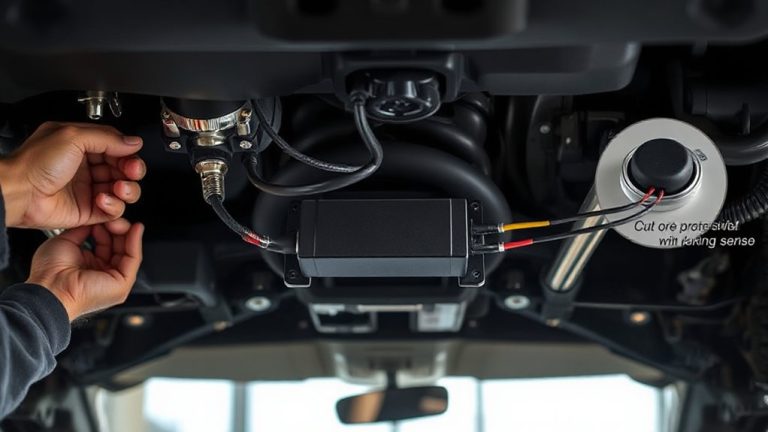
Where exactly are the sway bar links located on your Mazda CX-9? Directly beneath the front and rear axles, near the control arms. The sway bar location runs laterally across the chassis, linking both sides of the suspension. Sway bar links connect this bar to the strut or control arm via short arms-typically 6 to 8 inches long. For accurate link identification, look for small, tubular metal components with threaded ends and ball-and-socket joints. They’re mounted perpendicularly between the sway bar and suspension upright. Front links are easier to spot-positioned just behind each wheel. Rear links sit similarly, near the trailing arms. Most OEM links use 14mm or 18mm fasteners. They’re critical for rigidity, transferring lateral force to reduce body roll. Proper positioning guarantees even handling and tire wear during cornering.
Check for Loose or Clunking Sway Bar Joints
A telltale sign of failing sway bar links is a rhythmic clunking noise when driving over bumps or turning sharply. You’ll often feel the noise through the chassis, not just hear it. This clunking usually indicates excessive play in the sway bar joint, commonly where the link connects to the control arm. While inspecting, grab the sway bar link and shake it side-to-side and up-down. Any movement beyond 1/16 inch suggests wear. The ball joint at the end of the link should pivot smoothly without looseness. A damaged ball joint restricts movement and increases stress on the control arm bushings. Unlike suspension ball joints, sway bar link joints don’t carry vehicle weight but endure constant lateral force. Worn joints compromise handling precision and accelerate wear on adjacent suspension components, especially the control arm and bushings. Replace links showing visible cracks, rust, or torn boots immediately.
Compare Left and Right Sway Bar Link Wear
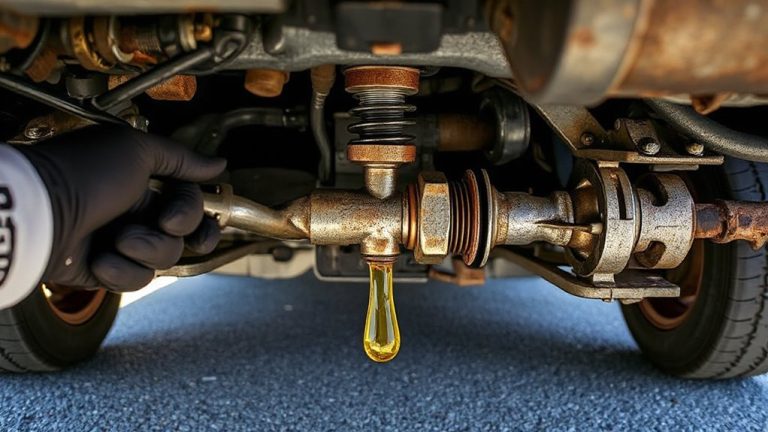
Why do both sides of your sway bar seem to wear differently? Road conditions, driving habits, and exposure vary between left and right links. Inspect both links side by side under the Mazda CX-9’s chassis. Look for asymmetrical bushing deformation-common on one side due to material fatigue from repeated stress cycles. Measure rubber bushing gaps: over 3mm indicates excessive wear. Check for rust on the link’s threaded shaft, especially near the ball joint. Corrosion impact accelerates wear, particularly in coastal or winter-road climates. A corroded link loses structural integrity and increases play. Compare ball joint boots: tears or dry rot suggest internal deterioration. Use a torque wrench to test joint tightness; uneven resistance means one side is failing. Differences in wear aren’t unusual-but they signal uneven load distribution. Left-side links often degrade faster due to road crown and curb contact. Always assess both sides thoroughly.
Should You Replace Sway Bar Links With Shocks?
Ever wonder if replacing your sway bar links means you should also swap out the shocks? Not necessarily. While both components affect ride stability, they serve different roles. A sway bar link connects the sway bar to the suspension, reducing body roll during cornering. The shock absorber dampens spring oscillations, ensuring tire contact and ride comfort. If your shock absorber is worn-typically after 50,000 to 100,000 miles-it should be replaced regardless of link condition. Worn shocks impair suspension alignment, increasing tire wear and reducing control. Replacing both together isn’t mandatory, but doing so can restore balanced performance, especially if the vehicle has high mileage. Always inspect both systems during maintenance. Properly functioning links and shocks maintain suspension alignment, improving handling and safety. Replace each based on wear, not assumption.
Tools to Inspect Mazda CX-9 Sway Bar Links
You don’t need to replace sway bar links and shocks together, but knowing their condition helps you make informed service decisions-and that starts with proper inspection tools. A 14mm socket wrench is essential for removing the sway bar link’s mounting bolt. You’ll also need a torque wrench to re-tighten fasteners to Mazda’s specification of 51–66 ft-lbs. Inspect the pivot ball for play by gripping the link and moving it side-to-side. Any lateral movement beyond 1–2mm indicates wear. A borescope helps visually confirm dryness or cracking in the rubber boot surrounding the pivot ball. Use penetrating oil to loosen corroded hardware before extraction. Gloves and safety glasses protect you during inspection. These tools give you accurate feedback on link integrity. Reliable inspection prevents unnecessary part replacement and guarantees precise diagnosis.
On a final note
Inspecting sway bar links during shock replacement is critical. Worn links cause instability and premature tire wear. On the Mazda CX-9, they connect the sway bar to the control arms, using 14mm fasteners. Check for play exceeding 1/8 inch. Failed bushings or cracked boots signal replacement. Always inspect both sides. Replace links if movement exceeds tolerance. Match OEM torque specs: 51–76 ft-lbs. Pair new links with new shocks for balanced handling.