Temperature Limits for Safe Clay Bar Application Without Smearing Contaminants
You should only clay bar when surface temperatures are between 60°F and 80°F (15°C to 27°C). Outside this range, lubricant fails-evaporating too fast in heat or thickening in cold-increasing friction. Hot surfaces expand paint pores, trapping contaminants; cold makes clay brittle, acting like sandpaper. Improper lube coverage causes marring and smearing. For best results, work in shade, warm the clay in your hands if needed, and use a pH-neutral, water-based lubricant. Deeper insights into climate-controlled detailing await.
Notable Insights
- Apply clay bars between 60°F and 80°F (15°C to 27°C) for optimal lubricant performance and contaminant removal.
- Avoid temperatures above 80°F (27°C) to prevent rapid lubricant evaporation and increased friction causing smearing.
- Do not use clay below 50°F (10°C) due to clay brittleness and poor lubricant film formation.
- Warm the clay bar in your hands if working in cold conditions to restore flexibility and reduce marring risk.
- Work in shaded, temperature-stable environments and use high-slip, pH-balanced lubricants to prevent smearing.
Ideal Temperature for Clay Bar Use
While you might be tempted to clay your vehicle whenever convenient, the ideal temperature range for effective and safe clay bar application is between 60°F and 80°F (15°C to 27°C). At this range, surface tension of the lubricant is optimized, allowing the clay bar to glide smoothly without skipping or sticking. Chemical breakdown of bonded contaminants-such as industrial fallout, rail dust, and overspray-occurs more efficiently when the lubricant remains stable and evenly dispersed. Temperatures below 60°F increase viscosity, reducing lubrication effectiveness and raising the risk of marring. Above 80°F, the lubricant evaporates too quickly, compromising contamination removal. Use a spray detailer specifically designed for clay barring with a non-evaporative, pH-balanced formula. This guarantees consistent slip and maintains protective integrity of clear coat. Proper temp balance enhances friction control and maximizes decontamination performance.
Why Heat Ruins Clay Bar Results
If the surface of your vehicle exceeds 80°F (27°C), clay bar performance drops considerably due to rapid lubricant evaporation. Without sufficient lubrication, the clay bar drags, increasing friction and reducing effectiveness. Heat also accelerates thermal expansion, causing paint micro-irregularities to swell. These expanded pores trap contaminants more tightly, weakening the clay’s ability to release them. Surface adhesion improves for bonded pollutants under heat, making them harder to remove. As the clay heats up, its own consistency softens, decreasing structural integrity and control during use. You lose precision and risk spreading contaminants instead of lifting them. Lubricant films thin out quickly, leaving micro-scratches from unglided movement. The ideal surface temperature remains between 60°F–80°F (15°C–27°C). In hotter conditions, work in shaded areas and section small areas quickly. Immediate wipe-off after claying is essential to prevent residue buildup. Heat fundamentally undermines both lubrication and contaminant release mechanisms. For diesel truck owners, maintaining proper maintenance intervals includes using the right Best Oil Filters for 6.7 Powerstroke to ensure engine longevity and performance.
Why Cold Weather Makes Clay Bar Scratch
Cold surfaces create a different set of challenges when using a clay bar, just as heat causes its own problems. Cold temperatures increase clay brittleness, making the bar less pliable and more prone to chipping. When brittle, the clay can’t conform to microscopic imperfections in the paint, raising the risk of surface scratching. Surface adhesion improves in cooler conditions, but only if the clay remains flexible. Below 50°F (10°C), most synthetic clay bars lose elasticity, reducing their ability to lift contaminants smoothly. Instead of gliding, the stiff clay drags, acting like fine sandpaper. Proper lubrication becomes less effective because cold paint doesn’t absorb spray detailer evenly. You must work in small sections and monitor the bar’s texture constantly. Inspect the clay frequently-cracks or dry edges mean it’s too cold for safe use. Replace or warm the bar before continuing. Choosing the right product for the conditions is crucial, and opting for a durable best car clay bar can improve performance in marginal temperatures.
Why Lube Fails and Ruins Claying in Extreme Temps
When temperatures drop below 50°F (10°C), your lubricant’s effectiveness plummets because cooler paint surfaces slow solvent evaporation and reduce mist dispersion. This creates uneven lubrication, increasing friction between clay and paint. Cold causes viscosity loss, making lubes too thin to form a consistent slippery layer. Without proper film strength, microscopic contaminants drag across the surface, causing marring. The chemical breakdown of surfactants occurs below 10°C, impairing contaminant encapsulation. Likewise, high temps above 85°F (29°C) accelerate evaporation, drying lube before coverage is complete. Rapid drying leaves residue, promoting streaking and contamination embedment. Both extremes compromise lubricant stability and film integrity. You lose control and risk damaging paint. Ideal lubricant performance occurs between 50°F–85°F (10°C–29°C), where solvents and carriers function as formulated. Outside this range, lubricants fail chemically and physically, ruining the claying process.
How to Prep Paint When It’s Too Hot or Cold
What happens when ambient temperatures fall outside the ideal 50°F–85°F (10°C–29°C) window for claying? You risk damaging your paint protection and spreading contaminants. If it’s too cold, the clay bar hardens, reducing its ability to safely lift debris. Warm the bar in your hands and work in a climate-controlled space. In heat, the clay softens excessively, increasing smear risk. Avoid direct sun and time claying for early morning or late evening. Always perform a detailed surface inspection before starting-check for bonded contaminants and moisture levels. Use a pre-wash to loosen grime without aggressive rubbing. Ideal prep includes a thorough wash, pH-neutral drying, and ensuring the surface is at least within 10°F of the clay’s recommended range. Proper prep safeguards your finish.
How to Avoid Smearing in Extreme Temps
Clay bars rely on consistent surface adhesion to remove bonded contaminants, and if temperatures drift too high, the lubricant evaporates faster than you can work. To prevent smearing, apply clay when ambient temperatures are between 60°F and 80°F. If it’s above 85°F, lubricant dries within 30 seconds, increasing friction and smear risk. In cold conditions, below 50°F, the clay hardens and loses pliability, reducing effectiveness. Monitor the dew point; if surface temperature falls below dew point, moisture condenses and dilutes lubricant, compromising performance. Wind chill accelerates cooling on exposed panels, making clay brittle in winter. Work in a shaded, climate-stable area. Use a high-slip synthetic lubricant with a pH of 7.0 to maintain glide. Replace clay every 12–18 months or after 15–20 vehicles, whichever comes first.
What Happens When You Clay in Direct Sunlight?
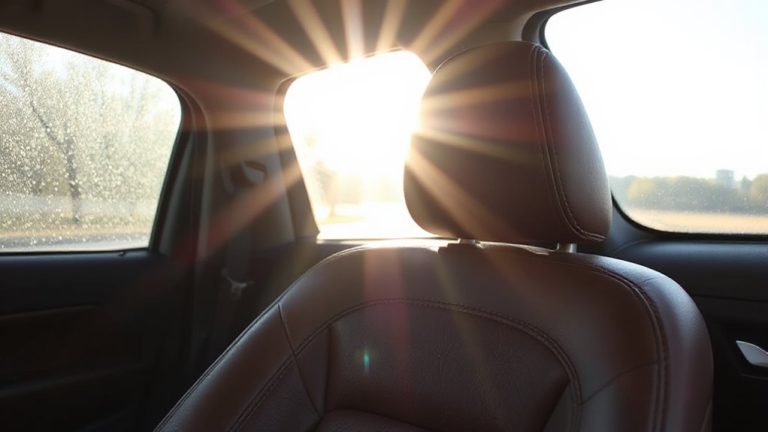
Ever wonder why your clay bar feels uncooperative on a bright afternoon? Direct sunlight raises surface temperatures beyond 100°F, exceeding the safe threshold for clay bar use. At these temperatures, lubricants evaporate too quickly, causing the clay to drag and increasing friction. This friction generates heat that accelerates surface oxidation, weakening the clear coat’s integrity. You risk embedding contaminants instead of removing them, defeating the purpose of claying. Prolonged exposure to high heat during detailing contributes to paint degradation over time. The ultraviolet radiation in sunlight exacerbates chemical breakdown in paint polymers. Work in shaded areas with surface temps between 60°F and 85°F. Use a water-based lubricant with glycol additives to extend evaporation time. This guarantees smooth gliding and effective decontamination without harming the finish.
On a final note
Clay bars work best between 60°F and 80°F. Outside this range, performance drops sharply. Heat softens the clay, increasing stickiness and smear risk. Cold makes it stiff, raising scratch potential on paint. Lubricant evaporates too fast in heat, too slow in cold, reducing effectiveness. Direct sunlight worsens heat issues. Always clay in shade, on cool surfaces. For extreme temps, adjust lubricant volume and use light pressure. Maintain surface temp below 95°F, above 50°F for best results.