How to Clean Up Transmission Fluid Spills Without Damaging Epoxy Coatings
Act fast to contain the spill-use polypropylene spill socks to encircle the fluid within five minutes. These absorb up to 2 gallons per linear foot, limiting epoxy damage and slip risks. Blot excess with microfiber towels, then apply a 1/4-inch layer of silica-free cat litter; let it dwell 12–24 hours to draw out trapped fluid. Clean with a pH-neutral degreaser safe for epoxy, using soft cloths and overlapping strokes. Rinse with at least two gallons of water per square foot and squeegee dry. Proper airflow cuts drying time by 50%. A full protection strategy follows.
Notable Insights
- Act quickly to contain the spill using polypropylene barriers or spill socks to prevent spreading and protect epoxy integrity.
- Blot excess fluid with microfiber towels and use silica-free cat litter to draw out residual transmission fluid from pores.
- Apply a pH-neutral, epoxy-safe degreaser to emulsify remaining residue without etching the coated surface.
- Clean gently with soft microfiber cloths using overlapping strokes to lift contaminants without scratching.
- Rinse thoroughly with low-pressure water, remove moisture immediately, and dry with airflow to prevent damage.
Spot and Contain the Transmission Fluid Spill Fast
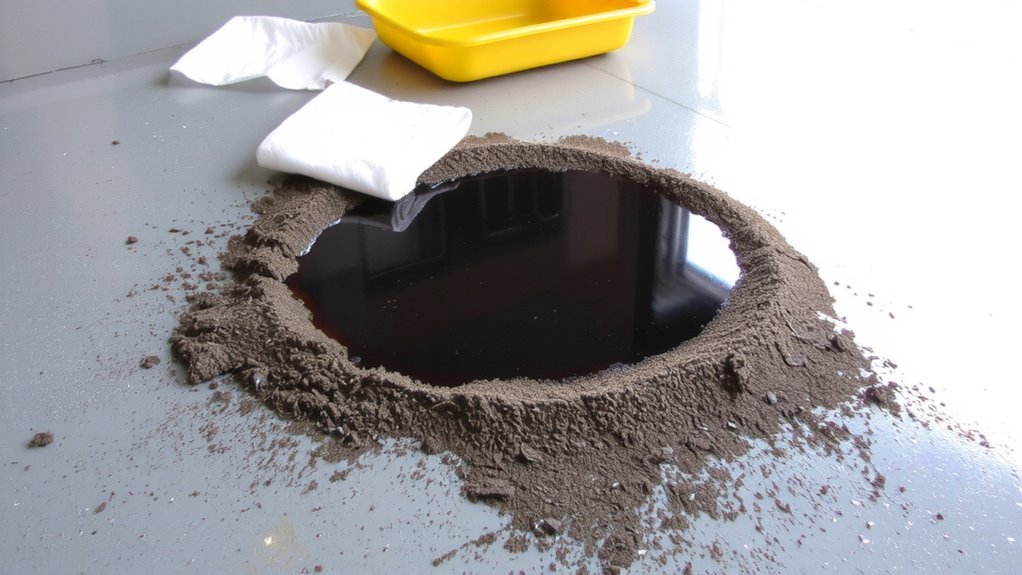
How long has that puddle been spreading under your car? Spotting a transmission fluid spill early is critical to protecting both your vehicle and garage floor. Transmission fluid spreads quickly, so you must contain spill immediately. Use absorbent barriers or spill socks made of polypropylene to encircle the puddle. These materials can hold up to 10 times their weight in fluid, creating an effective perimeter. Place the barrier tightly around the spill’s edge to prevent seepage into concrete pores. Spill socks with a 3-inch diameter can absorb up to 2 gallons per linear foot. Acting fast guarantees minimal surface contact. Containing the spill limits volatile organic compound (VOC) release. Immediate action reduces slip hazards and protects epoxy coatings from chemical degradation. Never let the fluid pool longer than five minutes. Rapid containment preserves floor integrity and meets OSHA safety standards.
Blot up Excess With Cat Litter or Towels
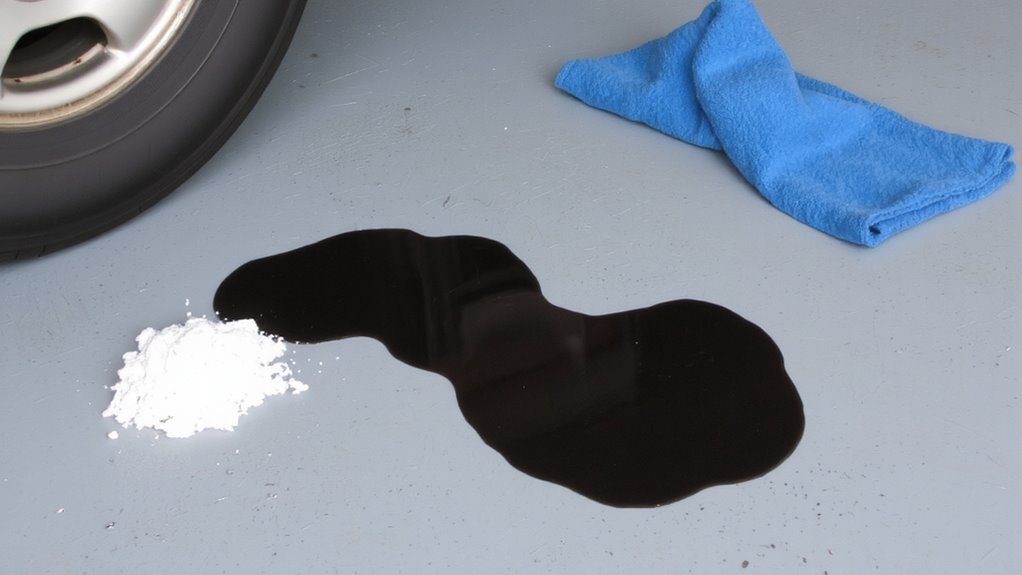
You’ve contained the spill-now it’s time to remove the bulk fluid efficiently. Begin with towel blotting using clean, absorbent cotton or microfiber cloths. Press down firmly without rubbing to avoid spreading the fluid. Replace towels frequently to maximize uptake. For deeper saturation, apply cat litter absorption using non-clumping, silica-free clay litter. Spread a 1/4-inch layer over the affected area and let sit for 12–24 hours. The porous granules draw fluid from micro-pores in the epoxy. Remove spent litter with a stiff brush or vacuum. These materials capture 85–90% of free fluid. Effective blotting reduces residue volume markedly before chemical cleaning. Cat litter absorption works best on fresh spills under 48 hours old. Towel blotting is ideal for initial response, minimizing seepage into coating defects. Both methods preserve epoxy integrity by limiting dwell time.
Use Dish Soap or Degreaser Safe for Epoxy Floors
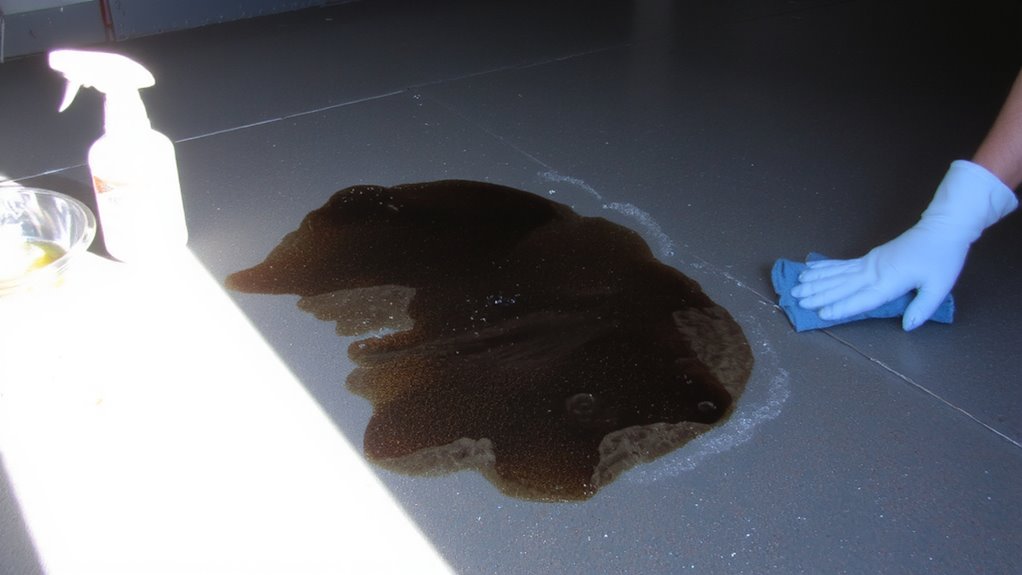
After removing the bulk of the spill with absorbent materials, the next step is breaking down residual transmission fluid that remains bound to the epoxy surface. You need a cleaner with strong degreasing action but proven surface compatibility. Dish soap or a dedicated degreaser labeled safe for epoxy floors works best. Choose a pH-neutral formula to avoid dulling or etching the coating. Many eco friendly options use plant-based surfactants that dissolve oil without harming the finish. Apply the solution directly to the stain, letting it dwell for 3–5 minutes to penetrate the residue. Avoid abrasive tools-this step is about chemical lift, not mechanical removal. Water alone won’t cut it; you need emulsification to suspend the oil. Always follow manufacturer guidelines for dilution and contact time to guarantee effectiveness and coating protection.
Gently Clean Without Scrubbing the Surface
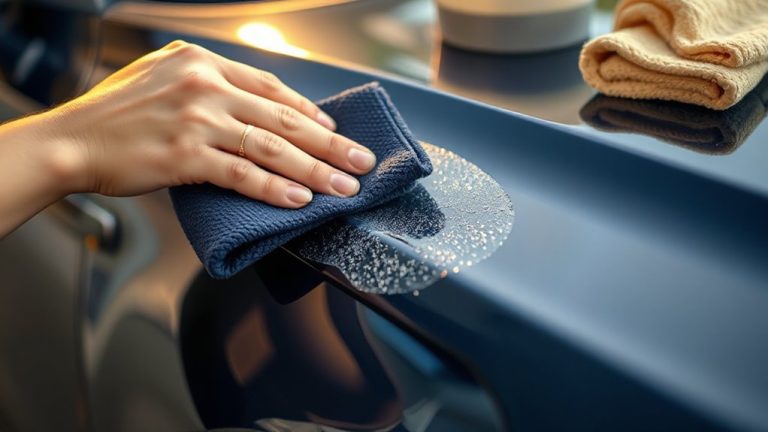
Skip the scrub brush-aggressive wiping can embed contaminants or scratch the epoxy finish. Instead, use a soft microfiber cloth to gently lift the transmission fluid. Microfiber cloths have fine fibers (typically 0.5 denier or less) that trap oils without abrasion. Fold the cloth frequently to expose clean surfaces, minimizing smearing. Apply a neutral pH cleaner (pH 6.5–7.5) to avoid degrading the epoxy’s polymer matrix. Most epoxy manufacturers specify pH-neutral products to preserve coating integrity. Spray the cleaner lightly-oversaturation can seep into seams or edges. Allow 30–60 seconds for the solution to emulsify the oil. Then, wipe in slow, overlapping strokes. The microfiber’s high surface area increases capillary action, drawing fluid away. Pressure isn’t necessary; let the cloth and cleaner do the work. This method removes residue effectively while maintaining the coating’s sheen and chemical resistance.
Rinse Well and Dry Immediately
Once the cleaning solution has lifted the transmission fluid, it’s critical to remove any residual cleaner and dissolved oil to prevent re-deposition or film formation. Rinse the area thoroughly with clean water using a low-pressure spray-high pressure can force moisture under the epoxy, risking delamination. Use at least two gallons of water per square foot to guarantee complete dilution and removal. Immediately squeegee or absorb the rinse water, then dry the surface with clean, lint-free towels. Speed matters: wet surfaces delay spill evaporation and increase slip risk. Activate floor ventilation to accelerate drying, lowering humidity and promoting airflow across the coating. Proper ventilation reduces drying time by up to 50%, minimizing the chance of water spotting or haze. Keep foot traffic off the area until fully dry-typically 30 to 60 minutes under ideal conditions.
Protect Your Epoxy Floor From Future Spills
Your epoxy floor’s resilience depends on proactive protection against future transmission fluid spills. To prevent future leaks, inspect vehicle seals and lines regularly-replace worn gaskets every 30,000 miles. Even small drips compromise coating integrity over time. Use protective mats made from nitrile rubber, at least 3mm thick, under transmission zones. These mats resist fluid breakdown up to 250°F and contain spills within a 36” x 48” coverage area. Place mats beneath common drip points to minimize direct contact. Nitrile offers 98% resistance to petroleum-based fluids, unlike vinyl or foam alternatives. Clean mats monthly to avoid buildup. Monitor fluid levels monthly; low levels indicate early leaks. Proactive maintenance reduces spill frequency by 70%. Pair routine checks with physical barriers to extend epoxy life. Use protective mats and vigilance-they’re your first line of defense.
On a final note
Act quickly to prevent transmission fluid from degrading your epoxy coating. Use absorbent materials like clay-based cat litter for at least 15 minutes to lift excess fluid. Clean the area with a pH-neutral dish soap or epoxy-safe degreaser diluted at 1:10 with water. Gently agitate with a microfiber mop-no harsh scrubbing. Rinse thoroughly with clean water and dry immediately using an air mover to prevent residue buildup.