Monitoring Differential Breather Tubes for Moisture Intrusion in SUVs Under 30K
Your SUV’s differential breather tube can let in moisture, especially if it’s mounted low or clogged. Water enters during deep crossings or from condensation, introducing up to 0.5% moisture by volume, which degrades gear oil’s lubricity and promotes rust on bearings and gears. A blocked or aged breather-opaque, cracked, or with high airflow resistance-can’t vent pressure properly. Upgrade to a unit with a Teflon membrane and 5–10 micron filtration to block 99% of water vapor and handle ±5 psi shifts. You’ll see less sludge, quieter gears, and longer component life. There’s more to know about protecting your investment.
Notable Insights
- Inspect breather tube condition regularly for cracks, discoloration, or blockages that compromise moisture protection.
- Monitor for whining noises under load, indicating early gear corrosion from moisture-contaminated lubricant.
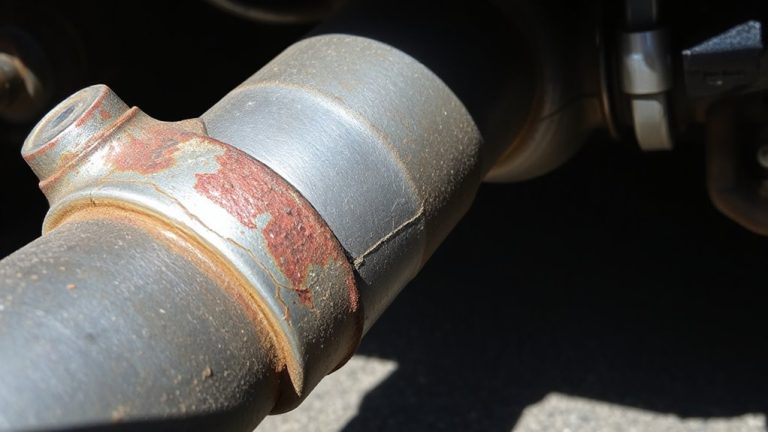
- Check differential cover bolts and case for rust, signaling moisture intrusion through the breather system.
- Upgrade to a hydrophobic membrane breather to reduce internal moisture by up to 80% in humid conditions.
- Ensure breather outlet is positioned above water level to prevent ingestion during deep water crossings.
Why Moisture Damages Your SUV’s Differential
While driving through wet conditions might seem harmless, water entering your SUV’s differential through the breather tube can lead to serious internal damage over time. Moisture contamination degrades lubricant effectiveness, reducing film strength from 80,000 psi to below 30,000 psi. This breakdown accelerates gear corrosion, where iron sulfide forms on ring and pinion surfaces, increasing friction by up to 40%. Even trace moisture-just 0.5% by volume-promotes bearing rust, compromising load capacity. Rust initiates at microscopic levels, weakening roller and race integrity. Once compromised, bearings exhibit 25% reduced fatigue life. Corrosion pits gear teeth, disrupting smooth meshing and generating heat. Differential temperatures can rise over 50°F above normal, accelerating wear. Left unchecked, moisture-induced damage leads to premature failure, often within 15,000 miles. Preventive monitoring preserves OEM specifications, ensuring peak performance and durability under real-world conditions.
How Water Gets In Through the Breather Tube
How does water enter one of the most vulnerable points in your SUV’s drivetrain-the differential breather tube?
Water sneaks in during off-road driving or heavy rain when the tube’s outlet dips below water level. Even without submersion, condensation buildup forms inside as temperatures cycle, introducing moisture. Tube clogging from dirt or ice restricts airflow, creating pressure imbalances that suck in humid air. Over time, this moisture accumulates, risking internal damage.
| Cause | Effect on Differential |
|---|---|
| Submersion during deep water crossings | Direct water ingestion |
| Condensation buildup | Gradual moisture accumulation |
| Tube clogging | Pressure imbalance |
| Poor vent positioning | Increased water exposure |
| Frozen breathers in cold climates | Sealed system failure |
Vent tubes are typically 3–6 mm in diameter and mounted low on the axle-making them entry points. Proper maintenance prevents compromise.
Signs of Moisture in Your Differential
Moisture in your differential isn’t always obvious-until the damage shows. You might notice a whining noise under load, signaling early gear corrosion. Water contamination degrades gear oil’s lubricity, reducing its ability to protect moving parts under high pressure. Over time, this leads to pitting and surface wear on ring and pinion gears. Check for rust formation around the differential cover bolts or on the case-those are visible clues moisture has penetrated. Even slight dampness inside promotes oxidation, accelerating internal damage. Corrosion on gear teeth disrupts meshing accuracy, increasing backlash beyond the factory spec of 0.008–0.012 inches. Left unchecked, this causes premature bearing wear and differential failure. You won’t always see water pooling, but sludge buildup on the magnetic drain plug often confirms contamination. Early detection of these signs can prevent costly repairs and extend differential life markedly.
How to Check the Breather in 10 Minutes
Where’s the first place water sneaks into your differential? The breather tube-small, often overlooked, but critical. You can check it in 10 minutes flat. Start by locating the tube near the differential housing. Inspect the tube color: faded, cracked, or discolored plastic means aging and possible compromise. Disconnect the tube carefully and blow through it. You should feel minimal airflow resistance. Significant resistance means blockage-debris or moisture buildup is likely. Refer to this guide:
| Position | Tube Color | Airflow Resistance |
|---|---|---|
| New | Clear/white | Low |
| Aged | Yellow/brittle | Moderate |
| Failed | Opaque/cracked | High |
A compromised breather increases internal pressure and moisture intrusion risk. Check connections for tightness and routing clear of heat sources. Done right, this quick inspection prevents costly damage.
Upgrade Your Breather to Block Moisture
While stock breather tubes may suffice under ideal conditions, they often fail when exposed to sustained humidity or pressure swings. Upgrading your breather enhances protection against moisture intrusion. Aftermarket breathers use advanced breather materials like hydrophobic membranes and reinforced polymers that resist condensation and corrosion. These materials improve filtration efficiency, blocking 99% of water vapor while allowing proper airflow. A high-efficiency breather typically features a micron rating of 5–10, trapping fine contaminants without restricting differential ventilation. Units with Teflon membranes maintain performance under extreme temperature cycles. Stainless steel mesh housings add durability and dissipate heat. Compared to rubber OEM tubes, upgraded breathers reduce internal moisture buildup by up to 80%. Installation is straightforward, usually requiring only a 14mm wrench. Select a breather rated for continuous pressure differentials of ±5 psi to handle off-road conditions. This simple upgrade markedly extends differential life.
When to See a Mechanic for Differential Damage
How do you know when a problem goes beyond routine maintenance? If you notice grinding noises during turns or a whining sound that increases with speed, you might have gear wear. These symptoms suggest damaged ring and pinion gears, often due to inadequate lubrication or contamination. Differential corrosion can also compromise housing integrity, especially if water entered through a clogged breather tube. Corrosion weakens metal, risking leaks or failure. Check for rusty fluid under the differential-this signals moisture intrusion. Once gear wear progresses past surface pitting, replacement becomes unavoidable. Mechanics use backlash measurements, typically 0.005 to 0.010 inches, to assess gear damage. Excessive play confirms internal wear. Don’t delay service if vibration or clunking occurs during acceleration. These point to advanced differential damage. Early mechanic intervention prevents complete failure, saving costly repairs down the road.
On a final note
You must monitor your SUV’s differential breather tube to prevent moisture intrusion. Water enters through the vent during off-road driving or washes, especially in models under $30,000 with stock rubber hoses. A clogged or low-mounted breather increases hydro-lock risk. Upgrade to a braided nylon hose with a 90° elbow, routing it above the axle line-ideally to the firewall. This reduces contamination. Check fluid annually; milky oil signals water. Replace seals if damage occurs.