Nighttime Car Breakdown: Triangle Placement, Lights & Gear
Stay calm and steer to the shoulder if your car fails at night. Keep your seatbelt on and hazards flashing 60–120 times per minute to meet FMVSS 108 standards. Wear your ANSI Class 2 vest, reflect 300 cd/m², and place triangles 100–300 feet back. Use a 100-lumen flashlight and call roadside help-they’ll track your GPS. Confirm the tow distance, often 5 miles free. Batteries should read 12.6V and be replaced every 3–5 years. There’s more to staying safe when the unexpected strikes after dark.
Notable Insights
- Stay calm and move to the shoulder if possible, remaining inside the vehicle with seatbelts fastened until fully stopped.
- Immediately activate hazard lights to increase visibility, even if the ignition is off, per FMVSS 108 standards.
- Wear a Class 2 reflective safety vest and place warning devices 100–300 feet behind the vehicle to alert approaching traffic.
- Use a fully charged flashlight and call roadside assistance with GPS-enabled tracking for faster response.
- Maintain a well-stocked emergency kit and perform regular preventive maintenance to reduce nighttime breakdown risks.
Stay Calm and Move to Safety During a Breakdown
If you feel the car begin to lose power or notice warning lights illuminating, your immediate response can prevent a dangerous situation. Stay calm-sudden movements or panic reduce reaction time and impair judgment. If possible, guide the vehicle to the shoulder or a flat, stable surface away from traffic lanes. Once stopped, remain seated with your seatbelt fastened until the vehicle is fully stabilized. This guarantees protection during unexpected shifts or rolling terrain. Avoid distractions like mobile phones or turning fully around to check cargo. Focus on external hazards and monitor mirrors for approaching vehicles. Use peripheral vision to maintain awareness without redirecting attention from the road. Night reduces visibility by up to 90% compared to daylight, increasing collision risk. Keeping focus maximizes reaction time, which averages 1.5 seconds for alert drivers but extends considerably with distraction. Your safety depends on controlled actions and sustained attention.
Turn on Hazards and Make Your Car Visible
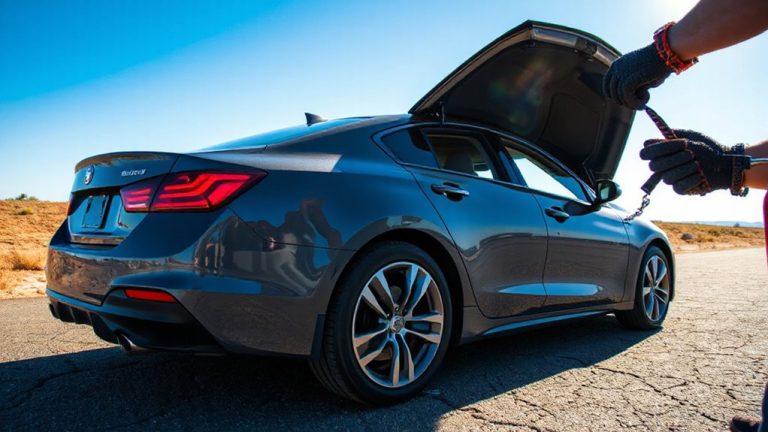
The first step after safely stopping your vehicle is to activate your hazard warning lights-commonly called hazard flashers or four-way flashers. These flashing lights alert other drivers to your presence, especially in low-visibility nighttime conditions. Hazard flashers typically operate on a 12-volt DC system and cycle at 60 to 120 flashes per minute, meeting FMVSS 108 visibility standards. They are powered independently from your engine, ensuring operation even if the ignition is off. For maximum visibility, pair flashing lights with reflective gear such as ANSI Class 2 safety vests, which reflect up to 300 candelas per square meter under headlight illumination. Position reflective triangles or LED road flares 100 to 300 feet behind your vehicle. These passive reflectors must comply with DOT regulations, reflecting light from 1,000 feet away. Together, flashing lights and reflective gear reduce collision risks by increasing your conspicuity on dark roadways. Consider enhancing your warning signal with a car safety siren that emits a 110-decibel alert to further deter approaching traffic.
Grab Emergency Supplies From Your Vehicle
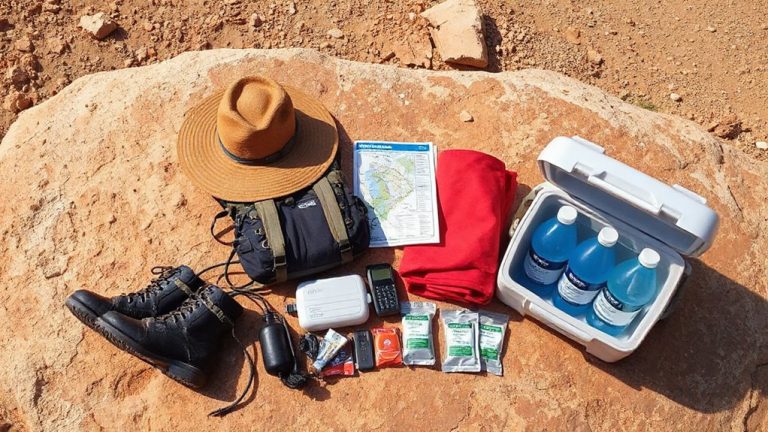
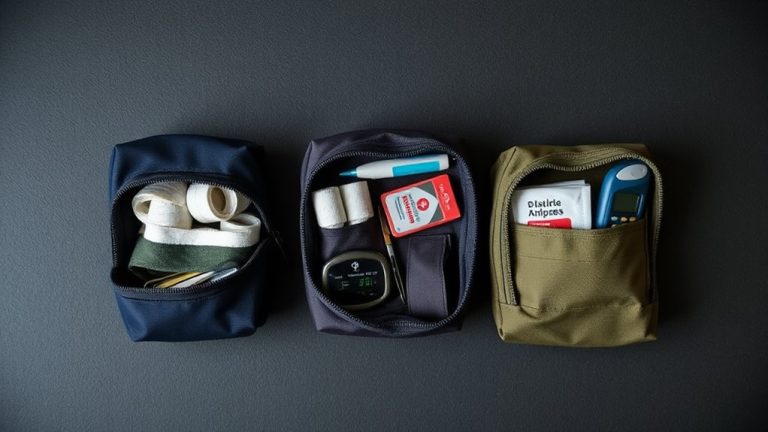
You’ve secured your position on the roadside with hazards flashing and reflective markers in place-now it’s time to access your emergency supplies. Retrieve your emergency kit from its designated storage compartment, typically located in the trunk or under the rear seat. A well-stocked kit should include a 100-lumen flashlight with extra batteries, a first-aid package compliant with ANSI Z308.1 standards, and a reflective safety vest meeting ANSI/ISEA 107-2020 Class 2 requirements. Guarantee all contents are intact and within expiration dates. You should’ve checked these during your last vehicle inspection, ideally conducted every six months. Inspections verify critical systems-battery voltage (12.6V at rest), tire tread depth (minimum 2/32 inch), and fluid levels-all influencing breakdown resilience. A current inspection log helps track maintenance and kit readiness. Storing the kit in a labeled, weather-resistant container prevents moisture damage. Access it promptly-preparation reduces exposure and risk during nighttime stops. Consider choosing one of the best car emergency kits to ensure comprehensive readiness and peace of mind.
Call for Roadside Help Immediately
Once you’ve secured your vehicle and gathered your emergency supplies, calling for roadside assistance becomes your next critical step-delay increases risk during nighttime breakdowns. Contact your provider immediately to initiate service. Most major services operate 24/7 call centers staffed with trained dispatchers who log your case within seconds. Average response time ranges from 30 to 60 minutes, depending on location and service tier. GPS-enabled systems reduce delays by automatically transmitting your coordinates. Basic membership plans cover one free tow up to five miles; premium tiers offer extended towing up to 100 miles and faster average response time due to priority routing. Delays increase exposure to hazards, especially on high-speed roadways. Communicate clearly with the call center to confirm service type-tow, jump-start, lockout, or fuel delivery. Do not hang up until you receive a tracking number and estimated arrival time. Immediate action guarantees faster resolution and reduces danger. Including a well-stocked roadside emergency kit can provide essential tools and supplies while waiting for help to arrive.
Share Your Location and Vehicle Details Clearly
Your safety hinges on how quickly help can reach you, and that starts with communicating your location and vehicle details accurately. GPS accuracy varies; phones typically offer 5–16 ft (1.5–5 m) precision under clear skies but degrade in canyons or heavy tree cover. Providing landmarks improves location clarity. Always describe your vehicle identification precisely-include make, model, color, and license plate.
| Vehicle Make | Location Marker | Visibility Feature |
|---|---|---|
| Honda Accord | Mile Marker 142 | Red hazard lights on |
| Ford F-150 | Northbound I-5 | Roof-mounted toolbox |
| Toyota Camry | 2 miles past exit 38 | Broken headlight (left) |
| Subaru Outback | Near river bridge | Ski rack on top |
| Chevrolet Malibu | Opposite gas station | Flashing yellow lights |
Clear details reduce response time. Modern GPS helps, but exact vehicle identification and precise location markers guarantee correct identification.
Stay Safe While Waiting for Assistance
While help is on the way, staying safe depends on maintaining visibility and minimizing exposure to traffic hazards. Activate hazard lights immediately and deploy reflective warning triangles or LED flares 50 to 100 feet behind your vehicle, complying with DOT standards for roadside visibility. Remain inside the car with doors locked unless the location is unsafe. Keep windows slightly open for awareness but maintain a secure environment. Personal awareness means constantly scanning your surroundings and avoiding distractions like mobile devices. Store a self-defense item-such as a flashlight with a strobe mode or a personal alarm-within easy reach, but use only if threatened. Avoid accepting help from strangers; emergency responders are identifiable by marked vehicles and uniforms. GPS tracking in your phone provides real-time location sharing. Treat the breakdown zone like a hazard perimeter: stay alert, unseen from passing traffic, and prepared. Safety relies on discipline, not luck.
Prevent Nighttime Breakdowns With Smart Prep
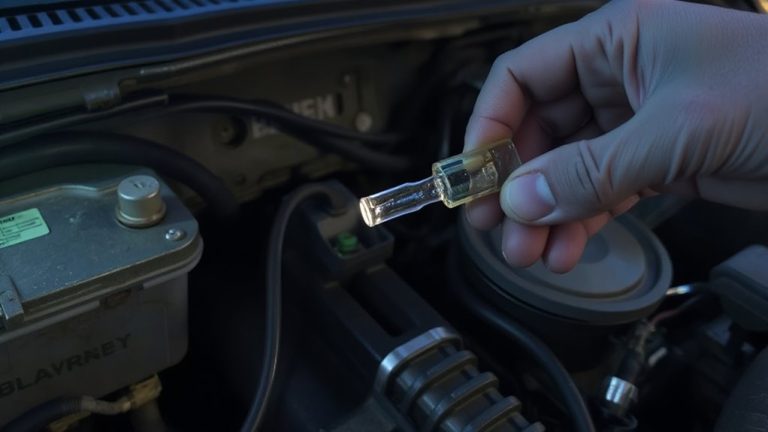
A breakdown at night isn’t just inconvenient-it’s dangerous. You need reliable prevention strategies rooted in routine vehicle inspection and proactive battery maintenance. Modern vehicles rely heavily on electrical systems, making battery health critical. Check terminals for corrosion monthly and test voltage with a multimeter-12.6V indicates a full charge. Follow your manufacturer’s maintenance schedule to avoid surprise failures.
| System | Inspection Frequency | Key Action |
|---|---|---|
| Battery | Every 3 months | Clean terminals, check voltage |
| Tires | Monthly | Inspect tread depth, PSI |
| Lights | Pre-trip | Test headlights, brake lights |
| Fluids | Every oil change | Top off coolant, oil, washer fluid |
| Belts & Hoses | Every 6 months | Look for cracks, swelling |
Replace batteries every 3–5 years. Smart prep minimizes risk and guarantees safer night travel.
On a final note
Stay calm and prioritize safety during a nighttime breakdown. Move your vehicle completely off the roadway-minimum 10 feet from traffic-to reduce collision risk. Activate hazard lights immediately; they emit 120–150 candela per bulb, visible up to 500 feet. Use reflective triangles or LED flares, positioned 50–100 feet behind your vehicle. Keep headlights off if parked on the shoulder to avoid blinding responders. Call roadside assistance with precise GPS coordinates. Wait inside with doors locked unless unsafe. Prepare with a 500-lumen flashlight, 35-decibel emergency whistle, and NFPA-compliant reflective vest. Prevent future incidents: check tire pressure monthly, maintain battery charge above 12.4 volts, and inspect brake pads at 25,000-mile intervals.