How to Prepare for Desert Heat Emergencies With a Detailed Plan
You must recognize heat exhaustion signs like dizziness, heavy sweating, and core temperatures of 100.4–104°F. Avoid peak heat by traveling before 10 a.m. or after 4 p.m. Carry 3 liters of water in an insulated hydration system with electrolyte tablets. Wear UPF 50+ clothing and a wide-brimmed hat. Use evaporative cooling to lower body temperature by 1.5°F every 10 minutes. Navigate with a topographic map and military-grade compass. Signal for help with a 406 MHz personal locator beacon. Emergency shelters are spaced 20–30 miles apart-plan accordingly. More critical strategies follow.
Notable Insights
- Recognize heat exhaustion and heat stroke symptoms early, including heavy sweating, dizziness, hot dry skin, and confusion.
- Schedule travel outside peak heat hours (10 a.m.–4 p.m.) to reduce heat exposure and strain.
- Pack essential supplies: 3+ liters of water, electrolyte tablets, UPF 50+ clothing, and a shaded shelter.
- Use evaporative cooling and shade structures to lower body and ambient temperatures during rest breaks.
- Carry communication devices like a PLB or satellite messenger and know the location of emergency shelters.
Spot the Warning Signs of Heat Emergencies
What does it feel like when your body can’t keep up with extreme heat? You start sweating heavily, feel dizzy, and notice a rapid pulse-classic signs of heat exhaustion. Your core temperature rises to 100.4–104°F (38–40°C). Nausea, headache, and muscle cramps follow. If untreated, it escalates. Heat stroke occurs when your body hits 104°F+ (40°C+), and sweating stops-skin turns hot and dry. Confusion, seizures, or unconsciousness may happen. This is a medical emergency. Heat stroke disrupts neurological function, requiring immediate cooling and 911 intervention. Unlike heat exhaustion, which responds to shade, water, and rest, heat stroke can be fatal within minutes. Monitor heart rate, mental status, and skin condition. Early detection saves lives. Know the difference: one is reversible; the other, lethal without rapid treatment.
Plan Your Route and Schedule for Extreme Heat
Recognizing heat exhaustion and heat stroke isn’t just about identifying symptoms-it’s about preventing them before they start. You must plan your route timing to avoid peak solar radiation, typically between 10 a.m. and 4 p.m. Travel during early morning or late evening when surface temperatures are 20–30°F lower. Use topographic maps and GPS to plot shaded or low-exposure paths. Build schedule flexibility into your plan to respond to rising temperatures or unexpected delays. A rigid timetable increases risk; instead, allow buffer time every 2–3 hours to assess conditions, rest, and rehydrate. Monitor wet-bulb globe temperature (WBGT) if possible, as it accounts for heat, humidity, wind, and solar load. Never exceed 50% of your maximum aerobic capacity in extreme heat. Adjust pace and duration based on hourly heat index readings. Proper route timing and schedule flexibility reduce core temperature rise and prevent circulatory strain.
Pack These Essential Desert Survival Supplies
When temperatures soar and rescue timelines stretch, your survival hinges on having the right gear-start with a hydration system that holds at least 3 liters, such as a durable camelbak or stacked water bottles with insulation sleeves to reduce water temperature by up to 15°F. Pack electrolyte tablets to maintain hydration efficiency. Use wide-brimmed hats, UPF 50+ sun protection clothing, and zinc oxide sunscreen to shield exposed skin. Carry a topographic map and a military-grade compass for reliable desert navigation; GPS devices can fail due to heat or battery loss. Bring a signal mirror and whistle for emergency signaling. A lightweight, UV-reflective space blanket reduces radiant heat exposure by up to 90%. Store all items in a 40-liter ripstop nylon backpack with padded straps and airflow backing. These supplies maximize survivability during extended exposure, functioning as a mobile life-support system in extreme arid environments.
Use Emergency Cooling Methods in the Heat
If the sun’s intensity pushes temperatures above 110°F and your core heat begins to climb, immediate cooling is critical to prevent heatstroke. You must initiate evaporative cooling right away. Wet your skin with available water and fan yourself to accelerate heat loss-this method can reduce body temperature by up to 1.5°F every 10 minutes. Evaporative cooling works best in low-humidity desert environments where sweat evaporates quickly. Seek or build shade structures immediately. A minimum 6 x 6-foot tarp elevated 3 feet above the ground blocks direct solar radiation and lowers ambient temperature by 15–25°F. Position the reflective side up to reduce ground heat absorption. Use natural features like rock overhangs when possible. Combine shade structures with evaporative cooling to extend safe exposure time. These methods are proven, accessible, and essential for maintaining thermoregulation when medical help is hours away.
Carry Working Emergency Communication Tools
A reliable means of communication is your direct link to rescue when environmental conditions exceed human limits. Carry working emergency communication tools like personal locator beacons (PLBs) and satellite messaging devices. PLBs transmit a 406 MHz distress signal to global search-and-rescue satellites. They’re accurate within 100 meters and operate for 24+ hours. Satellite messaging devices allow two-way texts via networks like Iridium or GlobalStar. Most weigh under 5 ounces and last 3–7 days, depending on usage.
| Device Type | Battery Life & Key Features |
|---|---|
| Personal Locator Beacon | 24+ hrs, 406 MHz, GPS |
| Satellite Messenger | 3–7 days, two-way texting |
| InReach Mini | 7 days, 4.5 oz, Iridium |
| SPOT Gen4 | 6 days, 5 oz, GlobalStar |
| Garmin inReach Explorer | 5 days, 7 oz, topographic maps |
Use these tools to signal early, when heat stress begins.
Find Desert Shelters & Emergency Help
Where can you go when desert temperatures soar beyond survival limits? Seek shelter immediately in natural formations like caves, rock overhangs, or deep arroyos. These structures reduce solar exposure and maintain temperatures up to 30°F cooler than open desert. Position yourself in shaded areas facing north (in the Northern Hemisphere) to maximize protection. Avoid low-lying areas prone to flash flooding. Water sources, such as seasonal springs or tinajas (rock basins holding rainwater), often occur near canyons and can sustain hydration if filtered. Locate emergency help by identifying the nearest Bureau of Land Management (BLM) station, ranger outpost, or marked evacuation route on topographic maps. Carry a GPS device with preloaded waypoints for known shelters and water sources. Emergency shelters maintained by border patrol or search and rescue teams are typically spaced 20–30 miles apart in remote zones. Know their locations before travel.
Practice Your Heat Emergency Response Plan
When desert heat pushes your body to its limits, having a rehearsed emergency response plan can mean the difference between life and death. Your heat tolerance varies by fitness, hydration, and acclimatization, so regular emergency drills guarantee everyone responds correctly under stress. Practice recognizing early symptoms: dizziness, nausea, and rapid pulse signal heat exhaustion. Use drills to test response speed and equipment readiness. Below is a sample drill schedule and response protocol:
| Scenario | Response Time | Key Action |
|---|---|---|
| Heat exhaustion | < 5 minutes | Move to shade, hydrate, cool skin |
| Heat stroke | < 3 minutes | Call emergency services, initiate cooling |
| Lost navigator | < 10 minutes | Activate GPS beacon, shelter in place |
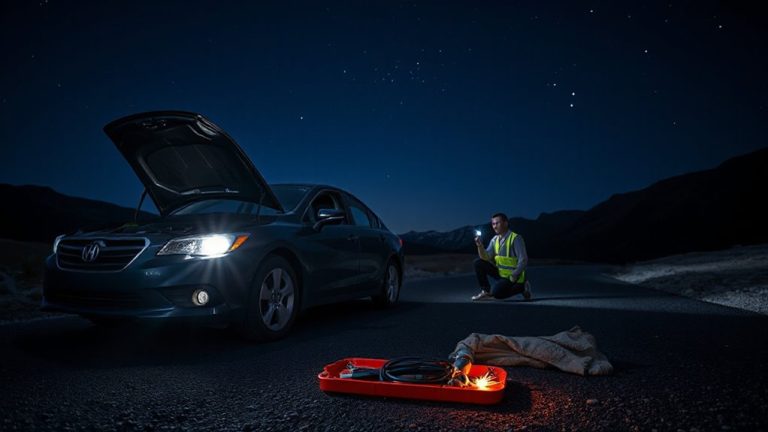
| Vehicle breakdown | < 15 minutes | Deploy shade canopy, ration water |
| Dehydration onset | < 4 minutes | Administer electrolyte solution |
Drills build muscle memory. Test plans biweekly in peak season. Adjust based on group heat tolerance and terrain.
On a final note
You must act decisively in desert heat emergencies. Core body temperature above 104°F indicates heatstroke-immediate cooling is critical. Use evaporative cooling: douse skin with water, fan aggressively. Carry at least one liter of water per hour of activity. GPS-enabled PLBs, like the ACR ResQLink+, transmit location within 50 meters. Test communication tools weekly. Shelters must block 90% of solar radiation. Practice your response plan quarterly-efficiency saves lives.