Inspecting Strut Mounts for Rubber Degradation on a 2015 Volkswagen Tiguan
You should inspect your 2015 Volkswagen Tiguan’s strut mounts by 80,000 miles, as factory rubber degrades from temperature swings and road chemicals. Look for cracks, tears, or separation around the center bolt. Use a pry bar to check for more than 1–2 mm of play. Confirm with a torque wrench set to 25–30 Nm during reassembly. Misalignment beyond ±0.75 degrees or clunking over bumps signals failure. Further details reveal how to pinpoint early-stage deterioration.
Notable Insights
- Lift the front end safely using a floor jack and secure it with jack stands before inspecting strut mounts.
- Remove the wheels to gain clear access to the strut assemblies and mounting components.
- Visually examine the rubber on each strut mount for cracks, tears, or separation from the metal parts.
- Use a pry bar to check for more than 1–2 mm of play, indicating rubber deterioration or failure.
- Inspect the center nut for looseness and verify torque to 25–30 Nm using a torque wrench if reinstalled.
Common Signs of Strut Mount Failure in a 2015 Tiguan
What should you watch for if your 2015 Volkswagen Tiguan starts handling poorly? A common sign is a clunking noise when driving over bumps. This sound often points to worn strut mounts. The mount secures the strut to the vehicle’s body, and when damaged, it allows metal-on-metal contact. You might also notice steering misalignment. The front wheels may pull to one side, even after alignment adjustments. This occurs because the strut mount no longer holds the suspension components in proper position. Misalignment leads to uneven tire wear-typically on the inner or outer edges. Check camber angles; they should be within ±0.75 degrees. If they’re out of spec, inspect the strut mounts. These parts support up to 1,500 pounds per corner under load. Failure compromises stability and control.
Why the 2015 Tiguan’s Strut Mount Rubber Cracks
Nearly every 2015 Volkswagen Tiguan will show strut mount rubber deterioration by 80,000 miles due to age and environmental exposure. Temperature fluctuations weaken the rubber compound over time. Daily cycling between hot and cold causes the material to expand and contract, leading to micro-cracks. These cracks propagate with continued stress, reducing structural integrity. The original equipment rubber is formulated for a service life of approximately seven years under moderate conditions, but real-world use often exceeds design limits. Chemical exposure from road salts, oil leaks, and brake dust accelerates degradation. These substances break down the polymer chains in the rubber, compromising elasticity and load distribution. You’ll notice the center mounting bolt may loosen prematurely as the rubber fails around it. Unlike metal fatigue, this is material decay from combined thermal and chemical stress. Prevention isn’t possible-only timely inspection and replacement mitigate suspension damage and maintain ride safety.
Tools Needed to Inspect 2015 Tiguan Strut Mounts
You can’t assess strut mount condition without the right tools on hand. A socket wrench is essential for removing strut assembly fasteners, typically 13mm or 15mm, depending on trim. Use a torque wrench to avoid over-tightening; Volkswagen specifies 25–30 Nm for mount-to-strut bolts. You’ll also need a floor jack and jack stands for safe elevation. Include a pry bar to gently separate components and check for play. Inspect with a bright LED flashlight to spot fine cracks. Wear safety glasses. Torque specs must be followed precisely during reassembly to prevent premature wear. A digital caliper helps measure bolt stretch if needed. Never rely on estimates-accurate tools guarantee reliable diagnosis. Using improper equipment risks misdiagnosis or damage. Always match OEM standards when verifying fitment. These tools give you confidence in every inspection step. For low clearance situations, consider a low-profile car jack to safely lift the vehicle when standard jacks won’t fit.
How to Check 2015 Tiguan Strut Mounts for Damage
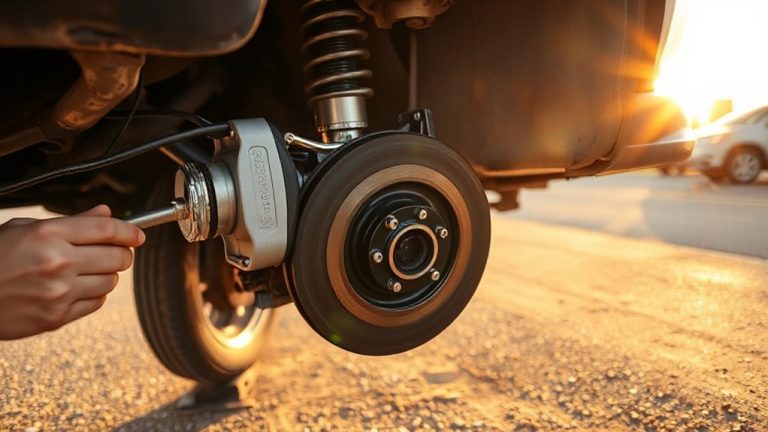
Damage to your 2015 Tiguan’s strut mounts often hides in plain sight-inspect methodically. Begin by lifting the front end and securely supporting it on jack stands. Remove the wheels to access the strut assemblies. Visually examine each mount for cracks, tears, or separation in the rubber bushing. Check the center nut for looseness-this indicates failed strut mount lubrication. Rotate the mount by hand if possible; any binding or stiffness suggests internal wear. Look for contact between the strut piston and mount, a sign of collapse. Failed mounts reduce noise isolation effectiveness, often allowing clunking over bumps. Compare both sides-the damaged side usually shows more deterioration. Use a pry bar gently around the mount to check for movement beyond 1–2 mm. Any excess play confirms deterioration. Record findings for each side.
What to Do After Finding Cracked Strut Mounts
A failed strut mount compromises both ride quality and steering response-immediate action is required. Cracked mounts allow metal-to-rubber separation, increasing strut noise and causing vibration through the chassis. You’ll likely hear clunking over bumps or on turns due to lost damping control. These symptoms degrade handling precision and accelerate wear on related components. Left unaddressed, cracked mounts lead to alignment issues, including uneven tire wear and pulling to one side. The 2015 Tiguan’s front MacPherson strut design relies on mounts to maintain camber and caster angles-damage disrupts factory settings. Do not drive extensively with compromised mounts; continued use stresses steering knuckles and suspension links. Isolate the faulty side by inspecting both front assemblies for visible cracks, collapsed rubber, or misaligned center studs. Prompt replacement restores structural integrity, ensuring proper load distribution and consistent ride height.
When to Replace vs. Monitor 2015 Tiguan Strut Mounts
How can you tell when a strut mount needs replacement instead of just close observation? If you notice persistent clunking noises or steering instability, it’s likely time for replacement. Minor cracks may only require monitoring, especially if your driving conditions are mostly smooth highways. However, severe rubber degradation compromises suspension alignment, leading to uneven tire wear and reduced handling. The 2015 Tiguan’s front strut mounts should maintain precise camber and caster angles-any deviation over 0.5 degrees signals failure. Under aggressive driving conditions like rough roads or frequent cornering, wear accelerates. Replacing mounts every 60,000 to 80,000 miles is standard. Monitor mounts with visual inspections every 12,000 miles. Failed mounts show visible separation between rubber and metal. Delayed replacement risks damaging struts and steering components.
On a final note
You now know how to inspect your 2015 Tiguan’s strut mounts. Cracked rubber compromises suspension alignment and ride stability. Inspect for visible fissures, deformation, or separation in the rubber bushing-common at 60,000 miles. Loss of damping occurs when the mount fails, increasing steering kickback. Replace mounts in pairs with OEM-spec units, torqueing to 30–35 lb-ft. Monitor every 12,000 miles if signs are minor.