How Ceramic Pads Generate Less Dust but May Require Higher Engagement Temperatures
Ceramic brake pads produce less dust because their dense compound-made of ceramic fibers, copper, and fillers-wears evenly, shedding fine, light particles under 2.5 microns that disperse easily. These pads lack iron, reducing visible, sticky residue. However, they need higher temps-300°F to 400°F-to reach peak friction. Their lower cold bite means reduced initial grip until warmed. Performance stabilizes with consistent heat, especially on longer drives, where fade resistance and dust control excel. You’ll discover how driving patterns affect real-world performance.
Notable Insights
- Ceramic brake pads produce less dust due to stable, dense compounds that wear evenly and generate fine, light-colored particles.
- Their composition lacks iron, reducing oxidation and particulate shedding that contribute to visible brake dust.
- Ceramic fibers and copper in the pads reduce rotor abrasion and improve heat dissipation, minimizing debris creation.
- Fine dust from ceramic pads is less adhesive and easily removed by airflow or washing, keeping wheels cleaner.
- Ceramic pads require higher temperatures (300–400°F) to achieve optimal friction, leading to reduced performance during cold starts.
Why Ceramic Brake Pads Make Your Wheels Stay Cleaner
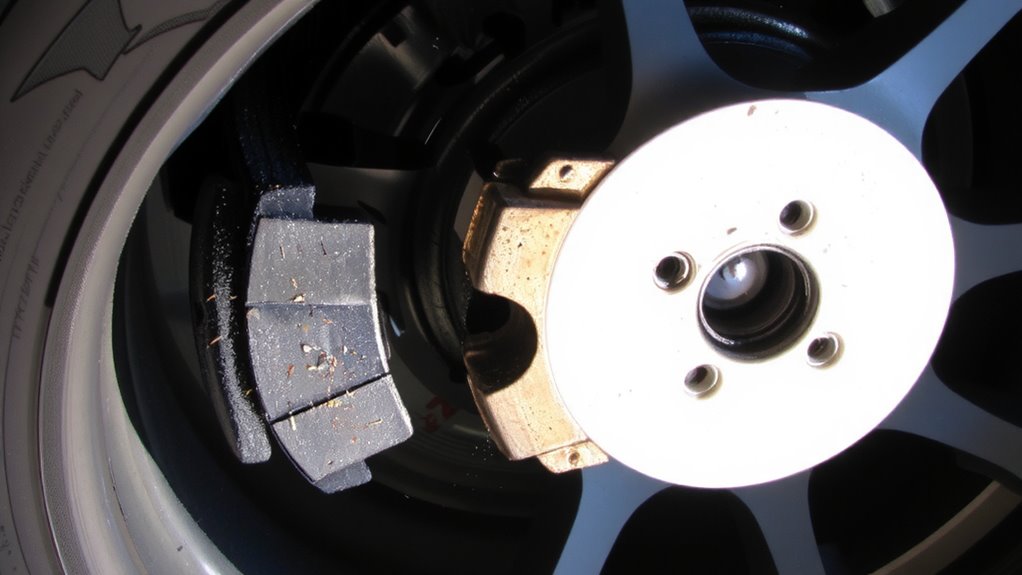
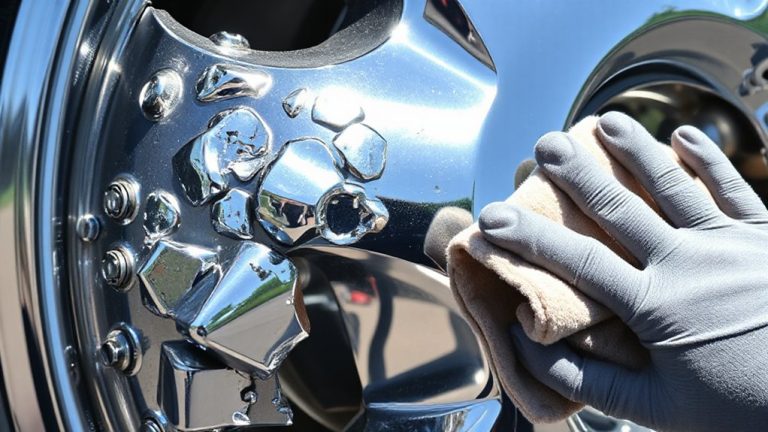
While traditional brake pads often leave behind dark, unsightly residue, ceramic brake pads produce markedly less dust due to their unique brake pad composition. The friction material in ceramic pads contains dense, stable compounds that wear more evenly. This consistency reduces the amount of debris generated during braking. Dust particle size is considerably smaller compared to semi-metallic pads, typically measuring under 2.5 microns. These fine particles are lighter and less likely to cling to wheel surfaces. Most get dispersed into the air or washed away easily with water. Because the dust is also light-colored, it’s far less visible on rims. You’ll notice cleaner wheels even after extended driving. This advantage holds true under normal driving conditions, especially in stop-and-go traffic. Reduced dust accumulation means less frequent detailing. The result? Cleaner wheels, better appearance, and lower maintenance effort-all stemming directly from advanced brake pad composition and minimized dust particle size.
What’s Inside Ceramic Pads That Reduces Dust?
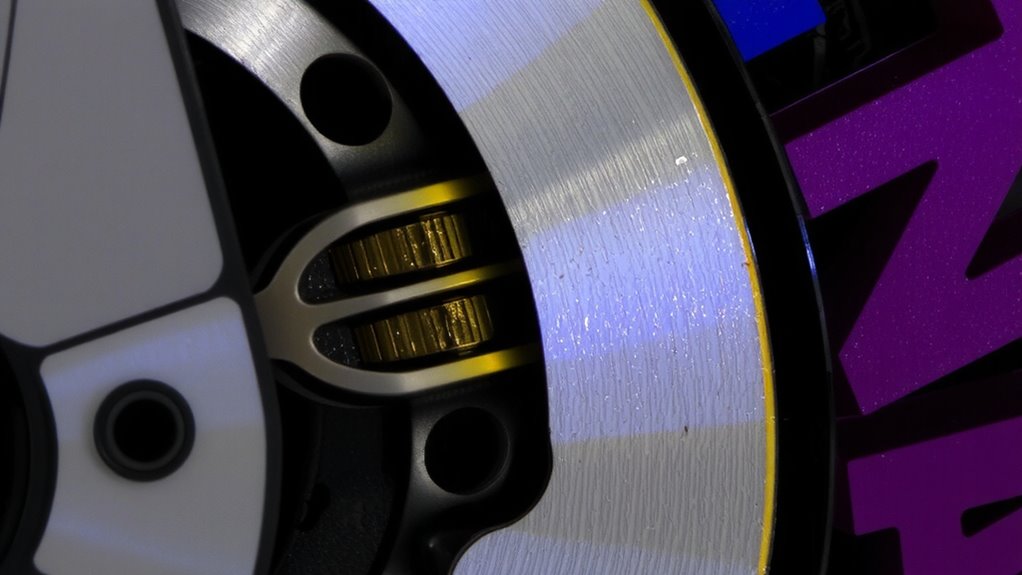
What makes ceramic brake pads produce so little dust? Their brake composition uses ceramic fibers, copper filaments, and proprietary fillers instead of metallic particles. These friction materials create a more stable compound under heat, minimizing wear debris. Ceramic fibers are hard yet lightweight, reducing rotor abrasion. The absence of iron or steel means less oxidation and particulate shedding during braking. Copper enhances thermal conductivity, helping the pad dissipate heat efficiently-often operating effectively between 400°F and 700°F. This stable performance reduces material breakdown, directly lowering dust production. Unlike semi-metallic pads, ceramic formulations don’t grind against rotors aggressively. The resulting particles are finer and lighter in volume. Since the friction materials wear more slowly, dust accumulation is markedly reduced. This composition also contributes to quieter operation and longer pad life. Overall, the precise balance of materials in ceramic brake pads directly limits dust at the source.
Why Ceramic Brake Dust Doesn’t Stick to Wheels
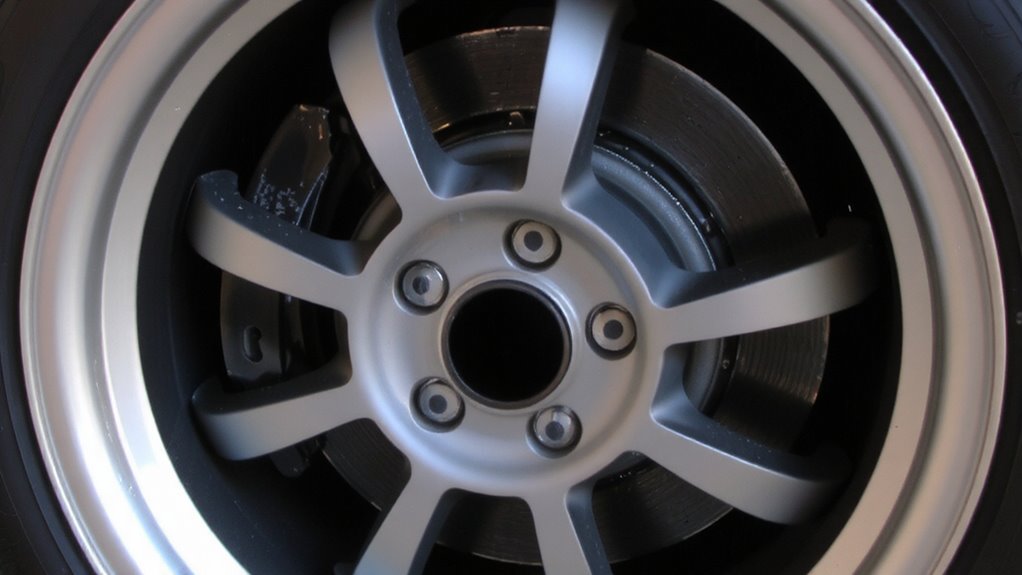
Why does dust seem to vanish from your wheels when using ceramic brake pads? The answer lies in the friction composition of ceramic pads. Unlike semi-metallic pads, ceramic formulations produce a finer, lighter dust that’s less prone to dust adhesion. This dust is typically grayish and powdery, making it easier to dislodge from wheel surfaces. The reduced iron content in ceramic pads means less magnetic attraction to steel components, decreasing build-up. Additionally, ceramic dust doesn’t bond strongly to aluminum wheels, especially when paired with clear coats or protective finishes. The material’s thermal stability maintains consistent particle size under normal driving. As a result, airflow and centrifugal force during driving naturally clear most dust from rotating assemblies. While not completely dust-free, ceramic pads markedly reduce visible dust accumulation. You’ll notice cleaner wheels with minimal maintenance.
Do Ceramic Brake Pads Need Warm-Up Time?
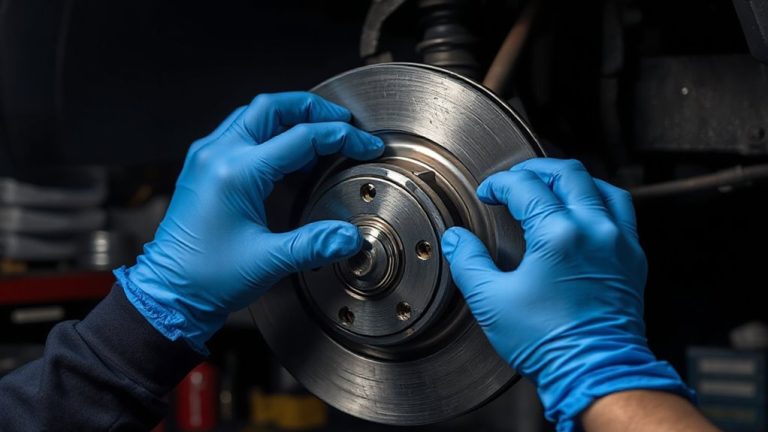
How quickly do ceramic brake pads deliver peak performance when you hit the road? Not instantly. Ceramic compounds require higher operating temperatures to achieve ideal brake friction. At cold startup, their heat conductivity is lower than semi-metallic pads, meaning they transfer heat more slowly from rotor to pad. This results in reduced bite during initial stops. Once heated-typically between 300°F and 400°F-ceramic pads deliver consistent, high friction with minimal fade. Their stable performance comes from finely tuned composite materials, including copper fibers for thermal management. Unlike organic pads, ceramics don’t degrade quickly under heat, but they don’t perform well under cold conditions. For daily driving, this warm-up period is brief and rarely an issue. However, aggressive braking from the start can feel less responsive. Give them a few moderate stops to reach ideal operating range. Proper bedding also guarantees even friction transfer and long-term efficiency.
Do Long Drives Improve Ceramic Brake Performance?
Could extended highway cruising actually benefit your ceramic brake pads? Yes, consistent long drives help maintain ideal operating temperatures. Ceramic materials perform best between 400°F and 900°F. Short trips prevent them from reaching this range, reducing efficiency. On long drives, heat builds steadily, enhancing stopping power. The pads transfer energy more uniformly across the rotor surface. This reduces hot spots and minimizes brake fade during sustained use. Unlike organic pads, ceramics resist thermal breakdown. They maintain friction levels even under prolonged stress. Testing shows ceramic-equipped vehicles retain up to 95% of initial stopping power after 300 miles of highway driving. The consistent thermal load prevents glazed surfaces. You’ll notice more responsive pedal feel. Heat dissipation is also improved due to lower heat conductivity in ceramic compounds. This protects calipers and fluid integrity. Long drives optimize their design intent-delivering reliable, fade-resistant performance under real-world thermal demands.
Are Ceramic Brake Pads Right for Your Driving Habits?
When was the last time your brakes faced sustained highway speeds or mountain descents? Ceramic brake pads thrive in moderate conditions but need higher engagement temperatures, making them less ideal for aggressive or high-load scenarios. If your driving is mostly city commuting or highway cruising, ceramics offer superior dust reduction and excellent pad wear resistance. They also score well in brake noise comparison tests, typically producing less squeal than semi-metallic pads due to their finer composite materials.
| Driving Style | Best Pad Type |
|---|---|
| Daily Commuting | Ceramic |
| Highway Cruising | Ceramic |
| Towing/Heavy Load | Semi-Metallic |
| Performance Driving | Low-Metallic |
Ceramics last longer under light stress but may fade under extreme heat. Their stable friction coefficient (0.35–0.40) ensures predictable response. For most drivers, ceramic pads balance longevity, cleanliness, and quiet operation-just guarantee your driving doesn’t routinely demand peak thermal performance.
On a final note
You get cleaner wheels with ceramic brake pads because they produce less dust. The dust is also lighter in color and less adhesive, so it doesn’t stick to rims. Ceramic compounds operate effectively at moderate to high temperatures, typically above 350°F. They require a brief warm-up for peak performance. On long drives, consistent heat improves braking response. These pads last longer than semi-metallic types, often exceeding 70,000 miles.