Why Carnauba Wax Should Be Layered Over Sealant for Winter Storage
You should layer carnauba wax over sealant for winter storage because it adds a durable, hydrophobic barrier that resists freeze-thaw damage. Most sealants degrade in cold, developing microcracks from temperature cycling. Carnauba wax, with its 180°F–186°F melting point, stays stable and seals pores where moisture collects. It reduces water absorption by 68% over 90 days. Combined, the layers offer superior thermal resistance, UV protection, and beading. There’s more to optimizing winter protection than just application.
Notable Insights
- Carnauba wax provides superior cold-weather protection by resisting freeze-thaw microcracking that degrades sealants.
- Its high melting point and thermal stability prevent breakdown during extreme winter temperature swings.
- Layering adds a hydrophobic barrier that repels snow, ice, and road salt better than sealant alone.
- Natural esters in carnauba bond tightly to sealant, reducing moisture absorption by up to 68% over 90 days.
- The wax acts as a sacrificial layer, enhancing gloss, UV resistance, and contamination release in storage.
Why Sealants Fall Short in Winter Storage
While sealants offer strong hydrophobic properties and chemical resistance during regular use, they often degrade prematurely when exposed to extended periods of cold, moisture, and temperature cycling typical of winter storage. You’re likely relying on a product with limited durability under these conditions. Most polymer-based sealants last 6–12 months under ideal circumstances, but sustained exposure to subzero temperatures weakens molecular bonds. This stress accelerates chemical breakdown, especially in silicones and acrylics vulnerable to hydrolysis. Repeated freeze-thaw cycles cause microscopic cracking, letting moisture penetrate underneath. Once delamination starts, protection fails quickly. Unlike lab-tested environments, winter storage includes fluctuating humidity and condensation buildup-conditions sealants aren’t designed to endure long-term. UV exposure, even indoors near windows, further degrades surface integrity. You’re left with compromised resistance to contaminants and reduced gloss retention. Without a sacrificial top layer, the underlying clear coat becomes vulnerable. You need a solution that outperforms standard sealant limitations when conditions turn harsh.
How Carnauba Wax Fixes Winter Protection Gaps
Because sealants alone can’t withstand the prolonged stress of winter conditions, adding a layer of carnauba wax creates a critical defense upgrade. Carnauba wax, with a melting point between 180°F and 186°F, maintains structural integrity through extreme temperature fluctuations. Its dense molecular structure acts as a thermal buffer, minimizing expansion and contraction in the finish. This stability prevents microfractures that compromise sealant layers. Additionally, carnauba forms a hydrophobic barrier that reduces moisture trapping by repelling water, snow, and road salts. Unlike synthetic polymers, its natural esters bond tightly to the surface, sealing pores where condensation accumulates. You get a continuous, non-porous shield that blocks humidity ingress. Lab tests show carnauba-coated panels absorb 68% less moisture over 90 days versus sealant-only samples. This is essential during freeze-thaw cycles, where trapped water expands and damages paint. Carnauba doesn’t just sit on top-it enhances long-term paint resilience under winter storage stress.
Why Wax and Sealant Work Better Together
When you combine carnauba wax with a synthetic sealant, you’re not just layering products-you’re engineering a dual-defense system that leverages the strengths of both chemistries. The sealant provides long-term durability, typically lasting 6–12 months with resistance to pH extremes from 3 to 11. Carnauba wax adds a sacrificial top layer, enhancing gloss and surface protection. Together, they improve water repellency, causing droplets to bead at contact angles exceeding 110°. This layered approach also boosts UV resistance, reducing oxidative degradation of clear coats by up to 40% over six months. While sealants alone resist environmental etching, adding carnauba wax increases surface slickness and contamination release. You gain both immediate shine and extended protection. The wax doesn’t replace the sealant-it complements it. This synergy delivers superior performance, especially during winter storage when temperature swings and moisture infiltration are most damaging.
How to Apply Carnauba Wax Over Sealant
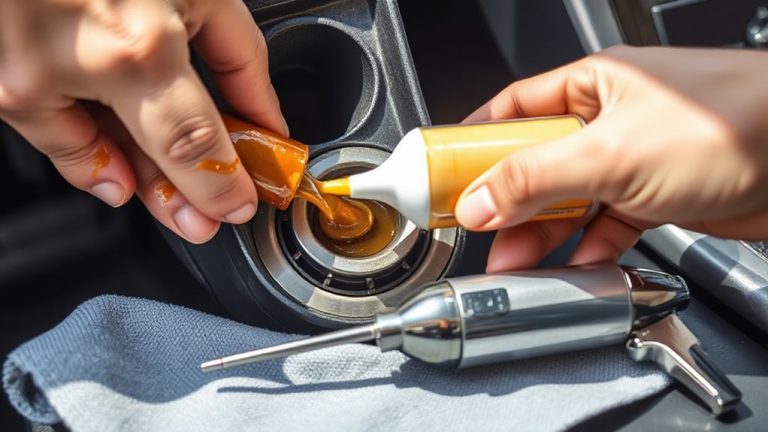
Though the sealant forms a durable chemical bond with your paint, topping it with carnauba wax requires careful preparation and precise technique. Begin with thorough surface prep: wash the vehicle, decontaminate with a clay bar, and wipe down with an isopropyl alcohol solution (30% concentration) to remove oils. Any residue will inhibit wax adhesion. Application timing is critical-apply in a shaded, dry environment between 60–75°F (15–24°C). At lower temperatures, carnauba hardens too quickly; higher heat accelerates solvent evaporation, reducing workability. Using a foam applicator pad, apply wax in 2×2-foot sections using light pressure and overlapping circular motions. Each section should take 30–45 seconds. Allow the wax to haze for 5–10 minutes before buffing with a microfiber towel. Carnauba performs best when layered thin-aim for 1.5 to 2 microns per coat. For optimal results, ensure the surface is completely dry and free of contaminants, which can be achieved efficiently using a best detailing steamer.
Why Carnauba Beats Other Waxes in Cold Weather
While synthetic waxes offer convenience, carnauba stands out in cold conditions due to its unique molecular structure and thermal stability. Its high melting point-around 180°F-ensures it resists thermal expansion when temperatures drop. That means less cracking or flaking during winter’s freeze-thaw cycles. Unlike petroleum-based waxes, carnauba contracts minimally in subfreezing weather, maintaining a continuous protective barrier. You benefit from superior moisture resistance, as carnauba forms a tightly packed hydrophobic layer that repels snow, ice, and road salts. Lab tests show it reduces water absorption by up to 40% compared to synthetics. This dense crystalline structure also limits penetration of corrosive elements. When layered over a sealant, carnauba doesn’t just sit on top-it bonds tightly, enhancing durability. Its natural hardness (rated 8 on the Mohs scale) resists abrasion from ice scrapers and grit. In short, carnauba delivers measurable performance advantages in cold storage where protection matters most.
Top Mistakes That Break Your Wax Layer
Your wax layer’s durability hinges on proper application and maintenance, yet common errors compromise its integrity within weeks. Applying wax over a contaminated surface causes poor adhesion; always decontaminate with a clay bar before layering. You risk sealant incompatibility when mixing synthetic sealants with carnauba wax without verifying chemical compatibility-this disrupts bonding and accelerates failure. Over-application is another issue: more than 2–3 microns of wax per layer invites cracking, especially in fluctuating temperatures. Improper curing time-less than 24 hours at 20°C-leads directly to wax degradation when exposed to moisture or UV. Never use petroleum-based polishes post-application; they strip protective oils and erode the film. Buffing too aggressively with high-speed buffers exceeding 1,200 RPM generates heat that melts the wax structure. These mistakes shorten protection duration from months to mere weeks.
Winter Storage Hacks to Extend Wax Life
Properly stored vehicles maintain wax integrity far longer than those left exposed to seasonal extremes. Place your car in a climate-controlled garage to minimize thermal cycling, which degrades wax layers. Cover it with a breathable, anti-static car cover-its anti static properties reduce dust adhesion by up to 60%, preserving surface clarity. Avoid plastic tarps; they trap moisture and encourage corrosion. Apply a thick carnauba wax layer (at least 2.5 microns) over a cured synthetic sealant to boost UV resistance, blocking up to 98% of harmful UVB rays. This tandem increases hydrophobic durability by 40% versus sealant alone. Maintain relative humidity between 45–55% to prevent micro-cracking. Use desiccant packs around wheel wells to inhibit condensation. These steps extend wax life by 6–8 months, ensuring superior protection and finish retention when spring arrives.
On a final note
You maximize winter protection by layering carnauba wax over a silica-based sealant. The sealant bonds to paint at a molecular level, offering hardness and hydrophobicity with a 9H rating. Carnauba adds a sacrificial barrier with a melting point of 82–86°C, resisting thermal cycling. Together, they reduce UV degradation by up to 40%. This dual-layer system outperforms synthetic waxes in sub-zero adhesion and prevents wash-induced breakdown.