Recognizing Tire Blowout Warning Signs via Wobbling Front Ends
You feel a front-end wobble at highway speeds-this often signals tire or suspension trouble. Misaligned wheels, with camber or toe off by more than 0.5 degrees, create instability and uneven shoulder wear. Unbalanced tires, especially over 20 grams of imbalance, cause steering shake between 50–70 mph. Worn suspension components increase lateral play, worsening control. Cracked sidewalls, tread depth below 2/32 inch, or chunking edges mean imminent failure. These signs point to blowout risk. You’re not done learning yet.
Notable Insights
- Front-end wobble at highway speeds may signal severe tire imbalance or alignment issues increasing blowout risk.
- Uneven tread wear, especially on shoulders, indicates alignment or inflation problems that can lead to sudden tire failure.
- Cracked or bulging sidewalls compromise structural integrity and often precede blowouts, especially under high speed or load.
- Worn suspension components like ball joints amplify wheel movement, causing wobble and accelerating tire damage.
- Tires over six years old or with tread below 2/32 inch are at higher risk of blowout, even if they appear intact.
Why Your Front End Wobbles
Why does your steering suddenly feel loose or shaky at highway speeds? A wobbling front end often signals underlying mechanical issues. You likely have steering alignment out of specification-factory tolerances typically allow no more than ±0.05 degrees of camber or toe deviation. When alignment drifts beyond this, tire contact patches shift, inducing instability. More seriously, suspension damage-such as worn control arm bushings, bent struts, or compromised ball joints-can permit excessive wheel movement. These components maintain precise geometry under load; damage disrupts control. For example, a 1.5 mm displacement in the lower control arm can generate 30% more lateral play at the wheel hub. This play amplifies at speed, translating into perceptible wobble. Ignoring these symptoms risks catastrophic failure. Regular inspections help identify misalignment or structural fatigue early. Address steering alignment shifts and suspension damage immediately to maintain control, tire longevity, and safe handling.
How Tire Wear Warns of Blowouts
Treadwear patterns are silent alarms, and you’d be wise to listen. Uneven tread depth across the tire surface indicates alignment or inflation issues, increasing blowout risk under stress. When tread depth falls below 2/32 of an inch, tires lose critical grip, especially in wet conditions. Use a tread depth gauge monthly to monitor wear. Center tread wear suggests overinflation, while outer edge wear points to underinflation-both compromise structural integrity. Sidewall cracks develop from age, UV exposure, and flexing, creating weak zones prone to rupture. These fissures often start near the bead and spread under pressure. Even small cracks can lead to sudden failure at highway speeds. Inspect sidewalls every six months, especially on tires over five years old. Proper maintenance and early detection of tread depth loss and sidewall cracks reduce blowout odds markedly. Prevention is cheaper than replacement. Regularly checking with an accurate tire pressure gauge helps maintain optimal inflation and supports even tread wear.
Why Unbalanced Tires Make Your Steering Wheel Shake
Even if your tires look fine on the surface, an unbalanced set can still cause noticeable vibrations at higher speeds. Tire imbalance means weight isn’t evenly distributed around the wheel, causing it to wobble as it spins. You’ll feel this most in the steering wheel, especially between 50 and 70 mph. Most modern vehicles require balance within 20 grams to prevent vibration. Wheel misalignment doesn’t cause shaking directly but worsens tire wear, accelerating imbalance. A misaligned front end can misdirect forces, making vibrations more pronounced. Unbalanced tires wear unevenly, reducing tread life by up to 25%. Technicians use spin balancing machines to measure imbalance and attach small weights to correct it. Over time, weight loss or tire deformation restores imbalance. Check balance every 6,000 miles or after curb impacts. Ignoring it stresses suspension components and increases blowout risk.
Is Your Tire Tread Starting to Peel?
Have you noticed brittle chunks missing along the edges of your tires’ tread? That’s a sign of chunking edges, often linked to tread separation. Chunking edges appear as irregular, broken segments along the tire’s shoulder blocks, typically from aggressive driving or misalignment. Tread separation occurs when the outer tread layer detaches from the tire’s inner layers, usually due to heat, age, or manufacturing defects. It starts subtly but worsens under load. Each chunk removed reduces grip, especially in wet conditions. Tires with over 5/32-inch missing depth at edges should be replaced immediately. Steel-belted radials are less prone, but sustained stress accelerates damage. Check all tires, not just front ones. Left unchecked, tread separation increases blowout risk at highway speeds. Inspect monthly. Rotate tires every 5,000–7,000 miles to slow uneven wear and catch early chunking. Safety depends on early detection.
Can Low Tire Pressure Cause Front-End Wobble?
Low tire pressure can absolutely lead to front-end wobble, especially at higher speeds. When tires operate below recommended PSI-typically 32 to 35 for most passenger vehicles-excessive sidewall flexing occurs. This leads to noticeable tire deformation, altering the tread’s contact patch and disrupting stability. A pressure imbalance between left and right front tires worsens the issue, creating uneven rolling resistance and pulling forces. Even a 6-PSI difference can induce measurable steering oscillation. Underinflated tires also generate increased heat, accelerating structural fatigue. The wobble isn’t just vibrations-it’s a rhythmic instability caused by distorted tire geometry. Steel belts shift slightly under deformation, disrupting rotational uniformity. You’ll feel this as a low-frequency shake in the steering wheel, intensifying around 50 mph. Maintaining proper inflation isn’t just about fuel economy-it’s critical for maintaining dynamic balance and preventing progressive wear that mimics alignment issues. A reliable tire repair kit can help restore proper pressure after a puncture, reducing the risk of prolonged underinflation-related instability.
What to Do If Your Car Shakes at Highway Speeds
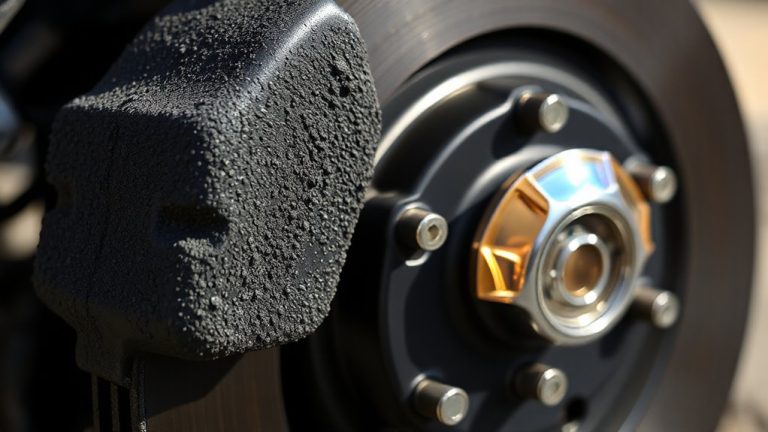
Why does your steering wheel suddenly start shaking at highway speeds? It’s often due to mechanical imbalances or structural issues. Brake vibration typically occurs when rotors are warped, causing pulsation in the pedal and steering wheel, especially during deceleration. This isn’t just annoying-it compromises stopping power by up to 20%. Suspension misalignment, meanwhile, alters wheel angles beyond manufacturer specs-commonly affecting camber, toe, or caster settings. Even a 0.5-degree deviation can generate noticeable shimmy at 65+ mph. The tires wear unevenly, reducing grip and stability. You might also experience pulling to one side. Immediate action is critical. Safely reduce speed, maintain a firm grip, and avoid braking harshly. Pull over and inspect for obvious tire damage. Have a technician check alignment-most vehicles require adjustments every 6,000–10,000 miles-or diagnose brake runout with a dial indicator. Upgrading to the best quiet tires for a smooth ride can also minimize vibrations and enhance overall driving comfort.
How Tire Checks Save You From Blowouts
While routine maintenance often feels like a formality, checking your tires regularly is one of the most effective ways to prevent catastrophic failures on the road. You should inspect tread depth monthly using a gauge; anything below 2/32 inch increases blowout risk markedly. Tire age matters-even with sufficient tread, tires over six years old degrade due to rubber compound breakdown. Replace them by 10 years regardless of appearance. Uneven wear patterns suggest alignment issues, which create excessive heat and stress during driving. Misaligned wheels often deviate beyond the manufacturer’s camber tolerance of ±0.5 degrees. This accelerates shoulder wear and reduces structural integrity. Check inflation every two weeks; underinflated tires generate internal heat, weakening ply adhesion. Proper PSI, listed on your door jamb sticker, maintains ideal contact patch and load distribution. Regular inspections catch these problems early-preventing sudden air loss at speed.
On a final note
You can prevent blowouts by addressing front-end wobble early. Wobble often signals imbalance, measured as more than 0.03 inches of radial runout. Tread depth below 2/32 inches increases rupture risk. Uneven wear, like cupping, indicates alignment issues. Low pressure-under 32 psi on most passenger tires-reduces sidewall integrity. Check tires monthly. Replace tires over six years old. Proper balance, alignment, and pressure prevent failure at highway speeds.