Upgrading to Stainless Braided Fuel Lines for Safety and Durability
You should upgrade to stainless braided fuel lines because rubber hoses degrade within 5–7 years, losing burst strength from 300 psi to under 150 psi. These lines feature a PTFE inner liner and stainless braid, resisting up to 2,000–3,500 psi. They withstand fuel, heat, and abrasion while containing leaks if the inner liner fails. Use AN fittings at 15–20 ft-lbs torque for secure connections. There’s more to contemplate about proper installation and material selection.
Notable Insights
- Stainless braided fuel lines resist bursting up to 2,000 psi, greatly improving safety over aging rubber lines.
- The stainless steel braid protects against abrasion and contains leaks if the inner liner fails.
- Upgraded lines resist degradation from ethanol, ozone, and extreme temperatures up to 450°F.
- PTFE-lined braided hoses reduce fuel permeation and maintain consistent flow under high pressure.
- Proper installation with AN fittings and correct torque ensures leak-free, long-term performance.
Why Rubber Fuel Lines Fail Over Time
While rubber fuel lines may seem like a reliable choice at first, they degrade over time due to exposure to fuel, heat, and environmental factors. You’re likely to notice cracks or soft spots after 5–7 years, even with minimal use. This deterioration stems from material fatigue caused by constant pressure cycles and vibration. Rubber expands and contracts with temperature swings, weakening its structure. Chemical degradation also occurs as gasoline, ethanol, and additives break down the rubber’s polymers. Over time, oxygen and ozone attack the material, accelerating brittleness. Standard rubber lines have a burst pressure of around 300 psi but can drop below 150 psi as they age. Once compromised, leaks become a serious risk. You can’t always see internal swelling, making failure unpredictable. These lines simply aren’t designed for long-term reliability in high-stress environments.
How Stainless Braided Lines Improve Safety
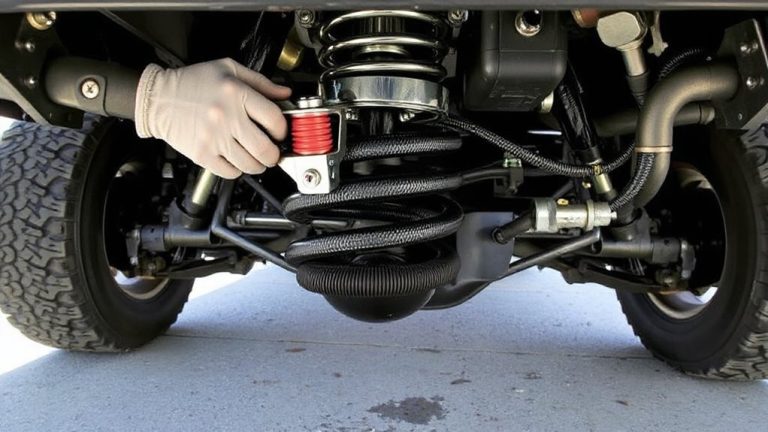
Stainless braided fuel lines offer a substantial upgrade in safety over traditional rubber hoses. Their layered construction provides superior burst resistance, typically withstanding pressures up to 2,000 psi or more, compared to rubber hoses that often fail at 500 psi. The inner Teflon or synthetic liner contains the fuel, while the outer stainless steel braid acts as a protective shell. This braided layer enhances fire protection by shielding the inner tube from abrasion, road debris, and high heat. Even if the inner liner weakens, the braid often contains leaks, preventing sudden fuel spills. Unlike rubber, stainless steel won’t degrade from oil, ozone, or temperature swings from -65°F to 450°F. This durability reduces the risk of underhood fires. You substantially lower fire hazards and improve burst resistance, making stainless braided lines a reliable choice for safe, long-term performance.
Top Benefits of Upgrading to Stainless Braided Fuel Lines
When it comes to fuel system upgrades, switching to braided stainless steel lines delivers measurable performance gains and long-term reliability. You benefit from superior fire resistance compared to rubber hoses, which can degrade and ignite under high heat. The outer stainless braid acts as a thermal shield, reducing combustion risk. These lines also offer excellent pressure tolerance, typically handling 2,000 to 3,500 psi, far exceeding the 500–700 psi limit of standard rubber lines. That means they won’t swell or burst during high-demand situations like aggressive acceleration or towing. The PTFE inner liner maintains minimal fuel permeation and consistent flow. Unlike rubber, they resist cracking, abrasion, and ozone damage. You’ll experience less maintenance and fewer leaks over time. Their compact design saves space in tight engine bays. Upgrading gives you a safer, more durable fuel system built for real-world performance demands.
Choosing a Quality Stainless Braided Fuel Line Kit
If you’re upgrading your fuel system, picking the right stainless braided fuel line kit matters just as much as the installation. Quality kits guarantee safety, longevity, and peak performance. Always verify material compatibility with your fuel type-especially ethanol blends or E85. Stainless over PTFE (Teflon) liners resist degradation and offer superior chemical resistance. Check pressure ratings closely; most performance systems demand at least 500 psi, with high-horsepower setups needing 750 psi or more.
| Feature | Standard Rubber Line | Stainless Braided Kit |
|---|---|---|
| Pressure Rating | ~100 psi | 500–1,000 psi |
| Material Compatibility | Limited (degrades with alcohol) | Excellent (handles ethanol, methanol) |
| Lifespan | 3–5 years | 10+ years |
Pressure ratings and material compatibility directly impact reliability. Choose a kit with AN fittings for secure, leak-free connections and precise sizing.
How to Replace Fuel Lines Without Leaks
Though replacing fuel lines may seem straightforward, doing it correctly prevents dangerous leaks and guarantees long-term reliability. You must use proper clamping techniques-stainless steel AN fittings with seamless ferrules guarantee a leak-proof seal under high pressure. Never reuse old clamps; they fatigue and compromise integrity. Position clamps within 1/8 inch of the hose end to prevent blowoff. Line routing precision is critical: maintain a minimum bend radius of 2.5 inches to avoid kinking, which disrupts fuel flow and weakens the braid. Secure lines with nylon ties every 18 inches to reduce vibration fatigue. Align paths away from sharp edges, heat sources, and moving parts. Double-check all connections with a pressure test at 65 psi before engine startup. Clean cuts, square ends, and smooth connections prevent micro-leaks. These steps guarantee safety, durability, and peak performance in your fuel system.
Common Mistakes When Installing Stainless Braided Lines
More than a few DIYers and even seasoned mechanics make avoidable errors when installing stainless braided fuel lines-errors that compromise safety and performance. You must avoid improper torque during installation. Overtightening can distort metal fittings, damaging sealing surfaces and leading to leaks under high pressure. Under-tightening risks complete fitting separation, especially at 50+ psi fuel system pressures. Use a torque wrench set to manufacturer specs-typically 15–20 ft-lbs for AN-6 fittings. Mismatched fittings are another critical mistake. Never mix NPT with AN (Army-Navy) standards; their thread angles and sealing methods differ, creating immediate leak paths. Confirm compatibility: AN-6, AN-8, or -6, -8 sizing must align throughout the system. Use Teflon tape only on NPT connections-not on AN flares. Double-flare or ISO bubble flare ends seal via metal-to-metal contact, not lubricants. Align lines straight before tightening to prevent stress.
On a final note
You’ve upgraded for a reason. Stainless braided fuel lines resist abrasion, heat, and pressure far better than rubber. They typically handle 2,000–3,500 psi, versus rubber’s 300–500 psi limit. The PTFE inner liner prevents fuel permeation; the 304 or 316 stainless sleeve blocks cuts. This isn’t just durability-it’s fail-safe engineering. Proper installation with AN fittings guarantees zero leaks. Your engine now runs safer, longer, cleaner.