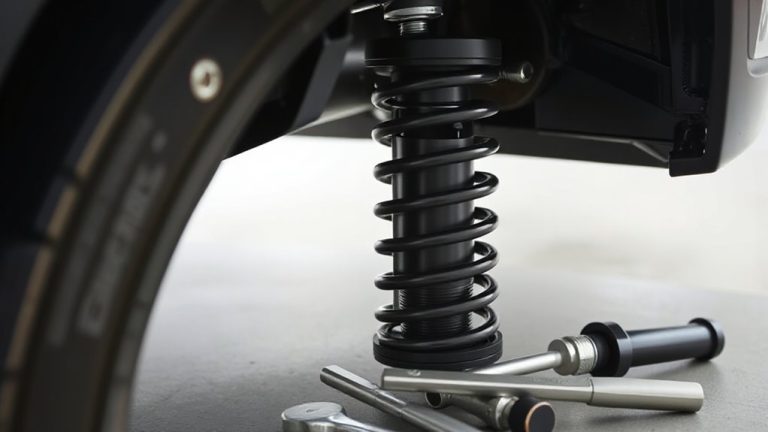
Impact of Added Mass on Suspension Behavior in Lightweight Sports Cars
You feel every pound in a lightweight sports car because added mass disrupts finely tuned suspension dynamics. Vehicles under 2,800 lbs rely on precise spring, damper, and anti-roll bar synchronization. Extra weight increases body roll, brake dive, and inertia, shifting the center of gravity. Sprung mass overloads springs and shocks, causing delayed response and overheating. Even 50 lbs degrades cornering balance-understanding where weight comes from reveals how to keep performance sharp.
Notable Insights
- Lightweight sports cars are highly sensitive to added mass, disrupting suspension tuning and dynamic balance.
- Extra weight increases sprung mass, causing spring rate mismatch and delayed suspension response.
- Higher unsprung mass reduces tire contact consistency, diminishing traction and ride compliance.
- Added load amplifies body roll, brake dive, and roll inertia, impairing cornering and stability.
- Suspension dampers overheat faster under increased load, reducing bump control and prolonging recovery.
Why Lightweight Cars Feel Every Extra Pound
Every pound counts when you’re driving a lightweight sports car-sometimes more than you might think. These vehicles are engineered with precise weight sensitivity, where even minor mass changes affect dynamics. A curb weight under 2,800 lbs means added load shifts the center of gravity, altering turn-in response and balance. You’ll notice it in how the nose dips during braking or how the rear lifts under acceleration. Ride harmony-the synchronization between springs, dampers, and anti-roll bars-depends on maintaining design-specific load ranges. Adding 50 lbs in passengers or cargo disrupts this balance, increasing inertia forces during cornering. The suspension system, tuned for minimal unsprung mass, works harder to maintain contact and control. Weight sensitivity isn’t just about performance loss; it compromises feedback, predictability, and handling precision. Manufacturers design these cars assuming tight mass budgets-exceed them, and ride harmony suffers. You feel every deviation.
How Added Weight Disrupts Suspension Response
Think of your car’s suspension as a tightly choreographed dance-each spring, damper, and control arm moving in sync to keep tires planted and the chassis stable. When you add weight, you disrupt this balance. The springs now face a higher sprung mass, increasing the effective spring rate mismatch. They compress more under load but rebound slower, delaying response. This throws off suspension timing, reducing wheel control. Damping inefficiency follows-shock absorbers struggle to manage excess movement, especially over bumps. They overheat and lose stroke too fast, diminishing control. Your car rolls more, dives harder during braking, and hesitates in shifts. Tires lose contact, hurting grip and feedback. The system was tuned for a specific mass; added weight alters natural frequencies. Result? Precision fades. The suspension can’t react quickly enough. Every input becomes sluggish. You’re no longer driving on rails-just fighting physics.
Why Unsprung Mass Hurts Handling and Grip
While engineers can tune springs and dampers to handle extra weight, unsprung mass strikes at the heart of wheel control-because every pound not held by the suspension directly undermines responsiveness. Increased unsprung mass reduces your tire’s ability to maintain consistent contact, worsening grip during cornering and braking. Tire deformation becomes unpredictable as heavy components delay wheel reaction to surface changes. Brake flex rises with heavier calipers and wheels, reducing stopping power and feel. Every millisecond of suspension lag cuts into available traction.
| Component | Light Setup (lbs) | Heavy Setup (lbs) |
|---|---|---|
| Wheel + Tire | 38 | 52 |
| Brake Assembly | 14 | 22 |
| Knuckle | 9 | 12 |
| Total Unsprung | 61 | 86 |
Lower unsprung mass means quicker responses, tighter control, and better handling-critical when every fraction of a second counts on track.
Where Performance Cars Gain Unwanted Weight
You’ve seen how unsprung mass limits grip and responsiveness, but even high-performance cars pick up weight in places that aren’t so obvious. Manufacturers add sound-deadening materials, electric motors, and complex HVAC systems, often increasing curb weight by 150–300 pounds. Aerodynamic drag is reduced with larger front splitters and rear wings, yet these components themselves add mass-carbon fiber helps but rarely offsets total gains. Interior luxury features like leather upholstery, infotainment screens, and heated seats improve comfort but contribute markedly to mass, especially higher up in the chassis, raising the center of gravity. Structural reinforcements for safety also add pounds. Even high-performance brakes and driveshafts aren’t weightless-larger calipers and heavier differentials increase rotating mass. Each addition, while beneficial in isolation, cumulatively degrades suspension efficiency, slowing response and increasing body roll. Performance suffers not just from what you see-but what you don’t.
How to Modify Without Compromising Dynamics
When done right, modifications enhance performance without sacrificing balance. You must prioritize weight distribution and component efficiency. Upgrading to performance-oriented tire compounds improves grip and responsiveness; look for DOT-approved rubber with higher silica content-18% to 22%-for ideal dry and wet traction. These compounds maintain elasticity at elevated temperatures, reducing roll resistance by up to 15%. Pair them with lightweight alloys to minimize unsprung mass. For stopping power, use high-carbon brake materials with ceramic composites; they withstand temperatures over 650°C and reduce brake fade by 40% compared to standard cast iron. Their reduced dust output keeps wheels cleaner. Always match brake upgrades to thermal load demands-track use requires at least 34mm front rotors with dual-piston calipers. Every change must align with the vehicle’s dynamic tuning. You aren’t just adding parts-you’re refining harmony.
On a final note
You feel every added pound because mass directly increases inertia. More weight demands higher spring rates and damping forces to maintain control. Unsprung mass-like heavy wheels or brakes-reduces tire compliance, cutting grip on uneven surfaces. Each extra kilogram amplifies forces transmitted through the suspension. Lightweight cars lose precision when modifications ignore mass distribution. For every 10 kg added, lap times increase by up to 0.3 seconds due to slower transient response.