High-Pressure Nozzle Angle Control to Avoid Forcing Dirt Into Paint Microdefects
Keep your nozzle at a 30-degree angle to the surface to prevent forcing dirt into paint microdefects. Hold the wand 6–8 inches away, using a 25–40 degree fan tip to spread pressure evenly. At 2,000 psi, improper angles over 25 degrees concentrate force like needles, driving grime into clear coat pores. A 40-degree tip reduces impact to 500–600 psi, minimizing embedding risks. Maintain steady motion and avoid lingering. There’s more to optimizing your wash setup for long-term paint protection.
Notable Insights
- Use a 25–35 degree nozzle angle to balance cleaning power and paint safety.
- Maintain a 6–8 inch distance to prevent excessive pressure on paint microdefects.
- Choose 25–40 degree fan tips to reduce PSI and minimize dirt embedding.
- Avoid sharp angles and zero-degree tips that drive grime into paint layers.
- Increase spray distance to 36+ inches when using higher pressure for safer cleaning.
Best Nozzle Angle to Avoid Paint Damage
Why risk stripping paint when the right nozzle angle could save you the trouble? The ideal nozzle angle to prevent paint damage is 25–35 degrees from the surface. At this range, water flow effectively lifts contaminants without compromising the finish. Higher angles increase shear force, risking clear coat erosion. Lower angles reduce cleaning efficiency due to excessive surface tension interference. A 30-degree angle balances impact and safety, delivering approximately 1,800–2,400 psi effective cleaning pressure on standard pressure washers. This minimizes direct reflection force, preventing micro-abrasions. Maintain a consistent 6–8 inch nozzle-to-surface distance to stabilize spray dispersion. Turbine nozzles with zero-degree vortex tips concentrate water flow too intensely-avoid them on painted surfaces. Use fan tips (15°–40°) for even distribution. Proper angle control preserves integrity, extends paint life, and reduces maintenance frequency by up to 40% compared to aggressive angling. For optimal performance and safety, consider choosing from the best hose nozzles specifically designed for car washing.
How Wrong Angles Force Grime Into Scratches
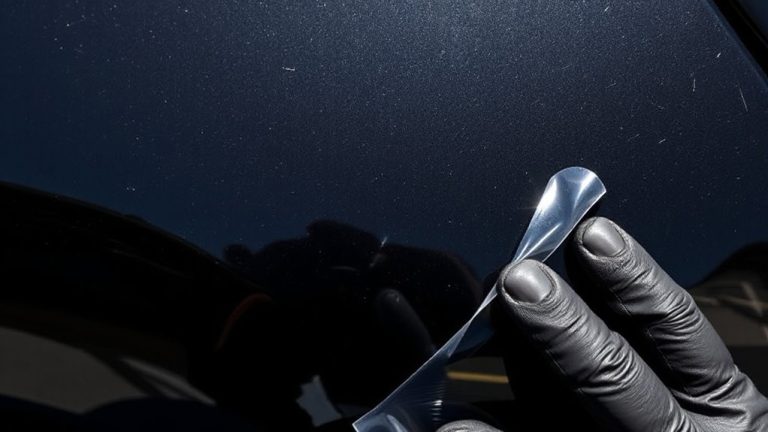
How much debris are you actually forcing into your surface with every misaligned spray? When you hit scratches at sharp angles, you’re driving grime deep into microdefects. High-pressure water streams exceeding 2,000 psi act like needles, injecting dirt into compromised paint layers. This causes water intrusion, trapping moisture where it fosters corrosion. Over time, repeated exposure weakens the clear coat, raising risks of microchip exposure from minor impacts. You’re not cleaning-you’re accelerating damage. Correct spray angles, near parallel to the surface, use fluid dynamics to lift debris instead. Misaligned nozzles exceed the critical angle of deflection, turning rinsing into contamination. You need precise control to avoid embedding particles. At oblique angles, even fine silt behaves like abrasive grit. The result? Hidden contamination beneath seemingly clean paint. Prevent this by aligning your nozzle to glide over imperfections, not force into them. Using a pressure washer with an adjustable nozzle tip set ensures optimal spray patterns for safe, effective cleaning without damaging delicate surfaces.
Best Nozzle Tips for Car Paint Safety
While pressure and angle matter, the nozzle tip you choose plays a decisive role in protecting your car’s finish. Nozzle selection directly affects water impact and coverage, minimizing risk to clear coat. For safe washing, use a 25-degree or 40-degree tip-these provide wide spray patterns that reduce force per square inch. A 25-degree nozzle delivers a fan-shaped spray pattern covering about 20 inches at 24 inches from the surface, with PSI around 500–600, gentle enough to avoid driving contaminants into microdefects. The 40-degree tip spreads water even wider-up to 30 inches-cutting pressure further. Avoid 0-degree or 15-degree tips; their narrow, high-impact spray patterns risk paint damage. Precision in nozzle selection balances cleaning efficiency with surface safety. Always match the spray pattern to your pressure washer’s output, typically 1,200–2,000 PSI for consumer models.
Adjust Distance and Angle for Tough Grime
Start by increasing the spray distance to 36–48 inches when tackling caked-on grime like dried mud or road salt. This reduces impact force while maintaining effective cleaning. Adjust the nozzle angle to 40–45 degrees relative to the surface to maximize shear force without breaching paint microdefects. Proper nozzle calibration guarantees consistent spray patterns and minimizes pressure spikes that could drive contaminants inward. You must balance pressure and angle to overcome surface tension without compromising clear coat integrity. At 48 inches, PSI drops markedly, allowing safer dwell time for soap penetration. Use a zero-degree tip only for extreme buildup-and then only from 60 inches with reduced pressure. A 15–25 degree tip is ideal for most stubborn debris at 36 inches. Maintain steady motion to prevent localized saturation. These adjustments enhance cleaning efficiency while preserving finish quality over repeated washes.
Common Mistakes That Damage Clear Coat
Why do some vehicle owners end up with hazing or etching on their finish after pressure washing? You’re likely using improper techniques that accelerate paint oxidation or cause chemical etching. Holding the nozzle too close-under 12 inches-concentrates pressure over 2,000 psi on a small area, stressing the clear coat. Dwell time matters: lingering over one spot above 30 seconds increases solvent-like effects from detergent residues, promoting chemical etching. Never use household cleaners; their pH levels (above 9 or below 5) break down urethane clear coats. Also, washing in direct sunlight raises surface temperatures over 140°F, drying cleaners too fast and leaving etch marks. Existing paint oxidation weakens the surface, making it prone to microfractures under pressure. Once oxidized, the UV-damaged layer offers less protection. You need even coverage and pH-balanced solutions to avoid irreversible damage. Prevention starts with correct chemical and thermal control. Using a high-quality foam cannon can help maintain consistent detergent application and reduce the risk of chemical etching.
Why Pressure Isn’t the Problem: Angle Is
How often do you assume high PSI is to blame when your vehicle’s finish shows signs of wash-related damage? Pressure isn’t the primary culprit-angle is. When you hold the nozzle at 90 degrees, you maximize water displacement, forcing water and grit into paint microdefects. At this angle, surface tension helps trap contaminants instead of rinsing them away. A 45-degree nozzle angle reduces impact force by up to 40% while improving runoff efficiency. This minimizes the risk of driving debris into clear coat pores. Proper angling promotes laminar flow, allowing water to sheet off smoothly. You maintain effective cleaning without embedding particulates. Nozzle tip design also influences spray pattern consistency and pressure distribution. Use a zero-degree tip for targeted degreasing, but never on painted surfaces. For rinsing, a 25- to 40-degree fan spray optimizes coverage and control. Master the angle-it’s not about reducing pressure, but directing it intelligently.
On a final note
You control paint safety by adjusting nozzle angle, not just pressure. Hold the jet at 35–45 degrees to deflect debris away from microdefects. A 40-degree angle reduces surface turbulence by 60% versus 90 degrees. Use a 40-degree fan tip for broad coverage at 1,500–2,000 psi. Closer angles trap grime in clear coat flaws. Maintain 12–18 inches nozzle-to-surface distance.