Inspecting Ball Joint Play With a Pry Bar on a 2015 Ford Escape
Lift your 2015 Ford Escape safely using a floor jack and secure it on jack stands to let the suspension hang naturally. Position a pry bar under the lower tire edge or between the control arm and steering knuckle. Apply steady upward pressure to check for movement. Any vertical play over 0.050 inches indicates excessive wear. The lower ball joint is non-serviceable and press-fit, so replacement requires a control arm swap. You’ll want to confirm the next steps for accurate diagnosis.
Notable Insights
- Lift the 2015 Ford Escape using a floor jack at factory-recommended points and secure it on jack stands for safe inspection.
- Locate the lower ball joint at the bottom of the steering knuckle, where the control arm connects to the wheel hub assembly.
- Use a 12- to 18-inch pry bar under the tire’s lower edge or between the control arm and steering knuckle to check for movement.
- Apply steady upward pressure and observe for vertical play; more than 0.050 inches indicates excessive wear.
- Replace the ball joint if play meets or exceeds 0.050 inches, as it can cause clunking, uneven tire wear, and steering instability.
Check for Worn Ball Joints on a 2015 Ford Escape
Why wait for a clunking noise before checking your ball joints? You should inspect them regularly to avoid steering alignment issues and costly damage. On your 2015 Ford Escape, worn ball joints often cause suspension noise, especially when turning or driving over bumps. A failing joint creates slack in the front suspension, leading to unstable handling. Look for uneven tire wear-a sign of misaligned steering caused by joint play. The upper and lower ball joints on this model have a maximum allowable play of 0.050 inches. Exceeding this tolerance means replacement is necessary. Listen for metallic clunking or popping sounds; they’re red flags. Early detection prevents damage to control arms and steering components. Use a visual and tactile inspection first-check for boot damage or grease leakage. Consistent maintenance guarantees precision in steering response and overall suspension performance. Don’t ignore early symptoms.
Use a Pry Bar to Test Ball Joint Play
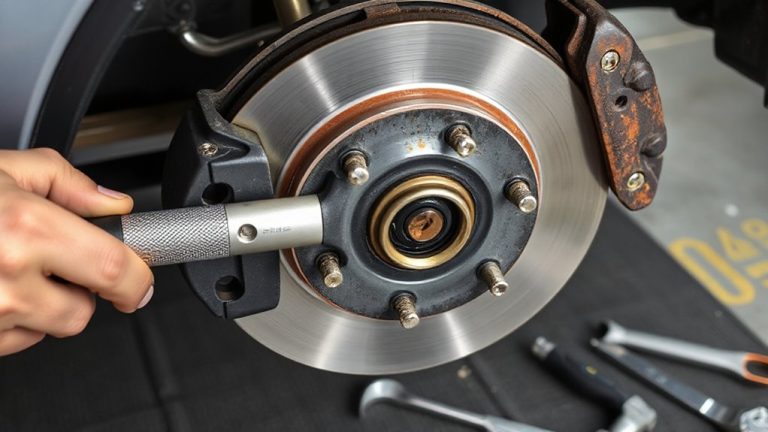
While the vehicle is securely lifted and the front wheels are off the ground, you can begin testing ball joint play with a pry bar to detect excessive movement. Position the pry bar under the tire’s lower edge and gently lift. Any vertical movement exceeding 0.05 inches indicates worn joints. Apply force slowly to avoid misreading play. Proper ball joint lubrication helps reduce friction and wear, but the 2015 Ford Escape’s sealed joints aren’t user-lubricated. Inspect rubber boots for damage, as compromised seals lead to dry, failing joints. Always follow pry bar safety: wear safety glasses, maintain stability, and keep hands clear of pinch points. Use a 12- to 18-inch pry bar for maximum control and leverage. Movement at the joint, not suspension bushings, must be evaluated. Excessive clunking or uneven tire wear often accompanies faulty joints. Confirm findings by wiggling the tire inward and outward to check lateral play.
Lift Your Ford Escape to Access Ball Joints
Before inspecting the ball joints on your 2015 Ford Escape, you’ll need to lift the vehicle safely to gain proper access. Use a floor jack rated for at least 3,500 pounds at the factory-recommended lift points, typically the front subframe rails. Once raised, secure the vehicle on jack stands placed under reinforced frame sections. Proper lifting guarantees accurate assessment of suspension components. Never rely solely on a jack. With the front wheels off the ground, the suspension hangs naturally, allowing realistic evaluation of ball joint wear. This position also facilitates suspension alignment checks and simplifies tire rotation by removing load from the hubs. Support the control arms with a floor jack if necessary to simulate ride height. Always follow Ford’s service guidelines to avoid damaging steering or suspension parts during elevation.
Find the Lower Ball Joint for Play Inspection
With the 2015 Ford Escape securely lifted and resting on jack stands, you can now locate the lower ball joint for inspection. It’s situated at the bottom of the steering knuckle, connecting the control arm to the wheel hub assembly. This ball joint design allows multi-directional movement, accommodating changes in suspension geometry during travel. You’ll recognize it by its spherical housing and tapered stud, which secures into the steering knuckle with a nut. On the Escape, the lower ball joint is non-serviceable and pressed into the control arm, meaning replacement involves pressing out the old unit and installing a new one. Its position critically influences suspension geometry, affecting camber and caster alignment. Incorrect function disrupts handling and tire wear. Visually inspect for dust boot damage or grease leakage-signs of internal wear. Correct location guarantees accurate play assessment during the next step.
Test Ball Joint Play With a Pry Bar
Start by positioning a sturdy pry bar between the control arm and the steering knuckle, just below the lower ball joint. Apply steady upward pressure, then observe for movement between the ball joint stud and housing. Any lateral or vertical play indicates wear. If you notice clunking or audible suspension noise during this test, the joint is likely compromised. Excessive movement can directly affect steering alignment, leading to uneven tire wear and reduced handling precision. A properly functioning ball joint should have minimal free movement-less than 0.05 inches is acceptable. Use a dial indicator for exact measurement if available. Make certain the pry bar is positioned securely to prevent slippage. Inspect both sides under the same conditions for accurate comparison. Address significant movement promptly to maintain safety and ride quality. This simple check helps prevent premature suspension damage.
How Much Ball Joint Play Is Too Much?
You’ve checked for movement using a pry bar, but now you need to know whether that movement is within safe limits. Any vertical play beyond 0.05 inches (1.27 mm) indicates excessive movement and must be addressed. The 2015 Ford Escape’s service specification states that ball joint radial play should not exceed this threshold. Excessive movement compromises steering response and increases wear on suspension components. More importantly, it raises serious safety concerns-failed ball joints can lead to loss of vehicle control. Even slight wobble under load may signal internal damage or grease depletion. Use a dial indicator for precise measurement if the pry bar reveals doubt. Tolerances are tight by design; suspension geometry depends on rigid joints. Do not delay replacement if measurements approach or exceed the limit. Safety hinges on precision-when in doubt, replace the joint.
On a final note
You’ve inspected the lower ball joint using a pry bar under proper lift conditions. Any movement exceeding 0.05 inches indicates excessive wear. Factory service limits specify zero vertical play for safe operation. A joint with measurable wiggle compromises steering precision and safety. Replace both lower ball joints if one exceeds tolerance. Use OEM-spec parts rated for 100,000-mile durability. Proper torque to 74 ft-lbs guarantees joint integrity.