Using Nano-Coatings on Windshields to Repel Water and Road Salt
You get superior visibility with nano-coatings that make your windshield highly hydrophobic. Water beads up and rolls off at speeds as low as 30 mph, thanks to contact angles exceeding 110°. The 1–5 micron coating seals microscopic pores, blocking saltwater and preventing pitting. It withstands -30°C and lasts up to two years. Proper application in dry, moderate conditions guarantees durability. High SiO₂ formulations resist abrasion and UV exposure. Performance fades when beads shrink-indicating it’s time for reapplication. You’ll see how to maximize results next.
Notable Insights
- Nano-coatings create a hydrophobic surface that causes water to bead and roll off windshields at low speeds.
- A contact angle over 110° on treated glass enhances water repellency compared to untreated 40° surfaces.
- The coating acts as a barrier, reducing salt adhesion and preventing pitting and fogging in winter conditions.
- Durable SiO₂-based formulations last up to two years and withstand UV exposure, abrasion, and freeze-thaw cycles.
- Proper application requires clean, dry glass and curing for 24 hours to ensure maximum effectiveness and longevity.
How Nano-Coatings Repel Water and Improve Visibility
When water hits a treated windshield, it beads up and rolls off almost instantly-thanks to the hydrophobic properties of nano-coatings. These ultra-thin layers reduce molecular adhesion between water molecules and the glass surface. Instead of spreading, droplets tighten into spheres due to increased surface tension. The contact angle of water on coated glass exceeds 110°, compared to 40° on untreated glass. This beading effect clears water at speeds as low as 30 mph. Nano-coatings are typically 1–5 microns thick, invisible to the eye, yet durable for up to two years. They’re applied evenly via spray or wipe, curing under ambient conditions. Silica- or fluoropolymer-based formulations create a smooth, non-porous barrier. This minimizes light scattering, maintaining optical clarity. Enhanced visibility during rain means safer driving with less wiper reliance. The coating doesn’t alter refractive index or distort vision. You get consistent performance across temperatures from -30°C to 90°C.
Can Nano-Coatings Protect Against Winter Salt Damage?
Nano-coatings do more than improve visibility in rain-they also guard your windshield against winter salt damage. These ultra-thin layers, typically 100–500 nanometers thick, create a hydrophobic barrier that limits saltwater adhesion. When road salt mixes with moisture, it forms a corrosive solution that can etch glass and degrade wiper performance. The coating’s molecular structure resists ion penetration, enhancing corrosion prevention. You’ll notice less pitting and fogging over time, thanks to improved surface durability. Independent tests show treated windshields retain clarity up to 30% longer in icy, saline conditions. The coating bonds at the microscopic level, filling tiny pores in the glass to prevent salt residue buildup. This protection reduces micro-abrasions during wiper use, preserving optical precision. While not indestructible, nano-coatings markedly slow salt-induced wear. They’re engineered to withstand repeated freeze-thaw cycles, maintaining integrity down to -30°C.
Best Long-Lasting Nano-Coatings for Windshields
Though durability varies across formulations, several nano-coatings stand out for their extended service life and resistance to environmental wear. You’ll want a coating that lasts at least 12 to 24 months under normal conditions. Look for products featuring SiO₂ (silicon dioxide) concentrations above 20%, as they form harder, more resilient layers. Coatings like NanoProtec and RainGuard X1 undergo rigorous durability testing, including car wash simulations and UV exposure cycles, to verify performance. These tests confirm resistance to road salt, thermal cycling, and abrasion from wipers. A well-bonded nano-coating maintains hydrophobic contact angles above 110° even after six months. High cost efficiency emerges over time-fewer reapplications mean lower long-term expenses. Independent lab results show top-tier coatings retain over 85% functionality after 15,000 simulated rain cycles. Choose a formula with easy inspection markers, such as water-break-free surfaces, so you can verify protection without tools.
Apply Your Coating in 5 Simple Steps
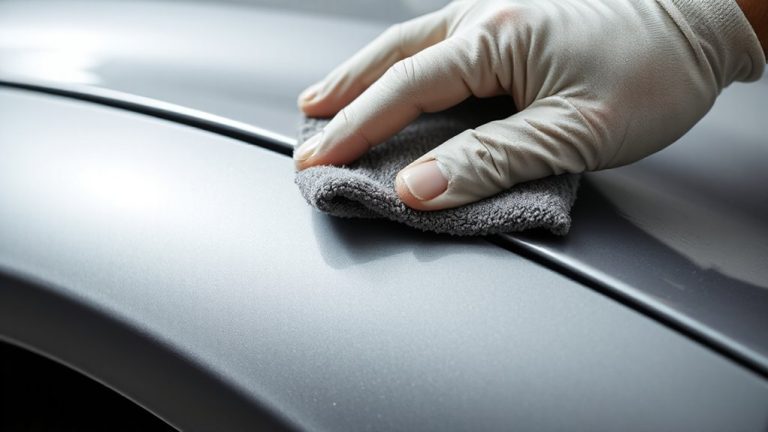
Since proper application determines long-term performance, follow these five steps to guarantee a durable, high-quality bond between the nano-coating and your windshield. First, clean the glass with isopropyl alcohol to remove contaminants. Use lint-free cloths to avoid residue. Second, apply the nano-coating evenly with recommended application tools-typically a microfiber pad or precision applicator-guaranteeing a uniform layer. Third, allow the coating to flash off for 2–3 minutes before buffing lightly with a clean cloth. Fourth, repeat if needed, based on manufacturer thickness specs. Finally, observe the full curing time-usually 24 hours-before exposing the windshield to moisture or road conditions. Avoid touching the surface during this period. Proper technique enhances hydrophobic performance and scratch resistance. Curing time guarantees molecular cross-linking for maximum durability. Follow these steps exactly to achieve maximum clarity, water beading, and salt resistance.
Mistakes That Ruin Nano-Coating Performance
Why do some nano-coatings fail just weeks after application? The leading cause is improper surface cleaning. If oils, waxes, or contaminants remain, the coating can’t bond properly. You must decontaminate the glass with isopropyl alcohol (70% or higher) and wipe thoroughly before application. Skipping this step causes premature coating failure due to weak molecular adhesion. You should also avoid applying in high humidity or extreme temperatures-ideal conditions are 50–77°F (10–25°C) with low moisture. Applying too thick a layer leads to hazing and reduced durability. Use only the recommended amount: roughly 2–3 mL per windshield. Let the coating cure fully-about 12 hours-without exposure to water or debris. Rushing any step drastically cuts performance life. Proper prep guarantees hydrophobic function lasts.
When to Reapply for Maximum Protection
How often should you refresh your nano-coating to maintain peak performance? Reapply every 6 to 12 months for maximum protection. Coating durability typically degrades over time due to friction from wipers and chemical breakdown. Most high-quality nano-coatings last up to 12 months under moderate conditions. But if you frequently drive in harsh weather or on salted roads, environmental exposure accelerates wear. UV radiation, extreme temperatures, and road grime reduce hydrophobic effectiveness. You’ll notice beads becoming smaller and less uniform-a sign it’s time to reapply. For best results, clean the windshield thoroughly before each application. Use isopropyl alcohol to remove oils and residues. Apply in a shaded, dry area. Two thin layers work better than one thick coat. Maintain your coating like you would paint sealant-regularly and precisely. Consistent reapplication guarantees lasting water and salt resistance.
On a final note
You’ve applied the coating correctly when water beads into spheres above 10 mm in diameter and rolls off at inclines below 10 degrees. High-grade silica-based nano-coatings last 12–24 months under normal conditions. They resist abrasion, with hardness ratings up to 9H on the pencil scale. Reapply when beading weakens or sheets turn patchy. Proper maintenance guarantees reliable performance, like a tightly sealed membrane repelling contaminants. Your windshield stays clearer, safer, and structurally protected.