How to Clean Paint Protection Film on Aggressively Contoured Body Panels
Rinse the PPF with low-pressure water under 1,200 psi at a 45-degree angle to lift debris without distorting the film. Use pH-neutral snow foam (6.5–7.5) for 2–3 minutes to break down contaminants. Wipe with an 80/20 polyester-polyamide microfiber towel at 300 gsm, folding it to maintain clean contact. Apply 3–5 pounds of pressure per pass, moving parallel to edges to avoid lifting. Skip abrasive polishes above 2,000 grit, especially on sharp contours. Dry with a clean microfiber and inspect in soft light to catch streaks-further refinement tips follow.
Notable Insights
- Rinse PPF with low-pressure water at a 45-degree angle to safely remove loose contaminants from deep contours.
- Apply pH-neutral snow foam and let it dwell for 2–3 minutes to lift grime without damaging film on curved surfaces.
- Use high-quality microfiber towels (80/20 polyester-polyamide, 300+ gsm) to clean complex shapes without marring.
- Clean one panel at a time with overlapping wipes and light pressure to prevent lifting at bonded edges.
- Avoid abrasive cleaners and high-pressure tools; use PPF-safe, neutral pH products to protect vulnerable contoured zones.
Rinse First to Loosen Caked-On Grime
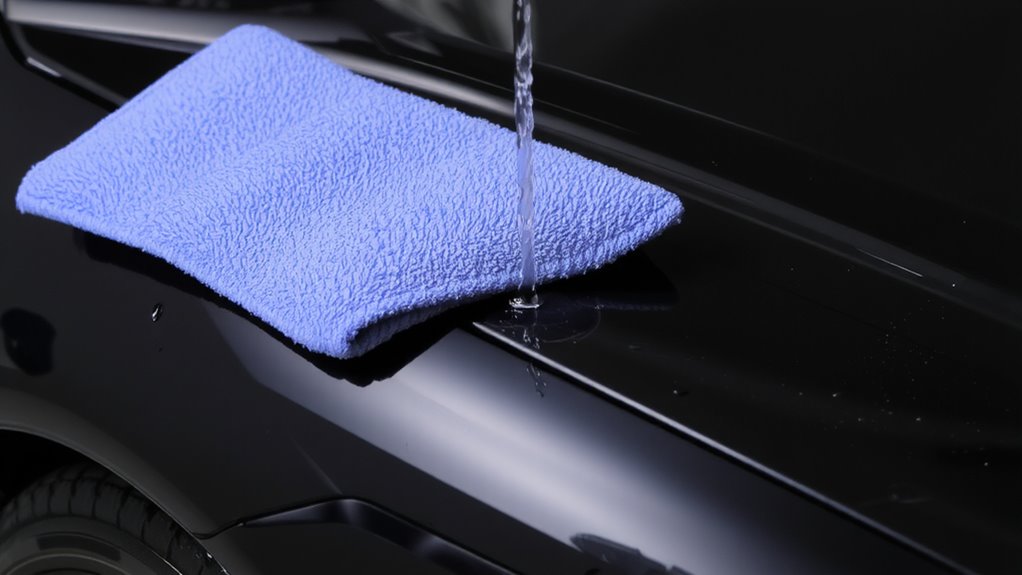
Before applying any soap or scrubbing, it’s critical to rinse the paint protection film (PPF) thoroughly with water to remove loose dirt and debris. This initial step is a foundational pre rinse technique that prevents surface scratching during cleaning. Use low-pressure water (under 1,200 psi) at a 45-degree angle to avoid forcing water underneath the film edges. Apply a dwell time of 2–3 minutes with a pH-neutral snow foam to enhance grime loosening methods. The foam penetrates bonded contaminants, softening tar, road film, and insect residues. For best results, maintain water temperature between 60–80°F to prevent film distortion. Rinsing first guarantees that abrasive particles aren’t dragged across the surface. This process improves cleaning efficiency and preserves the PPF’s self-healing layer. Consistent pre rinse techniques extend film life and maintain optical clarity.
Use Microfiber Towels to Clean PPF on Curves
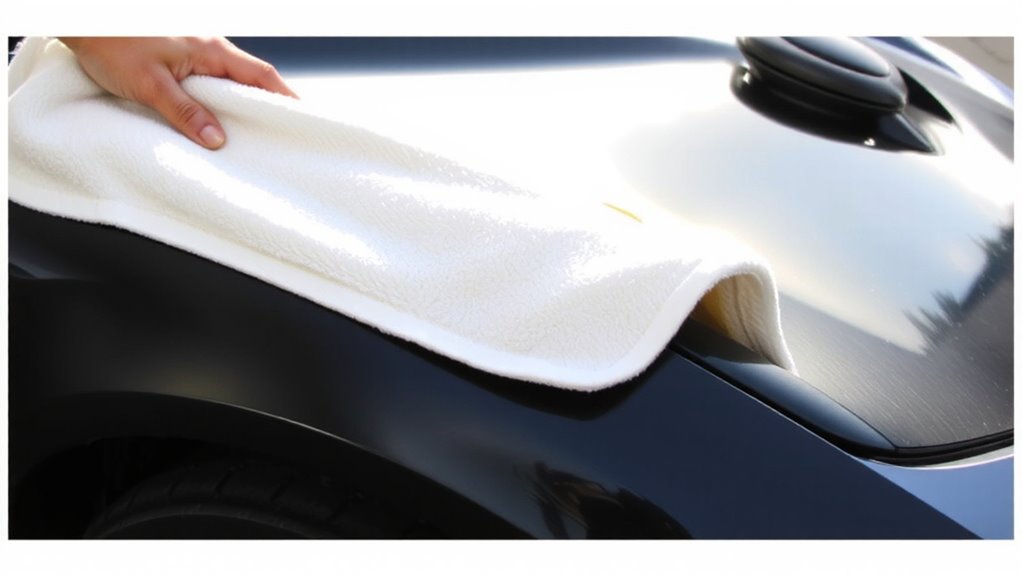
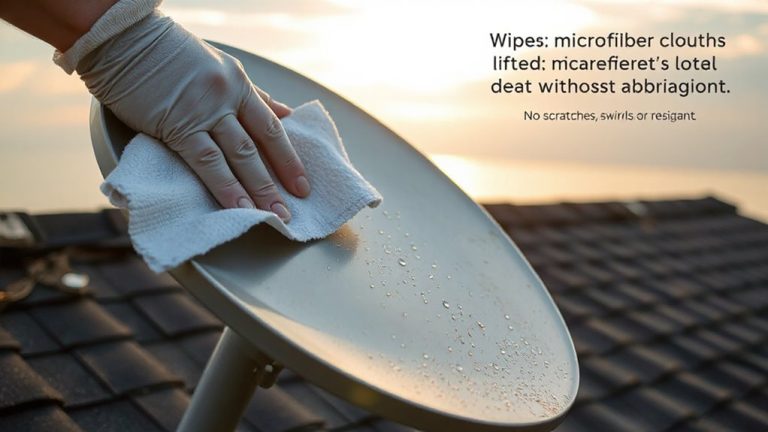
A microfiber towel is your best tool for cleaning paint protection film on curved surfaces, where contaminants gather and standard cloths struggle to reach. Its ultra-soft, densely woven fibers conform precisely to complex contours, ensuring consistent cleaning without abrasion. Use a towel with at least 300 grams per square meter (gsm) density and an 80/20 polyester-polyamide blend for ideal flexibility and absorbency. This composition supports edge preservation by preventing fraying and lifting at film boundaries. Gentle wiping motions maintain contour integrity, avoiding stress on film seams or raised body lines. Microfiber’s split fibers trap fine particles, reducing micro-marring on convex or recessed zones. Always fold the towel into quarters to rotate to clean surfaces, minimizing grit contact. Do not use worn or coarse towels-they compromise contour maintenance. High-quality microfiber extends PPF life and sustains optical clarity across aggressively shaped panels. For optimal results, choose from the top-rated options in the Best Car Microfiber Towel Kits.
Choose Cleaners That Won’t Damage PPF
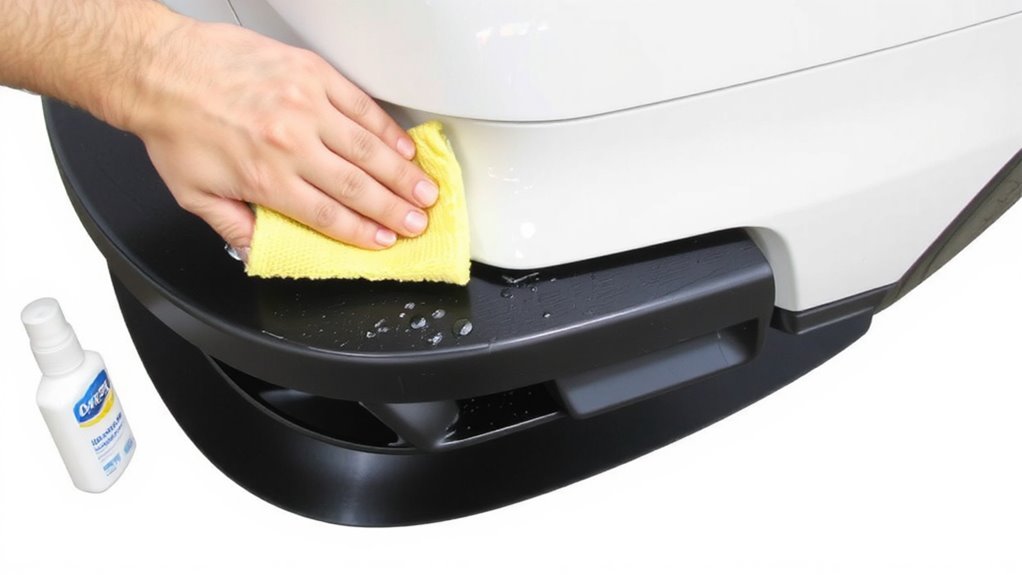
Many off-the-shelf cleaners contain harsh chemicals that degrade paint protection film over time, so choosing the right formula matters. You need products with proper chemical compatibility and a neutral pH balance (around 7.0) to avoid hazing, yellowing, or delamination. Avoid solvents, alcohol-based cleaners, or waxes with petroleum distillates-they compromise PPF integrity. Instead, use PPF-safe formulas specifically tested for urethane films. A top-rated option provides long-lasting protection and excellent clarity, making best car paint protection film a key consideration when maintaining your vehicle’s finish.
| Product Type | pH Range | Safe for PPF? |
|---|---|---|
| Neutral Car Shampoo | 6.5–7.5 | Yes |
| Wheel Cleaner (Acidic) | 2.0–4.0 | No |
| All-Purpose Cleaner | 9.0–11.0 | No |
| PPF-Specific Cleaner | 6.8–7.2 | Yes |
| Glass Cleaner | 8.5–9.5 | No |
Always verify the manufacturer’s recommendations. Proper pH balance prevents swelling or softening of the film’s adhesive layer.
Clean PPF Panel by Panel With Controlled Wipes
When cleaning paint protection film, treating each panel separately guarantees even coverage and minimizes the risk of residue buildup. Start at the hood or roof and work section by section to maintain consistency. Use a microfiber towel with controlled, overlapping wipes-about 2-inch strokes-to guarantee complete contact without missed spots. Maintain proper pressure balance: apply 3 to 5 pounds of downward force to activate the cleaning agent without distorting the film’s surface. This prevents micro-abrasions and preserves optical clarity. Pay close attention to edge alignment, especially around fender flares or door jambs, where dirt accumulates and improper technique leads to lifting. Align your wiping motion parallel to the PPF’s bonded edges to avoid delamination. Use a clean, folded towel on each pass to prevent contamination. This method guarantees uniform results across aggressively contoured body panels, maintaining both protection and appearance.
Skip Abrasives That Cut Through PPF on Sharp Edges
Never use abrasive compounds or polishes rated above 2,000 grit on paint protection film-especially near sharp edges like rocker panels or mirror caps. These areas experience higher stress and reduced film thickness, making them prone to abrasion damage. Aggressive abrasives compromise the PPF’s integrity by cutting through the clear coat layer, exposing the urethane to UV degradation and chemical reactions with environmental contaminants. Surface tension on contoured edges causes water and cleaning solutions to bead, increasing dwell time and risk of staining. Stick to PPF-safe polishes with diminishing abrasives rated below 2,000 grit. Such products level minor surface flaws without thinning critical edge coverage. Always verify product pH-opt for neutral formulas (pH 7–8) to avoid accelerating chemical reactions that degrade urethane. Precision matters: using incorrect abrasives near sharp contours reduces PPF lifespan by up to 40%. Protect the film’s designed performance-skip harsh cut compounds.
Wipe Gently to Prevent Swirls on PPF Edges
A soft touch makes all the difference when cleaning paint protection🏨film along edges. Aggressive wiping stresses film edges, increasing risks of edge lifting and eventual film peeling. Use light pressure-less than 1 psi-to maintain integrity on contoured surfaces. Swirls form easily on textured or curved edges due to uneven contact, especially with stiff or worn microfiber towels. Always use a plush, clean microfiber cloth rated at least 300 g/m² for maximum safety.
| Technique | Pressure (psi) |
|---|---|
| Gentle wipe | <1 |
| Firm wipe | 2–3 |
Maintain overlap in your wiping pattern to avoid concentrated force. Edges are especially vulnerable where adhesive bonds weaken from heat cycling or improper installation. Prevent damage by treating PPF edges like precision components-not just surface coverings. Applying a ceramic coating kit can enhance durability and simplify future maintenance.
Dry With Microfiber & Check for Streaks in Soft Light
Drying with a clean micro´s towel guarantees your paint protection film stays free of water spots and lint. Use a plush, 70/30 polyester-rayon blend microfiber towel with at least 380 grams per square meter density. Fold it into quarters to maximize absorbency and minimize passes. Apply light pressure while dragging the towel across the surface-never rub. This technique reduces the risk of micro-marring, especially along tight contours. For a touchless drying option, use an automotive dryer with filtered air at 115°F and ≤ 50 PSI to avoid film distortion. Residual moisture can leave mineral deposits, particularly on vertical panels. After drying, inspect the PPF under soft lighting at a 45-degree angle. This reveals streaks or missed spots invisible in direct sunlight. Soft lighting enhances contrast, making imperfections stand out like topographical lines on a map. Repeat wiping with a dry section if needed.
On a final note
Rinse thoroughly before cleaning to prevent micro-scratches. Use only pH-neutral cleaners, like CarPro Reset or Chemical Guys TVP-213, to preserve polyurethane integrity. Microfiber towels-100% polyester, 300 GSM-safeguard aggressive curves. Apply light pressure; excessive force risks lifting film edges. Avoid abrasive compounds. Inspect under diffused light to spot streaks. Dry with plush, clean microfiber to prevent water spots and guarantee optical clarity across all panel contours.