Understanding Chemical Compatibility for Better Car Care Outcomes
You protect your car’s paint and trim by choosing chemically compatible products. Solvent strength and material resistance determine if a product degrades rubber, plastic, or urethane clear coats (1.5–2.5 mils thick). Mixing cleaners can form aggressive compounds-like chloramine gas from bleach and ammonia-that cause hazing, swelling, or corrosion. pH matters: stay between 5 and 9 to avoid etching or seal damage. Always check labels for active ingredients and test first-your next step reveals how to apply this safely across every surface.
Notable Insights
- Match product solvent strength to vehicle materials to prevent damage to paint, rubber, or plastic surfaces.
- Avoid mixing chemical products, as combinations like alcohol and petroleum can degrade clear coats and trim.
- Never blend ammonia and bleach, which produce toxic chloramine gas and risk surface corrosion.
- Use pH-neutral products (pH 5–9) to maintain material integrity and prevent long-term chemical degradation.
- Test new chemicals on hidden areas and use designated microfiber towels to prevent cross-contamination.
What Chemical Compatibility Means for Your Car
With countless cleaning and maintenance products on the market, knowing what chemical compatibility means for your car is essential to avoiding damage and ensuring long-term performance. Chemical compatibility refers to how well a substance interacts with your vehicle’s materials without causing degradation. Solvent strength determines how aggressively a product breaks down contaminants like grease or wax. High solvent strength may harm plastics, rubber, or painted surfaces if mismatched. Material resistance defines how well a component withstands chemical exposure. For example, fluorinated elastomers resist swelling in fuel systems, while polypropylene tolerates mild acids. Always match solvent strength to material resistance. Using a product with excessive solvency on low-resistance trim can lead to cracking. Conversely, weak solvents on resistant surfaces, like ceramic coatings, won’t compromise integrity but may underperform. Manufacturers specify chemical resistance ratings-often measured in Shore A hardness retention or percent weight change after exposure. Check technical data sheets for compatibility matrices based on ASTM F141 standards.
Why Mixing Products Damages Paint and Trim
Mixing cleaning or care products might seem like a way to boost performance, but it often leads to unintended chemical reactions that compromise your car’s finish. You risk creating abrasive interactions that scratch clear coats and degrade protective layers. Most car wash solutions are pH-balanced; altering them destabilizes their formulation. Solvent reactions can occur when alcohol-based dressings mix with petroleum-based cleaners, producing aggressive compounds. These compounds may soften urethane clear coats, which typically measure 1.5–2.5 mils thick, leading to hazing or etching. Trim seals, made from thermoplastic olefins, swell or crack when exposed to incompatible solvents. Even seemingly mild ingredients, like ammonia and bleach, react to form chloramine vapors that corrode surfaces over time. Never assume compatibility-manufacturer guidelines reflect rigorous chemical testing. Your car’s finish relies on precise material science. Mixing products disrupts this balance, reducing longevity and appearance without visible warning until damage is permanent. Using a dedicated engine part cleaner ensures optimal performance without risking damage to sensitive surfaces.
Dangerous Car Care Mixes to Avoid
While some car care products appear interchangeable, combining certain chemicals can trigger dangerous reactions that compromise both vehicle surfaces and personal safety. Never mix bleach and ammonia; this produces toxic chloramine gas, which can cause respiratory distress and eye damage. This reaction occurs even in small concentrations, so avoid using either near the other. Acetone, commonly found in paint thinners and some cleaners, degrades rubber seals and softens clear coat when misapplied. Worse, it dissolves wax instantly, stripping protective layers and reducing UV resistance. Applying acetone after wax negates hours of protection, leaving paint vulnerable. Always check product labels for active solvents. Use pH-neutral cleaners for regular washing and confirm chemical contents before layering treatments. When in doubt, apply products as directed, never blend, and ventilate work areas fully. Prevent irreversible damage-know what’s in your bottle.
How pH Affects Chemical Compatibility
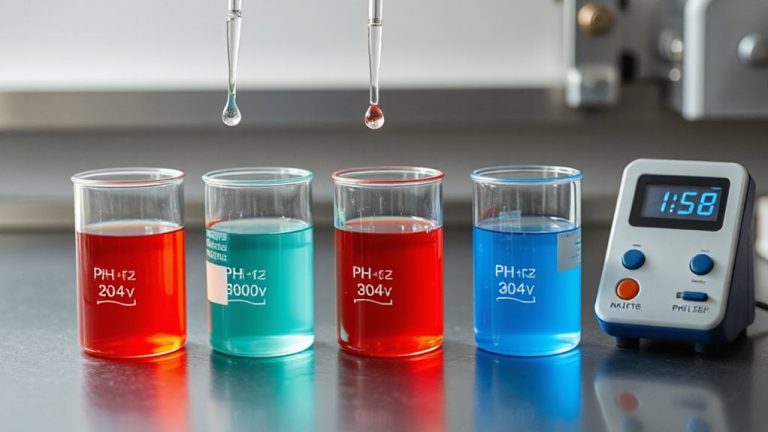
Why do some car care products play well together while others cause damage? The answer lies in pH. pH measures how acidic or alkaline a solution is, on a scale from 0 to 14. Most car surfaces, like paint and rubber, perform best near neutral pH (around 7). When you mix products with extreme pH levels, you risk an adverse surface reaction. Acidic cleaners (pH below 5) can etch clear coats; alkaline waxes (pH above 9) may degrade rubber seals. Always do pH testing before combining products. Even a 2-point difference can trigger chemical incompatibility. That reaction might not be visible immediately, but over time, it weakens materials. For safe use, stick within a pH range of 5–9 unless specified. pH stability prevents unintended interactions. You’re not just cleaning-you’re managing chemistry.
Safe Product Pairings for Common Surfaces
Surface integrity starts with smart product pairings. You must match cleaners and protectants to surface materials to prevent damage. For painted surfaces, use pH-neutral waxes instead of harsh solvents-strong solvent effects can strip clear coats and cause hazing. On glass, opt for ammonia-free cleaners to avoid streaking and rubber deterioration. When wiping, microfiber safety is critical: use cloths with a 70/30 polyester-to-polyamide blend and ≤1.0 oz/yd² weight to prevent scratching. Interior plastics and vinyls respond best to non-oily conditioners with UV inhibitors; pairing them with alcohol-based cleaners risks cracking due to aggressive solvent effects. Always apply with a clean, low-lint microfiber to preserve finish. For leather, use water-based conditioners-oil-based alternatives can degrade stitching. Proper pairings extend surface life, maintain appearance, and reduce long-term repair costs. Your detailing success hinges on these calculated combinations, not guesswork. Using a car clay bar before applying waxes ensures contaminants are removed for a smoother, longer-lasting finish.
How to Read Labels for Compatibility
What’s really in the bottle? You won’t know unless you read the label. Proper label interpretation is essential for safe, effective car care. Manufacturers list active ingredients, pH levels, and dilution ratios-critical data for compatibility. A product with a pH above 11 can damage clear coats; one below 3 may corrode rubber seals. Always check for safety symbols: a flame means flammable, a corrosion icon warns of material degradation risks. These standardized pictograms, per GHS guidelines, communicate hazards instantly. Don’t overlook application restrictions-some chemicals react poorly with aluminum or tinted windows. Misuse voids warranties and risks surface damage. Reading labels isn’t optional; it’s part of precision maintenance. You’re not just cleaning-you’re managing chemical interactions. Ignoring symbols or skimming instructions compromises results and safety. Make label review a non-negotiable step every time.
Build a Chemically Safe Cleaning Routine
How do you guarantee every step of your car care routine avoids chemical conflicts? Start by mapping product pH levels: use acidic cleaners (pH 2–4) only on glass and wheels, alkaline solutions (pH 8–10) for paint and interiors. Never mix them. Limit cleaning frequency to once weekly to prevent wax and sealant degradation. Overwashing increases microfiber abrasiveness. Use only 300–400 GSM plush microfiber towels-lower GSM risks swirls. Designate separate towels per surface: one for paint (non-abrasive, 70/30 polyester-polyamide), another for glass (streak-free weave), and a third for wheels (high-absorbency, reinforced edges). Pre-rinse with 30–40 PSI water to dislodge grit. Apply products in shaded areas below 70°F. Residue buildup from improper layering causes etching. Test new chemicals on inconspicuous areas first. Microfiber safety depends on proper washing-rinse in cold water, no fabric softener-to maintain fiber integrity and absorption.
On a final note
You now control how chemicals interact with your car’s surfaces. Always match pH levels-use pH-neutral (7.0) cleaners on waxed paint. Acidic (pH < 6) or alkaline (pH > 8) mixes degrade sealants. Silicone-based dressings repel water (contact angle >90°) but fail if layered over oil residues. Test compatibility on inconspicuous areas first. A structured routine prevents hazing, cracking, or stripping. Precision in pairing guarantees lasting protection and peak performance.