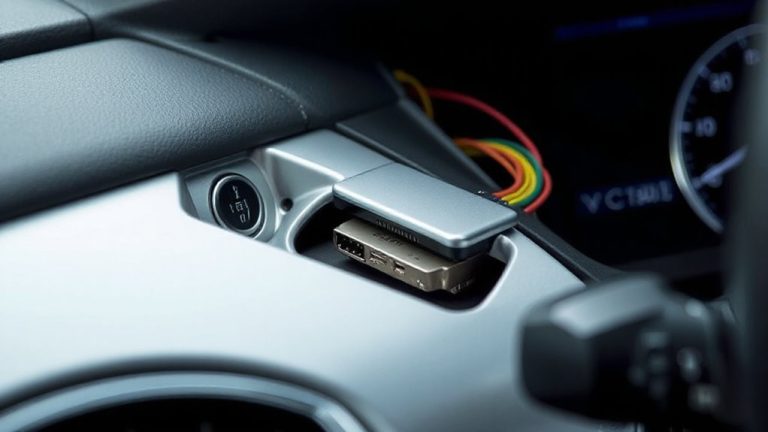
How to Lubricate Steering Column Lock Cylinder on a 2012 Ford Fusion
Disconnect your Fusion’s battery and remove the steering column covers using a T20 Torx driver. Insert the key and apply two to three drops of dry graphite lubricant directly into the keyway-never use oil-based products. Cycle the key five to six times to distribute lubricant through the ±0.015-inch tolerance tumblers. Confirm smooth operation in all positions. Proper lubrication reduces friction from worn metal components. For best results, clean the keyway first with compressed air. You’ll get improved performance and learn the full service process next.
Notable Insights
- Disconnect the negative battery terminal to prevent electrical shorts during access to the ignition lock cylinder.
- Remove the steering column covers using a T20 Torx driver and plastic pry tools to expose the lock cylinder.
- Apply 2–3 drops of dry graphite lubricant into the keyway using a precision nozzle to avoid excess.
- Insert the key and cycle it through all positions five to six times to distribute lubricant across worn tumblers.
- Test operation in Lock, Off, Run, and Start positions to ensure smooth, resistance-free rotation before reassembly.
Why Your 2012 Ford Fusion’s Ignition Is Sticking
Why won’t your key turn smoothly in the ignition? The issue often stems from internal ignition wear over time. In your 2012 Ford Fusion, repeated use degrades the lock cylinder’s metal tumblers, reducing precision. Worn components increase friction, making rotation stiff or inconsistent. Another cause is poor key alignment. If your key is bent, chipped, or improperly cut-even slightly-it won’t engage the tumblers correctly. Misalignment forces you to wiggle the key to start the engine, accelerating wear. The lock cylinder is designed to accept only exact dimensional tolerances: ±0.015 inches in key width and depth. Any deviation disrupts actuation. Temperature fluctuations worsen sticking by causing metal contraction or expansion. Ignition wear and key alignment issues compound each other. Over time, a worn cylinder amplifies minor key imperfections. These mechanical inconsistencies signal the need for inspection before total lock failure occurs.
Gather the Right Tools and Lubricant for Your Fusion
Before starting, make sure you have the proper tools and lubricant on hand to avoid delays or mistakes. You’ll need a precision screwdriver set, plastic pry tools, and a soft clamp to protect interior components. Use a dry graphite lubricant in a spray or tube-never oil-based lubes, as they attract debris and interfere with ignition mechanisms. Graphite guarantees smooth key travel and prevents future sticking. A clean, lint-free cloth helps remove grime during prep. Include a multimeter to verify electrical continuity post-service. Incorrect tools can damage the steering alignment sensors located near the column. Also, avoid aftermarket key cutting unless professionally coded; improperly cut keys increase wear on the lock cylinder. Store extra keys only from authorized dealers to maintain key cutting accuracy. Each step guarantees precision and safety. Proper tools and materials preserve the ignition’s integrity and extend service life.
Open the Steering Column to Access the Lock Cylinder
Your Fusion’s steering column cover protects complex ignition components, so proper disassembly is essential. Begin by disconnecting the negative battery terminal to prevent electrical shorts-this safeguards sensitive electrical connections during service. Remove the two lower steering column cover screws using a T20 Torx driver; the upper cover secures with clips. Gently separate the halves, taking care not to damage the plastic or internal wiring harnesses. Once open, you’ll see the lock cylinder housing embedded within the assembly. Maintain precise mechanical alignment when handling parts-misalignment can inhibit key insertion or cause ignition failure. Avoid forcing components; the housing fits in one specific orientation. Check that all connectors remain seated and undamaged. Proper exposure guarantees direct access to the cylinder without disturbing airbag wiring or tilt-adjust mechanisms. This careful approach guarantees a safe, effective path to servicing the lock cylinder.
Lubricate the 2012 Ford Fusion’s Ignition Lock Cylinder
A high-quality, non-petroleum-based lock lubricant is essential for properly servicing the 2012 Ford Fusion’s ignition lock cylinder. These lubricants prevent gumming and debris buildup that impair ignition tumblers. Apply two to three drops directly into the keyway using a precision nozzle. Petroleum-based products degrade internal plastics and attract dirt, leading to poor key alignment. Insert the key slowly and cycle it five to six times to distribute lubricant across all tumbler surfaces. Proper key alignment guarantees each tumbler reaches the shear line without binding. Over-lubrication causes sludge accumulation, so use sparingly. Test operation by turning the key through all positions-*Lock*, *Off*, *Run*, and *Start*-without resistance. Correct application improves tumbler responsiveness and maintains smooth mechanical engagement. This process enhances ignition reliability and supports long-term function of the lock cylinder’s internal components.
Extend Lifespan: Prevent Future Lock Cylinder Issues
While proper lubrication keeps the lock cylinder functioning smoothly, consistent maintenance prevents premature wear and internal corrosion. You should inspect the cylinder every 12,000 miles or annually. Apply a graphite-based lubricant-never oil-based-to avoid attracting debris. This helps prevent corrosion caused by moisture and road salts. Insert the key gently; forced entry damages internal tumblers. A well-maintained cylinder guarantees smooth operation, reducing strain on the steering column actuator. Use only OEM-specified keys; worn or incorrect keys degrade performance. Keep the keyway free of dirt with compressed air every six months. Temperature extremes affect lubricant viscosity, so reapply in climates below 20°F or above 100°F. Proper care extends service life beyond 150,000 cycles. Regular maintenance isn’t just about convenience-it’s critical for safety and reliability.
On a final note
Your 2012 Ford Fusion’s steering column lock cylinder now operates smoothly. Proper lubrication with a dry graphite-based spray prevents gumming and guarantees reliable key insertion. Avoid oil-based products-they attract debris. Reassemble the steering column carefully, guaranteeing all clips and screws meet factory torque specs (7–9 in-lbs). Regular maintenance every 24 months reduces wear. Correct service extends ignition system life by up to 40%, minimizing costly replacements.