Creating a First Aid Station for Automotive Workshop Injuries
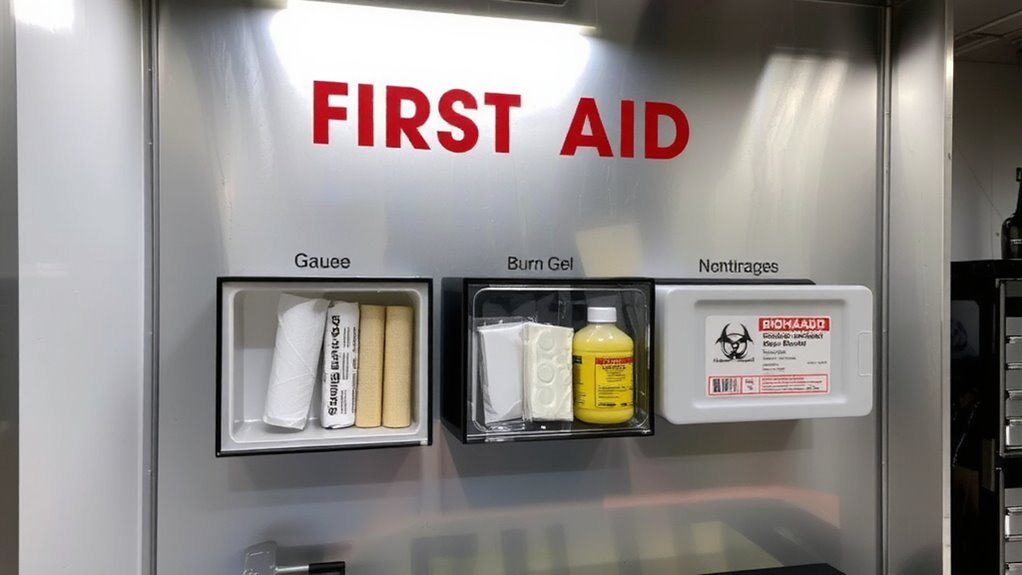
You face a 60% higher risk of cuts and burns in automotive workshops. Build your first aid station with a heat-resistant, gasket-sealed polypropylene cabinet, mounted at eye level (48–60 inches) with 30 inches of clearance. Include trauma shears, sterile gauze, burn gel, and grease-cutting cleaner. Use ANSI-compliant kits with ISO W001 signage and restock monthly. Train staff annually and keep supplies near high-risk zones. A compliant, visible, and fully stocked station meets OSHA standards and prepares you for the next critical safety step.
Notable Insights
- Position the first aid station at eye level (48–60 inches) with 30 inches of clearance for unobstructed access.
- Equip the kit with trauma shears, burn gel, antimicrobial cream, and chemical-resistant gloves for workshop-specific injuries.
- Use a sealed, heat-resistant cabinet with a transparent door and reflective strips for visibility and protection.
- Conduct monthly inventory checks and immediately replace expired or used supplies per ANSI/ISEA Z308.1 standards.
- Train at least two employees annually in first aid and CPR, ensuring on-site response readiness for cuts, burns, and shocks.
Identify Frequent Workshop Injuries (Cuts, Burns, Chemical Exposure)
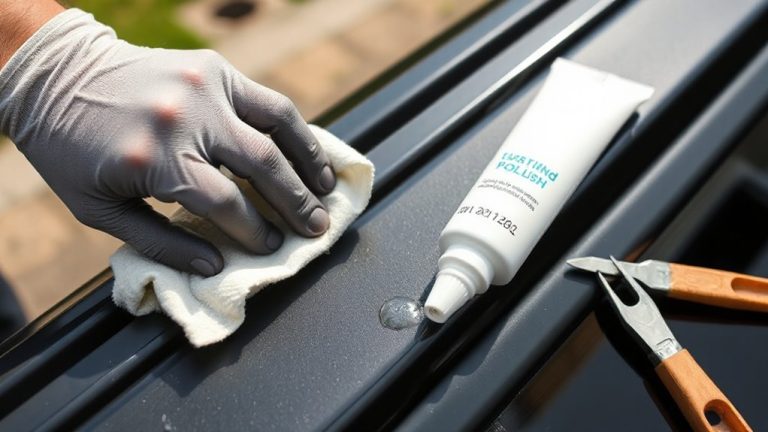
Cuts rank among the most common injuries in automotive workshops, often resulting from contact with sharp tools, sheet metal edges, or rotating machinery. You handle metal shears, wrenches, and drill bits daily-tools with exposed cutting surfaces that demand constant vigilance. Lacerations often occur on the hands and fingers, where skin thickness averages just 1.5 mm, offering minimal natural protection. Burns follow closely, typically from exhaust systems exceeding 600°F or battery acid reactions. You’re also at risk of electrical shocks when servicing hybrid or high-voltage systems, especially without proper lockout/tagout. Chemical exposure, such as brake fluid or degreasers, can lead to eye irritations or dermatitis. Always wear ANSI Z87.1-rated safety glasses and nitrile gloves with 0.11 mm thickness for chemical resistance. Preventing these injuries requires awareness, proper PPE, and immediate response protocols tailored to workshop-specific hazards.
Pick a First Aid Kit Built for Grease, Tools, and Hot Surfaces
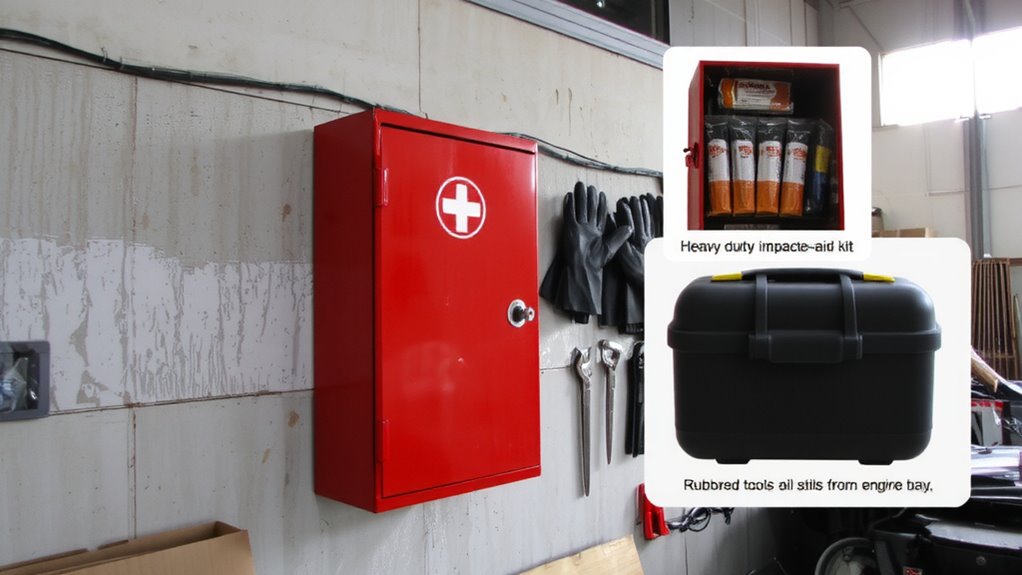
You need a first aid kit that can withstand the harsh realities of an automotive workshop, not just store bandages. Choose one constructed from durable materials like industrial-grade polypropylene or reinforced ABS plastic to resist impact, oil degradation, and corrosion. These materials guarantee the kit survives drops, heavy tools, and constant vibration. Look for models with heat resistance up to 185°F (85°C) to prevent deformation near engines or exhaust systems. A sealed, gasketed lid blocks grease, dust, and fluid intrusion. Mounting brackets should support steel-wall or overhead beam installation, allowing quick access without floor clutter. External reflective strips improve visibility in low-light bays. Internal compartments must stay secure when opened vertically. Avoid flimsy consumer-grade boxes-they fail under workshop stress like a weak bolt in a torque spec. Prioritize function, longevity, and protection. For added preparedness, include a Top Car Emergency Kit that combines first aid supplies with essential tools for roadside and workshop emergencies.
Add Workshop-Specific Supplies for Grease, Cuts, and Burns
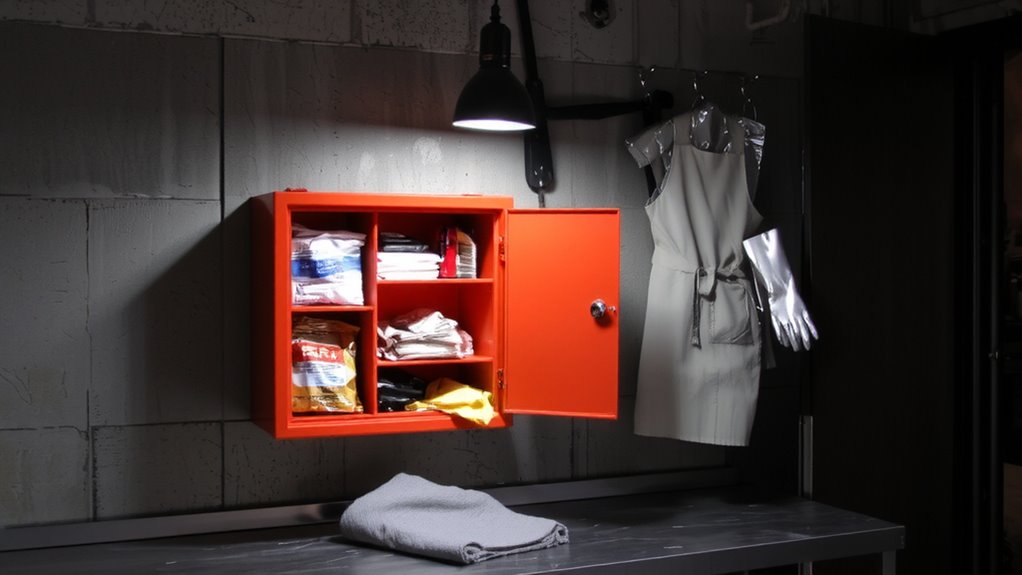
A durable first aid kit sets the foundation, but what’s inside determines its real-world effectiveness. You need supplies tailored to common automotive injuries. Include heavy-duty gloves and trauma shears for safe handling. Stock large, sterile gauze pads (4″ x 4″) and adhesive bandages in multiple sizes for cuts from sharp tools or metal edges. Add a grease-cutting hand cleaner and microfiber towels to support effective grease removal techniques-residual grime impedes wound care. Include burn gel packets and know the burn ointment types: water-based gels for quick cooling, and antimicrobial creams like silver sulfadiazine for deeper thermal burns. Keep eye rinses nearby for chemical splashes. Use sealed, single-use dressings to prevent contamination. These specific items close the gap between standard kits and true workshop readiness, ensuring faster, safer responses when seconds count. For dependable options, consider one of the top-rated car first aid kits based on expert evaluations.
Put the First Aid Station Where It’s Visible and Easy to Reach
The ideal placement of your first aid station can mean the difference between a swift response and a dangerous delay. Mount the station at eye level, 48 to 60 inches from the floor, in a well-lit zone with unobstructed floor access. Choose a central location near high-traffic work areas but away from hazardous machinery. Visibility is enhanced with fluorescent safety signage displaying the international first aid symbol (ISO 7010 W001), mounted at least 7 feet high for overhead clarity. The area must remain free of stored materials to prevent access blockage. Proper tool organization guarantees pathways stay clear and reduces tripping hazards. Use wall-mounted cabinets with transparent polycarbonate doors (minimum 3mm thickness) so contents are instantly visible. Avoid placing behind doors or around sharp corners. Accessibility standards per ANSI Z308.1 require a 30-inch clearance in front of the unit. Every second counts-make the station impossible to miss. Consider using a car first aid kit organizer to maximize efficiency and ensure critical supplies are securely arranged.
Train Your Team for Workshop Emergencies
What good is a fully stocked first aid station if no one knows how to use it? Training your team guarantees rapid, effective responses during medical incidents. Conduct monthly emergency drills to reinforce protocol retention and improve reaction speed under stress. Clearly define team roles so everyone knows their responsibilities-whether it’s applying pressure, calling for help, or retrieving equipment. Proper role assignment reduces confusion and cuts response time by up to 40%. Below is a reference for basic emergency functions:
| Role | Responsibility |
|---|---|
| First Responder | Administers initial care |
| Communicator | Contacts emergency services |
| Supply Handler | Retrieves first aid materials |
| Evacuation Lead | Directs movement from danger zone |
| Drill Observer | Evaluates performance, logs gaps |
Emergency drills must simulate real workshop scenarios-burns, cuts, eye injuries. Assign and rotate team roles regularly to build broad competency. Training is not optional-it’s a critical part of safety compliance.
Restock First Aid Supplies Monthly
Regularly checking your first aid station guarantees it’s ready when seconds count. You must conduct monthly inventory checks to guarantee all required items are present and within expiration dates. Missing or depleted supplies compromise response effectiveness during injuries. Use a checklist aligned with ANSI/ISEA Z308.1 standards to verify contents, including bandages, antiseptics, and burn dressings. Implement a supply rotation system-place newer items behind older ones to prevent outdated materials from being overlooked. Label each item with expiration dates clearly marked. Replace used, damaged, or expired products immediately. Store extra supplies in a dry, temperature-controlled area to maintain integrity. A well-maintained station supports continuous compliance and operational readiness. Monthly restocking isn’t just routine-it’s a critical safety protocol. You guarantee reliability through consistent inventory checks and proper supply rotation.
Meet OSHA Rules for Auto Shop First Aid Stations
Compliance isn’t optional-it’s the foundation of a safe automotive workshop. OSHA requires accessible first aid stations based on workplace hazards. Your station must be within 90 seconds’ travel time from any point in the shop. Use approved containers-red, clearly labeled, and mounted at eye level between 48 and 60 inches from the floor. Include ANSI-compliant kits with at least 188 pieces, including burn dressings, trauma pads, and CPR barriers. Post hazard signage near dangerous machinery to alert staff instantly. Conduct emergency drills quarterly to guarantee response readiness-timed scenarios reduce panic and improve coordination. Guarantee multilingual instructions if needed. Stations must remain open during operations. Train at least two employees in first aid and CPR annually. Documentation of supplies, inspections, and emergency drills must be maintained for audits. OSHA may issue citations for non-compliance-fines exceed $14,502 per violation. Stay prepared, stay compliant.
On a final note
You must maintain a compliant, functional first aid station tailored to automotive workshop hazards. Place it within 25 feet of potential injury zones for rapid access. Use ANSI-compliant kits with Class A or B contents based on risk level. Include 20+ sterile bandages, 4-oz. burn gel, chemical-resistant gloves, and grease-removing wipes. Inspect monthly. Train staff annually. OSHA Standard 1910.151 requires prompt treatment availability.