Replacing Front Brake Pads on a 2016 Volkswagen Golf With Caliper Bolt Torque
You must torque the caliper guide pin bolts to 23 lb-ft when replacing front brake pads on your 2016 Volkswagen Golf. This precise torque guarantees even clamping force, prevents caliper misalignment, and avoids thread damage. Use a calibrated torque wrench and 7mm hex key. Under-torquing can cause noise or shifting; over-torquing risks bracket distortion. Proper torque maintains ideal pad-to-rotor contact, reducing wear and heat buildup-critical for long-term braking performance and safety. There’s more to get right for a complete, reliable brake job.
Notable Insights
- Use a torque wrench to tighten caliper guide pin bolts to 23 lb-ft to prevent misalignment or damage.
- Remove the 7mm hex bolts securing the caliper to access and replace the front brake pads.
- Compress the caliper piston slowly using a C-clamp or proper tool before installing new pads.
- Install OEM-spec ceramic or semi-metallic pads for optimal performance and noise control.
- Inspect rotor condition and ensure wheel spins freely before test driving the vehicle.
Why Torquing to 23 Lb-Ft Matters for Your VW Golf Brakes
While it might seem like just another number on a torque wrench, hitting exactly 23 lb-ft when tightening the caliper guide pin bolts on your VW Golf isn’t optional-it’s critical. Under-torqued bolts can loosen, causing caliper misalignment and uneven pad wear. Over-torquing risks stripping the threads or distorting the bracket, compromising brake safety. The 23 lb-ft specification guarantees even clamping force across the brake pad surface. This precise torque maintains ideal contact between pad and rotor, promoting consistent friction and wear. Uneven pressure leads to tapered pad wear, reducing effectiveness and generating noise. Proper torque also prevents excessive heat buildup, extending pad and rotor life. Think of it like tire lug nuts-too loose, they come off; too tight, they warp. Your brake system relies on exact tolerances. At 23 lb-ft, you guarantee reliable operation, maximum stopping power, and long-term brake safety. Precision here isn’t overkill-it’s engineered necessity.
Gather the Right Tools and Parts for 2016 Golf Brake Pads
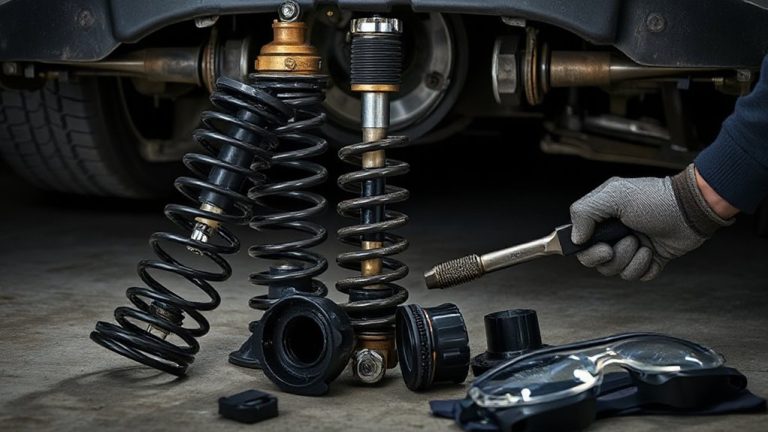
Since you’ll be working on the front brake system of your 2016 VW Golf, having the correct tools and components guarantees the job is done safely and to factory standards. You’ll need a 7mm hex key, 14mm socket, and torque wrench accurate to 23 lb-ft. Use OEM-spec brake pads with ceramic or semi-metallic brake pad material for best wear and noise control. Always inspect the rotor finish; it should be smooth with no scoring or grooving deeper than 0.040 inches. Replace or resurface rotors if surface roughness exceeds RA 50 microinches. Use brake grease on caliper slide pins, not the pad backing. You’ll also need a C-clamp or caliper piston tool. Proper tools guarantee correct caliper retraction and even pad wear. Match replacement parts to factory specs for reliable performance and braking consistency. For consistent accuracy, consider using one of the top torque wrenches recommended for automotive tasks.
Remove the Front Wheel and Brake Caliper
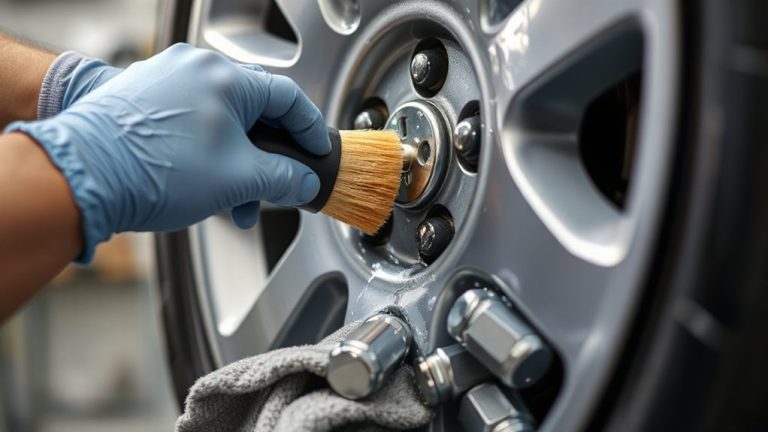
After securing your 2016 VW Golf on a level surface and setting the parking brake, begin by loosening the front wheel lug nuts one full turn using the 14mm socket. Jack up the front end and support it with jack stands. Remove the lug nuts completely, then pull off the wheel. Inspect for excessive brake dust accumulation around the caliper and rotor-wipe it clean with brake cleaner. Use a wire brush if needed to address any lug nut rust. Remove the two 7mm Allen-head caliper guide pins using a socket wrench. Carefully lift the caliper off the rotor and hang it with a bungee or wire to avoid straining the brake hose.
| Component | Tool/Specification |
|---|---|
| Lug Nuts | 14mm socket |
| Caliper Guide Pins | 7mm Allen socket |
| Brake Dust | Clean with brake cleaner |
| Lug Nut Rust | Remove with wire brush |
Compress the Caliper Piston Safely
You’ve removed the caliper and set it aside without disconnecting the brake hose-now it’s time to make room for the new brake pads by compressing the caliper piston. Use a C-clamp or brake caliper tool to slowly push the piston back into the bore. This prevents damage and maintains caliper alignment. Before compressing, inspect the piston dust cap for tears or wear; a compromised seal can let in debris and moisture, leading to piston corrosion. The dust cap must remain intact to guarantee proper function. Apply even pressure to avoid tilting the piston, which could bind in the bore. The 2016 VW Golf’s front caliper requires approximately 1.2 inches of retraction. Do not force the piston. Confirm full retraction so new pads fit without binding. Proper compression guarantees even brake pad wear and peak braking performance. Always maintain clean, smooth piston movement.
Install New Front Brake Pads on Your 2016 VW Golf
The new front brake pads for your 2016 VW Golf must be installed with precise attention to orientation and seating. Proper brake pad alignment is critical-each pad must sit flush within the caliper bracket without binding. The inboard pad connects to the piston, while the outboard pad anchors into the caliper housing. Make certain the pad’s friction material faces the rotor surface without contact during installation. Check the rotor surface condition before proceeding; it should be smooth, free of deep grooves, scoring, or excessive rust. Minor surface oxidation can be cleaned with fine sandpaper, but significant wear requires rotor resurfacing or replacement. The pads must slide freely in the bracket, guided by anti-rattle clips and shims. Misaligned pads cause uneven wear and noise. Verify the pad’s retaining tabs engage securely. Proper fit prevents vibration and guarantees peak braking performance.
Torque the Caliper Bolts to 23 Lb-Ft Correctly
Tighten the caliper bolts in a crisscross pattern to guarantee even pressure distribution across the caliper assembly. Use a calibrated torque wrench to achieve the exact specification: 23 lb-ft. Overtightening can distort the caliper bracket, leading to uneven pad wear and premature rotor damage. Undertightening risks bolt loosening, which may cause brake noise or caliper misalignment. The 23 lb-ft value is critical-it assures secure fastening without compromising hardware integrity. Torque gradually, applying steady force to avoid skewing. This bolt tension maintains ideal alignment between pads and rotor. Consistent torque reduces vibration, minimizing the chance of squealing or grinding sounds-common symptoms of brake noise. Properly torqued bolts also promote even pad wear, extending component life. Always follow factory specs; deviations compromise braking performance and safety. The precision of 23 lb-ft is not optional-it’s engineered for reliability, consistency, and peak function under real-world driving conditions.
Check Brakes and Clearances Before Test Driving
Before taking the vehicle for a test drive, inspect the brake system thoroughly to confirm proper assembly and safe operation. Check the brake fluid level in the reservoir; it should be between the “MIN” and “MAX” marks. Low fluid can indicate air in the lines or excessive pad wear. Examine the rotor surface condition-surfaces must be smooth, clean, and free of cracks, scoring, or debris. Any glazing or uneven wear can reduce braking efficiency. Make certain the pads sit correctly against the rotors without binding. Confirm all connections are secure and no tools remain. Spin each wheel to verify there’s no drag or friction. Proper clearance between pad and rotor prevents noise and premature wear. These checks guarantee reliable braking performance and long component life.
On a final note
You’ve successfully replaced the front brake pads on your 2016 Volkswagen Golf. Torquing the caliper bolts to 23 lb-ft guarantees proper alignment and prevents damage. Under-torquing risks loosening; over-torquing can strip threads. The 23 lb-ft spec matches factory standards for safe, reliable braking. Always use a calibrated torque wrench. Test brakes at low speed first. Confirm no drag or noise. Regular maintenance extends rotor life. Safety depends on precision.