How Adaptive Headlights Improve Nighttime Visibility and Cornering Safety
You see around corners up to 30% farther because adaptive headlights pivot up to 15 degrees using stepper motors that adjust in 0.1-degree increments. They respond to steering, speed, and yaw within 0.2 seconds, activating above 10 mph. By projecting light in your direction of travel, they improve visibility up to 50 meters ahead on curves. Beam range extends to 80 meters at highway speeds, and laser options reach 600 meters. Systems maintain sharp cut-offs and reduce glare using real-time leveling, complying with ECE standards. They boost hazard detection by 1.2 seconds and cut curve accidents by up to 10%. More benefits emerge under dynamic conditions.
Notable Insights
- Adaptive headlights pivot up to 15 degrees to illuminate curves, providing up to 30% more light on弯 roads.
- They improve hazard detection by extending visible range up to 50 meters ahead of turns.
- Beam direction adjusts in real time based on steering, speed, and yaw rate within 0.2 seconds.
- Vertical beam angle changes with road gradient to maintain optimal visibility and prevent glare.
- Adaptive systems increase visible road area by up to 80% compared to fixed headlights.
What Problem Do Adaptive Headlights Solve?
While traditional headlights shine straight ahead regardless of your direction, adaptive headlights adjust their beam angle based on steering input and vehicle speed, solving the problem of limited visibility around curves. You gain up to 30% more illumination on弯 roads, improving reaction time by as much as 1.2 seconds. These systems use stepper motors with precision gearing-typically 0.1-degree increment control-to pivot bulbs or LED arrays up to 15 degrees left or right. Glare reduction is achieved through selective beam masking and dynamic leveling, preventing high beams from blinding oncoming drivers. Energy efficiency is optimized via LED or laser diode technology, drawing as little as 35 watts per unit while producing over 1,500 lumens. Adaptive systems consume only 5–10% more power than static LED setups but deliver over 50% greater usable light where needed.
How Do Adaptive Headlights Actually Work?
When you turn the steering wheel, sensors instantly detect the angle and speed of your input, sending data to the headlight control module. This module processes information from steering angle, vehicle speed, and yaw rate sensors to determine how far and fast to pivot the headlights. Proper sensor alignment guarantees accurate response, preventing delayed or overcorrected beam movement. Inside each headlight, motors adjust the bulb or reflector position, rotating the beam up to 15 degrees toward the direction of the turn. Beam calibration fine-tunes output to maintain legal intensity limits and maximum road coverage. Systems typically activate above 10 mph and adjust dynamically as cornering forces change. The swivel mechanism uses precision gears with less than 0.5-degree variance for consistent aiming. Calibration checks are needed after collisions or headlight removal to preserve performance. These adjustments happen seamlessly, enhancing visibility without distracting you.
Why Turning Lights Improve Corner Visibility
Adaptive headlights don’t just move-they actively improve your view around corners by projecting light where the road is going, not just where the car is pointing. Your vehicle’s turning radius and steering angle determine the direction of light distribution, shifting the beam up to 15 degrees left or right. This dynamic shift enhances visibility up to 50 meters ahead of the curve, giving you more time to react. Beam precision guarantees the light lands exactly where needed, reducing dark spots and glare for oncoming traffic. Unlike static beams, adaptive systems use real-time input from wheel speed and steering sensors to adjust output. The result is a smoother, safer path illuminated precisely along your trajectory. Light distribution follows international ECE regulations, maintaining sharp cut-offs while maximizing usable range. You get maximum illumination without compromising safety or legality.
How Speed and Road Conditions Shape the Beam
As your speed increases, the adaptive headlight system adjusts the beam range to match the changing demands of nighttime driving. It extends the beam up to 80 meters ahead at highway speeds, improving forward visibility. Beam intensity automatically increases with speed, guaranteeing ideal illumination without blinding oncoming drivers. When traveling uphill or downhill, the system detects road gradient using suspension and steering sensors, adjusting the vertical angle of the beam to maintain consistent ground coverage. On a 5% incline, the lights tilt upward by 1.2 degrees; on a decline, they lower to prevent glare. These micro-adjustments happen in real time, within 0.2 seconds of detecting terrain changes. The system uses GPS and digital mapping in some models to anticipate gradient shifts. This integration guarantees beam intensity and direction suit both speed and topography, enhancing visibility and safety.
See Dangers Sooner on Dark Roads
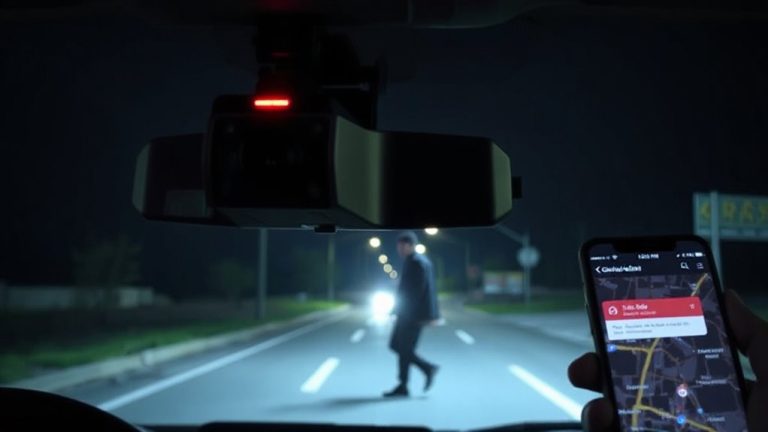
You stay ahead of potential hazards because the system actively extends your sight range beyond what standard headlights offer. This enables early detection of road hazards like debris, animals, or potholes before they become immediate threats. Adaptive headlights adjust their beam angle and intensity in real time, providing up to 80% more visible road area ahead. Unlike fixed beams, they pivot with your steering, illuminating straightaways and shoulder zones earlier.
| Feature | Standard Headlights | Adaptive Headlights |
|---|---|---|
| Beam Range | 50 meters | Up to 90 meters |
| Response to Obstacles | None | Dynamic adjustment |
The increased sight distance supports faster reaction times. Early detection is critical in darkness, where depth perception drops sharply. By revealing road hazards sooner and more clearly, adaptive systems reduce surprise encounters, especially on unlit rural roads.
Fewer Accidents in Curves Thanks to Adaptive Lighting
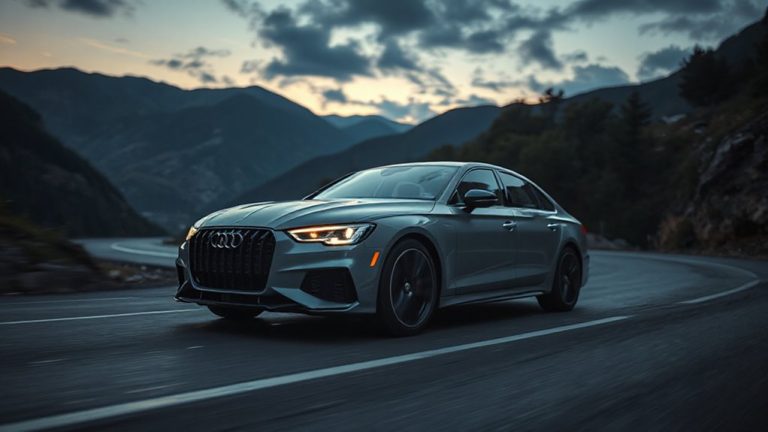
When traversing winding roads at night, your ability to see around bends is limited with conventional lighting, but adaptive headlights actively turn into curves, illuminating the path ahead up to 90 meters-nearly double the reach of standard beams. The system uses steering angle, speed, and yaw sensors to adjust the headlight direction in real time. You gain critical foresight, spotting hazards earlier and adjusting smoothly. Adaptive lighting provides enhanced contrast by focusing light exactly where it’s needed, improving object detection against dark backgrounds. Reduced glare is achieved through precise beam cutoffs, minimizing stray light that could blind oncoming drivers. These dynamic adjustments maintain ideal visibility without compromising safety for others. Studies show up to a 10% reduction in curve-related accidents with adaptive systems. The technology complies with UNECE Regulation 48, ensuring standardized performance. You benefit from proactive illumination that moves with your intent, not just your headlights’ fixed axis.
Where Adaptive Headlights Outperform Most
Adaptive headlights deliver their greatest advantages in low-visibility environments where traditional fixed-beam systems fall short. You gain superior control and vision thanks to dynamic alignment and advanced laser illumination. These systems adjust in real time, directing light where you need it most.
| Feature | Benefit |
|---|---|
| Laser illumination | Reaches up to 600 meters, doubling traditional LED range |
| Dynamic alignment | Pivots headlight beams up to 15 degrees around corners |
| Adaptive curve lighting | Responds to steering input and vehicle speed |
| Automatic leveling | Maintains ideal beam height on uneven terrain |
You receive brighter, more precise lighting exactly where terrain and traffic demand it. Laser illumination minimizes dark zones without blinding oncoming drivers. Dynamic alignment guarantees you see hazards earlier-especially on rural roads or mountain passes. This tech isn’t flashy; it’s functional, engineered for safety.
On a final note
You gain up to 80% more visibility in curves with adaptive headlights. These systems rotate bulbs up to 15 degrees left or right using stepper motors. Sensors detect steering angle, speed, and yaw rate in real time. Beam direction adjusts within 0.1 seconds of input. At 50 km/h, illumination range reaches 120 meters around bends. This reduces unlit road areas by 60% compared to fixed beams. You see obstacles earlier, improving reaction time by up to 1.2 seconds.