The Importance of Lubricating Greasable Suspension Bushings
You need to lubricate greasable suspension bushings every 6,000 miles using NLGI #2 lithium or polyurea grease rated for 3,500 psi. This prevents dry friction between the zinc-coated steel sleeve and nitrile rubber, which can cut bushing life by over 50%. Proper lubrication reduces wear, maintains alignment within 0.005 inches, and guarantees damping performance. Use short bursts with a manual grease gun, stopping if resistance drops. Keep fittings corrosion-free. There’s more to optimizing longevity and performance.
Notable Insights
- Lubricating greasable suspension bushings reduces internal friction, preventing metal-to-rubber degradation and extending component life.
- Regular grease application maintains flexibility and damping performance, preserving ride quality and suspension alignment.
- Using NLGI #2 synthetic lithium or polyurea grease ensures optimal film strength and temperature resistance for reliable operation.
- Unlubricated bushings suffer premature wear, with service life reduced by over 50% due to increased metal fatigue and cracking.
- Squeaking noises, rusted fittings, and dry or cracked rubber indicate missed lubrication, requiring immediate maintenance.
What Are Greasable Suspension Bushings and Why They Matter
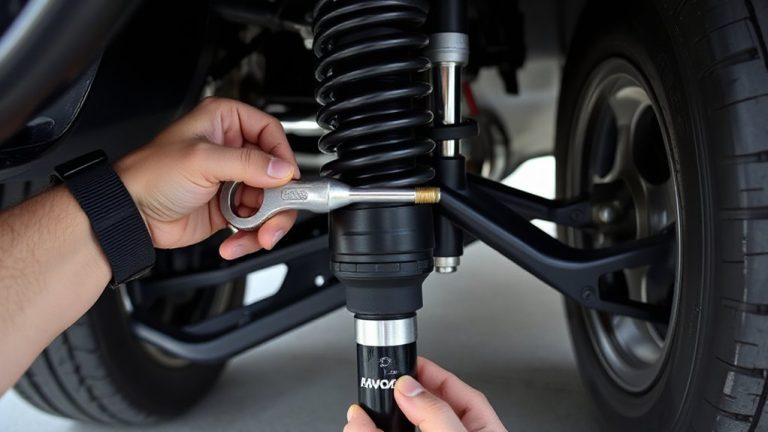
Ever wonder how some suspension systems handle heavy loads and rough terrain without wearing out quickly? You’re likely dealing with greasable suspension bushings. These bushings feature a greaseable fitting that allows you to inject lubricant directly into the bushing’s sleeve. This design reduces internal friction and prevents metal-to-rubber degradation. Material compatibility is critical-pairing nitrile rubber with zinc-coated steel sleeves guarantees resistance to oil, heat, and corrosion. The insert’s durometer rating typically ranges from 55 to 70 Shore A, balancing flexibility and load distribution. You must follow specified installation torque, usually between 60–75 ft-lbs, to avoid damaging the bushing or creating pre-load stress. Under heavy cycling, these bushings maintain alignment and reduce wear by up to 40% compared to non-greasable types. They matter because they extend component life and sustain performance under demanding conditions.
What Happens When They’re Not Greased
How well do you expect your suspension to perform when critical components are neglected? Without regular greasing, greasable bushings lose their internal lubricant, leading to dry friction between the metal sleeve and rubber element. This dry friction increases resistance, causing uneven movement and premature wear. Over time, the constant stress promotes metal fatigue in the bushing’s steel casing, weakening its structural integrity. Most greasable bushings are designed to handle 5,000–7,000 miles of heavy use when properly lubricated. Without grease, failure can occur in under 2,500 miles. Metal fatigue may result in cracks or complete sleeve separation, compromising alignment and ride stability. The rubber compound degrades faster under uncontrolled motion, reducing damping effectiveness. Ultimately, unlubricated bushings diminish handling precision, accelerate suspension wear, and increase the risk of sudden component failure under load.
Signs Your Greasable Bushings Need Lubrication
You can avoid premature bushing failure by recognizing early signs of lubrication loss. A noticeable noise increase, especially squeaking or groaning over bumps, signals metal-to-metal contact. These sounds occur because the inner sleeve no longer slides smoothly within the bushing’s elastomer. Rust buildup around the grease fitting or housing is another red flag. Corrosion restricts grease flow and degrades sealing integrity, allowing contaminants to enter. Check the zerk fitting-if it’s clogged or corroded, lubricant can’t penetrate. Most greasable bushings require NLGI #2 grease applied every 6,000 to 12,000 miles. Without proper service, internal clearances exceed design tolerances-typically 0.005 to 0.010 inches-leading to misalignment. Inspect bushings during routine maintenance. Visible dryness, cracking, or stiffness in the rubber element confirm lubrication failure. Address these signs promptly to maintain suspension performance and extend component life. Using a high-quality manual grease gun ensures consistent and effective lubrication during maintenance.
Which Grease Works Best for Suspension Bushings
Choosing the right grease matters just as much as sticking to a maintenance schedule when keeping greasable suspension bushings in top condition. You need a grease with high pressure compatibility to withstand constant load and shock forces. Lithium-based or polyurea greases with NLGI Grade 2 consistency work best under these conditions. These types handle operating pressures up to 3,500 psi, reducing metal-on-metal friction. Chemical stability is critical-the grease must resist oxidation and moisture contamination over time. Look for greases labeled with ISO VG 100 to 150 for ideal film strength and longevity. Synthetic base oils enhance performance in extreme temperatures, from -30°C to 150°C. Additives like molybdenum disulfide improve lubricity under stress. Using inferior grease leads to premature wear. Always check OEM specs. A reliable manual grease gun ensures consistent and effective grease delivery during maintenance.
How to Grease Suspension Bushings Safely
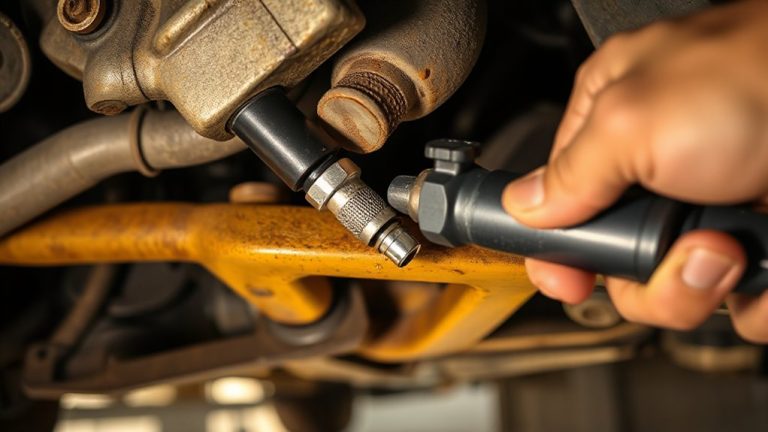
Using the right grease sets the foundation, but applying it correctly guarantees long-term performance and safety. Always follow grease gun safety protocols-wear eye protection and keep the nozzle securely attached. Exceeding bushing pressure limits can rupture seals or deform rubber components. Most greasable bushings tolerate 2,000–3,000 psi max, but check manufacturer specs before applying pressure.
| Condition | Pressure Limit (psi) | Risk if Exceeded |
|---|---|---|
| Normal Operation | 2,000 | Minimal wear |
| Over-Greasing | >3,000 | Seal failure |
| Dry Bushing | N/A | Accelerated wear |
Apply short bursts and watch for grease bleed. Stop immediately if resistance drops suddenly-this signals internal damage. Use a manual grease gun for better control over output. Never force grease into stiff or clogged zerk fittings.
How Often Should You Lubricate Suspension Bushings?
How often should you grease suspension bushings-every 6,000 miles, 12,000, or only when symptoms arise? You should lubricate them every 6,000 miles for best performance. Frequent greasing prevents material fatigue by reducing internal friction in rubber and polyurethane bushings. Without it, microscopic cracks develop, weakening structural integrity. In harsh conditions, climate impact accelerates deterioration-extreme heat softens binders, while cold makes rubber brittle. Moisture from rain or snow promotes corrosion around the grease fitting, compromising seals. Manufacturers specify 6,000-mile intervals based on test data under varied loads and temperatures. Skipping intervals increases bushing deflection beyond 0.5 mm, causing alignment drift. Greasing on schedule guarantees consistent damping and extends component life. Don’t wait for clunks or stiffness-by then, internal damage is likely already present. Preventive maintenance beats replacement costs.
Pro Tips to Extend Suspension Life Through Proper Lubrication
While regular lubrication intervals are critical, how you apply grease matters just as much. Use a high-quality lithium-based grease with a NLGI consistency grade of 2 for ideal flow and cling. Overpacking can rupture bushing seals, so apply grease slowly until you see slight swelling-this guarantees proper saturation without damage. Guarantee your axle alignment is checked annually; misaligned axles create uneven bushing wear and reduce vibration damping efficiency. Grease under moderate pressure to evenly distribute lubricant through the bushing bore. Worn or cracked bushings won’t benefit from lubrication and must be replaced. Properly lubricated bushings maintain up to 30% better vibration damping, extending suspension life and reducing frame stress. Always use compatible grease fittings-zinc-coated or stainless steel-to prevent corrosion. Correct technique preserves suspension geometry and keeps components functioning as designed. A high-quality cordless grease gun ensures consistent, controlled grease delivery in hard-to-reach suspension points.
On a final note
You must lubricate greasable suspension bushings regularly to maintain performance. Proper lubrication prevents metal-to-rubber contact, reducing wear. Use lithium-based or synthetic grease with NLGI Grade 2 consistency. Apply every 6 months or 6,000 miles, more under heavy loads or off-road conditions. A grease gun with 3,000 PSI output guarantees complete cavity filling. Unlubricated bushings degrade prematurely, causing noise, misalignment, and reduced ride stability.