How to Inspect a Clutch for Oil Contamination From a Rear Main Seal Leak
Check for slipping gears or a burnt smell-these signal clutch oil contamination. Inspect the bell housing’s bottom for wetness or dark residue, signs of a rear main seal leak. As little as 5 mL of oil can coat the clutch disc, reducing friction below the 0.3–0.5 coefficient needed. Remove the transmission safely, then examine the disc for greasy spots and the pressure plate for glazing. A shiny flywheel or oily film confirms contamination. Find where else oil could enter.
Notable Insights
- Check for oil residue or wetness at the bottom of the bell housing near the rear main seal.
- Inspect the clutch disc for dark, greasy spots or a slippery feel indicating oil contamination.
- Look for glazing-shiny, smooth surfaces-on the pressure plate or flywheel.
- Use a clean, lint-free cloth to confirm oily residue around the rear main seal area.
- Remove the transmission to fully examine the clutch components if external signs suggest contamination.
Spot the Signs of Clutch Oil Contamination
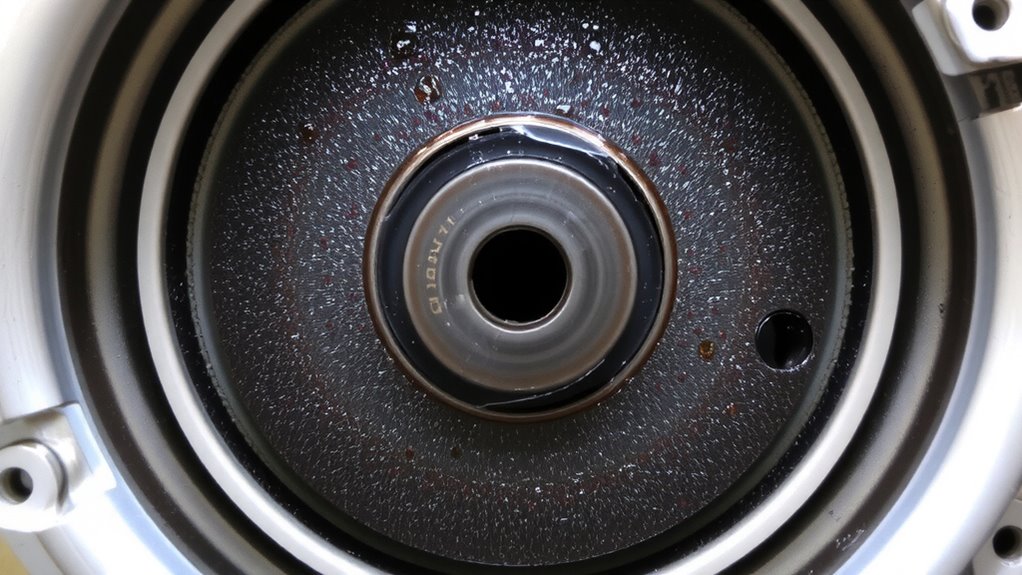
Why does your clutch feel weak or slip under load? You’re likely dealing with oil contamination. Slipping gears occur when the clutch disc can’t grip the flywheel due to oily residues reducing friction. This leads to RPM surges without corresponding acceleration. Inspect for a greasy clutch disc or pressure plate-visible oil means compromised performance. A persistent burnt smell often follows, caused by the clutch material overheating while slipping against contaminated surfaces. Unlike normal wear, this smell is acrid and lingers after driving. Oil reduces the coefficient of friction from the standard 0.3–0.5 range, drastically impairing torque transfer. Contamination usually stems from leaking seals, allowing as little as 5–10 milliliters of oil to foul the assembly. Check the bell housing for drips or stains. Early detection prevents total failure. Ignoring these signs risks warping the flywheel or destroying the release bearing.
How a Rear Main Seal Leak Damages Your Clutch
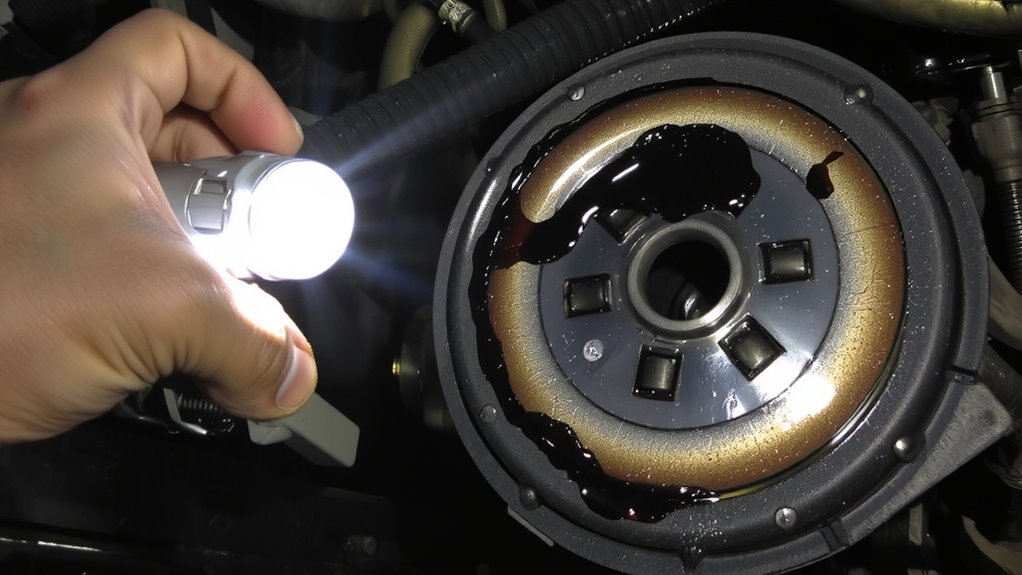
Your engine’s rear main seal sits at the back of the crankshaft, where the engine meets the transmission, and when it fails, oil starts seeping into places it shouldn’t. This leaking oil coats the clutch disc and flywheel, reducing friction needed for proper engagement. Even small amounts-just a few milliliters-can cause clutch slippage under load. Prolonged exposure leads to glazed clutch material, permanently impairing performance. Oil also attracts debris, accelerating wear. The damp environment promotes flywheel corrosion, creating an uneven surface that hampers clutch contact. Corrosion pits disrupt smooth engagement, increasing vibration. Left unchecked, contaminated components generate excess heat, warping the pressure plate and disc. This degradation raises the risk of complete transmission failure due to mechanical bind or seizure. Fluid breakdown byproducts further damage synchronizers and bearings inside the transmission. Early intervention prevents cascading failures and costly repairs.
Check for Oil Before Removing the Clutch
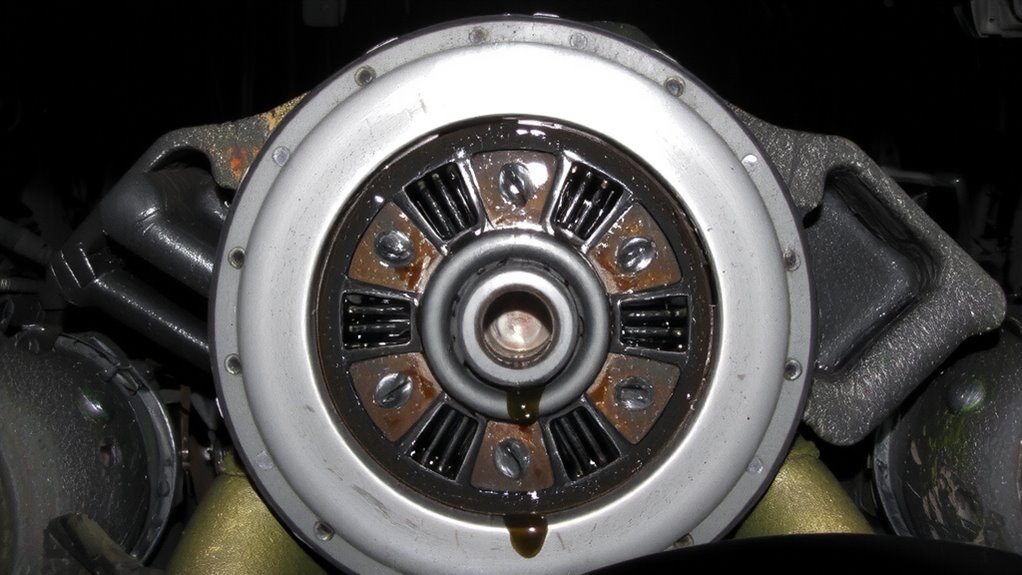
Before removing the clutch assembly, inspect for signs of oil intrusion around the bell housing and along the transmission mounting surface. Early detection preserves clutch cleanliness and prevents unnecessary disassembly. Look for wetness, drips, or dark residue near the rear main seal area-common indicators of leakage. Oil seepage often appears near the bottom of the bell housing due to gravity flow. Your inspection timing is critical; checking before removal guarantees accurate diagnosis and avoids misattributing slippage to wear when contamination is the real issue. Use a flashlight and mirror to examine tight spaces. Do not confuse light condensation with active leaks. Any visible oil means contamination likely occurred, compromising friction material. Proper inspection timing helps determine whether the rear main seal, not the clutch itself, needs immediate attention. Maintain focus on objective evidence-your findings dictate the next steps.
Remove the Clutch for Inspection
Clutch removal begins with making certain the vehicle is securely elevated and the transmission is supported. Use jack stands rated for the vehicle’s weight and secure the transmission with a transmission support bar or cradle to prevent damage. Disconnect the battery, then remove the driveshaft and linkage components. Unbolt the transmission from the bell housing and carefully lower it using a transmission jack-this controlled approach is one of the most reliable transmission support methods. With the transmission clear, you can access the clutch assembly. Use proper clutch removal tools, like a pilot bearing puller and clutch alignment tool, to avoid damaging the input shaft or flywheel. Remove the pressure plate bolts gradually in a star pattern to prevent warping. Label and organize all components. Keep hardware separate to make certain correct reassembly. This process makes certain safe, efficient clutch removal for inspection.
Look for Oil: What a Contaminated Clutch Looks Like
Oil contamination on a clutch assembly is often unmistakable once you know what signs to look for. You’ll notice dark, greasy spots across the clutch disc-this is clutch disc staining, usually caused by oil seepage. The staining often appears uneven, concentrated near the edges or center hub, and may leave a slippery residue when touched. Examine the pressure plate carefully. Oil exposure leads to pressure plate glazing, where the surface becomes unnaturally smooth and shiny, almost varnished. This glazing reduces friction, impairing grip during engagement. The flywheel surface may also show oil film or residue. Unlike normal wear, which creates uniform friction material wear, contamination creates splotchy, inconsistent surfaces. Use a clean lint-free cloth to test for oily residue. If present, and linked to rear main seal location, oil is likely the culprit. These visual and tactile clues confirm contamination.
Rule Out Other Causes of Clutch Oil Leaks
How can you be sure the oil near your clutch actually originated from a rear main seal? Don’t assume the leak source is obvious. External oil sources, like engine valve cover gaskets or oil pan leaks, can migrate to the bell housing. Inspect the entire engine exterior first. Contamination from above or behind can drip down and mimic a rear main failure. Transmission seals are another common culprit. A failing input shaft seal often leaks in the same area, especially in high-mileage vehicles. These seals typically allow fluid to escape under pressure, leaving grease-like residue around the seal bore. Use a degreaser and dry the area thoroughly. Then, run the engine and watch for fresh seepage. Confirm the leak path by tracing the oil’s origin upward. Rear main leaks usually coat the backplate’s upper half. Transmission seal leaks pool lower. Visual confirmation prevents unnecessary repairs.
On a final note
You now know how to identify rear main seal leaks affecting your clutch. Oil contamination reduces friction linings’ coefficient of friction by up to 40%. Inspect the clutch plate’s surface for glossy, darkened areas. Measure any residue depth-it should be zero. Even slight seepage, 1–2 milliliters per hour, compromises performance. Replace both seal and clutch if oil contact occurred. Always verify flywheel runout is within 0.002 inches post-installation. Prevent future failure with proper seal installation torque-typically 8–10 ft-lbs.