Understanding Environmental Conditions and Their Impact on Car Detailing Outcomes
Your detailing results suffer when environmental conditions aren’t controlled. Surface temperatures above 85°F cause sealants and waxes to dry too fast, preventing proper bonding. In humidity over 60%, slow evaporation increases water spots, especially with mineral content above 120 mg/L. Direct sunlight can push panels past 160°F, degrading waxes and reducing lifespan by up to 50%. Dust and pollen settle faster in dry, windy conditions, risking scratches. For best results, work in shaded areas below 80°F with deionized water and microfiber towels. Early morning application guarantees peak curing and fewer airborne contaminants. You’ll achieve superior results by aligning your process with environmental science.
Notable Insights
- High surface temperatures above 85°F cause rapid product drying, reducing dwell time and impairing wax and sealant bonding.
- Direct sunlight can raise panel temperatures over 160°F, accelerating chemical breakdown and causing polish hazing.
- High humidity above 60% slows evaporation, increasing water spot risk from mineral deposits on drying surfaces.
- Airborne contaminants like dust and pollen can scratch clear coats, especially in windy or unfiltered environments.
- Early morning detailing in cool, shaded conditions optimizes product performance and minimizes environmental interference.
Why Your Car Detail Job Fails in Hot Weather
Why does your car detailing work seem to fail every time temperatures climb? High temperatures accelerate product evaporation, reducing dwell time and compromising performance. When surface heat exceeds 85°F (29°C), chemical reactions in cleaners and coatings occur too quickly, causing rapid drying. This prevents proper molecular bonding and leads to hazing or streaking. Most waxes and ceramic sealants require 10–15 minutes of wet dwell time to cure correctly; rapid drying cuts that window short. Direct sunlight raises panel temperatures 30–40°F above ambient, worsening the effect. Apply products in shaded areas when ambient temperatures stay below 80°F (27°C). Work in small, manageable sections-2’ x 2’ maximum-to guarantee even application before drying begins. Use cooling sprays or mist panels lightly if needed, but avoid thermal shock. Opt for formulations designed for high temperatures, with extended drying buffers and heat-stable polymers.
How Humidity Causes Water Spots and Streaks
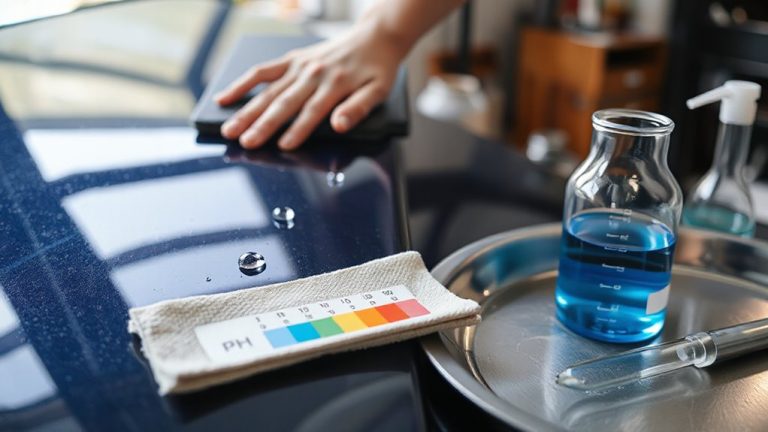
Ever wonder why water spots and streaks ruin your finish even after a careful wash? High humidity slows water evaporation, leaving droplets on the surface longer. This extended dwell time allows minerals in the water to settle, forming visible mineral deposits as the water dries. These deposits bond to the paint, especially in hard water areas where calcium and magnesium concentrations exceed 120 mg/L. Surface tension pulls water into tight beads, concentrating contaminants in small areas. When humidity exceeds 60%, evaporation rates drop below 0.5 mL/cm² per hour, increasing residue formation. Improper drying techniques worsen the issue, spreading deposits across the panel. Using deionized water reduces mineral content to less than 1 mg/L, minimizing spots. Microfiber towels with pile heights of 2–3 mm effectively disrupt surface tension, lifting water without smearing. Immediate, thorough drying is critical in humid conditions to prevent lasting blemishes. Upgrading to a high-quality microfiber towel kit ensures superior absorbency and scratch-free drying performance.
Sunlight Ruins Polish and Wax Application
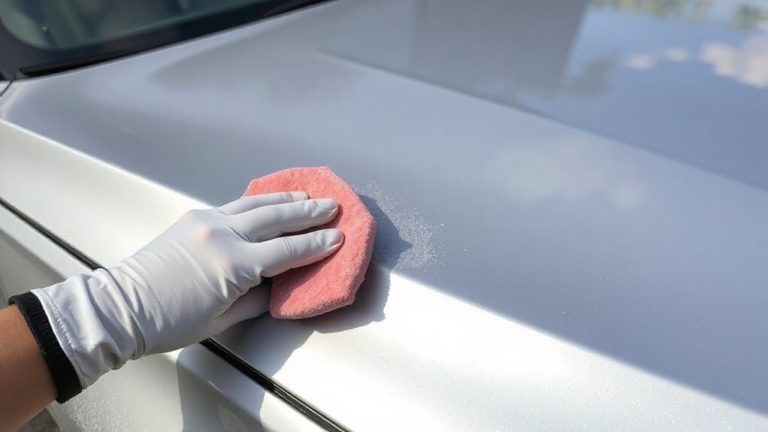
Direct sunlight raises surface temperatures above 140°F (60°C), compromising polish and wax application by accelerating chemical breakdown and reducing working time. Heat damage occurs when volatile solvents in polishes evaporate too quickly, leaving residues or hazing. You lose control over correction, especially with dual-action polishers that generate additional friction heat. UV degradation breaks down carnauba and synthetic wax molecules, reducing protective lifespan by up to 50%. Surface temperatures above 100°F (38°C) impair wax adhesion, causing uneven curing. Apply products in shaded areas with ambient temperatures between 60–80°F (15–27°C). IR thermometers confirm safe surface temps before application. UV-stabilized waxes resist degradation but can’t fully overcome direct sun exposure. Thermal imaging shows hood and roof surfaces exceed 160°F (71°C) in midday sun. Work panel by panel in indirect light to guarantee even results. You’ll achieve superior clarity, depth, and protection when avoiding intense heat and UV exposure. A high-quality car buffing kit ensures optimal results by combining compatible pads, polishes, and tools designed for heat-sensitive applications.
Dust and Airborne Contaminants Sabotage Your Shine
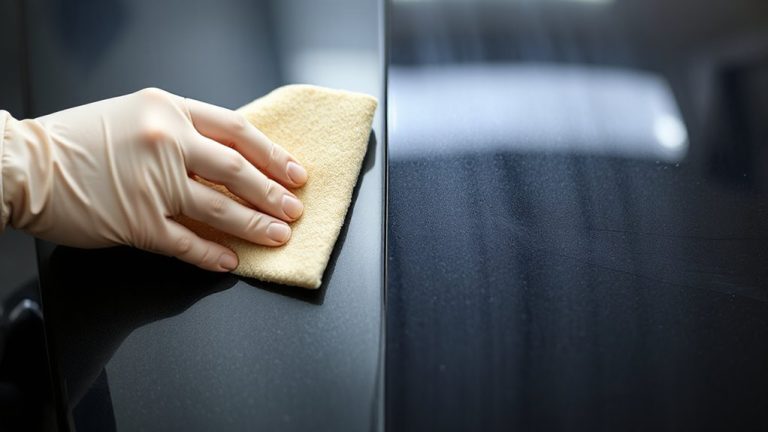
Even with perfect technique, airborne contaminants can compromise your finish if you’re working in uncontrolled environments. Poor air quality introduces dust, pollen, and particulate matter that settle fast on clean surfaces. These cause micro-abrasions during wiping, leading to visible surface contamination. Particles as small as 10 microns-barely visible-can scratch clear coats during buffing. In outdoor settings, wind speeds above 8 mph increase contaminant deposition by up to 40%. Enclosed spaces reduce exposure but require HEPA filtration to maintain clean air. Unfiltered garage air may contain over 500,000 particles per cubic meter, ensuring rapid recontamination. Always pre-wash with a snow foam lance delivering 4–6 bar pressure to lift contaminants before contact. Use microfiber towels with a split fiber density of at least 80,000 fibers per square inch to trap debris without marring. Immediate sealing with a silica-based coating (7–9H hardness) reduces future adhesion of airborne grime. For optimal results, consider using a HEPA filtration system to maintain clean air in your detailing bay.
Best Time of Day to Detail for Lasting Results
When should you detail your car for maximum durability? Early morning is ideal, just after morning dew evaporates. Surface temperatures are low, typically 55–65°F, minimizing rapid product drying and reducing the risk of residue. Cool shadows prolong your safe working window, especially on east-facing surfaces shielded from direct sun. Direct UV exposure raises panel temps over 140°F by midday, accelerating chemical breakdown and compromising adhesion. Apply sealants or waxes when the surface is within 70–85°F for ideal curing. Polishing in heat causes premature hardening, leading to hazing and inefficient correction. Early timing also reduces airborne particulate interference by 30–40% compared to afternoon sessions. Morning dew removes loose dust naturally, pre-cleaning surfaces. Begin detailing at 7–9 AM to exploit cooling gradients and stable humidity. These conditions guarantee superior product bonding, increasing protection longevity by up to 20%.
Seasonal Detailing Tips for Perfect Finish Year-Round
Timing your detailing sessions right sets the foundation, but adjusting your approach with the seasons guarantees consistent, long-lasting results. Seasonal shifts demand changes in products and methods to protect your car’s finish. In summer, use UV-resistant waxes (minimum 6-month durability) to combat sun damage. During fall, apply ceramic coatings (8–10H hardness) before moisture and road grime increase. Winter storage requires thorough decontamination (clay bar with 0.3 mm tolerance) and moisture-resistant sealants. Spring is ideal for paint correction using 3-step polishes (cut, refine, polish). Each season impacts wax cure time, drying rates, and contaminant adhesion. Below is a guide:
| Season | Recommended Product | Application Tip |
|---|---|---|
| Spring | Iron remover (98% efficacy) | Use at 12°C–20°C ambient temp |
| Summer | UV-blocking wax | Apply in shade; 20-min cure time |
| Fall | Ceramic coating | 72-hr off-gassing period post-cure |
| Winter | Synthetic sealant | Warm garage (10°C min) for adhesion |
| Winter Storage | Desiccant + car cover | Maintain 40–50% humidity under cover |
On a final note
You achieve peak detailing results by controlling environmental variables. Temperature above 85°F accelerates chemical evaporation, reducing dwell time for cleaners and waxes by up to 40%. Relative humidity over 60% slows drying, increasing water spotting risk due to mineral deposits from 50+ ppm water. Direct UV exposure degrades polymer bonds in sealants within minutes. Detail in early morning or late afternoon when temperatures are 68–77°F and humidity is 40–50% for maximum product efficacy and finish durability.