Enhancing Your Detailing Process With High-Quality Cleaning Agents Selection
You’re using high-quality cleaning agents because they’re engineered to protect and clean effectively. Premium formulas maintain a pH between 6.5 and 8.5, preventing clear coat damage while delivering 30% higher soil suspension. Unlike household soaps that strip wax, these contain concentrated surfactants (up to 18%) and avoid abrasive fillers. Acidic (pH 2–5) and alkaline (pH 8–10) variants target specific surfaces without degradation. Proper dilution (10:1 to 20:1) guarantees value and performance. A foam cannon applying pH-balanced lather at 3–5 bar extends dwell time and reduces wash-induced defects. Choose agents with UV inhibitors and non-silicone emulsions to maintain material integrity. The right selection preserves ceramic coatings and cuts rework by minimizing water spots and marring. There’s a proven methodology behind peak outcomes.
Notable Insights
- Choose pH-balanced washes to protect wax layers and ceramic coatings during cleaning.
- Use surface-specific cleaners to match the chemistry to paint, wheels, or trim safely.
- Opt for premium cleaners with concentrated surfactants to remove over 95% of bonded grime.
- Apply foam cannons with high-quality agents for extended dwell time and even coverage.
- Prevent swirls and marring with a two-bucket method and 400+ GSM microfiber drying towels.
Why Premium Cleaners Beat Everyday Car Wash Soap
While everyday car wash soap might seem like a cost-effective choice, it often falls short when compared to premium detailing cleaners designed for modern automotive finishes. These high-end formulas deliver superior lubrication, reducing friction during washing and minimizing the risk of micro-scratches. Most contain enhanced pH balance, typically between 6.5 and 8.5, making them safe for clear coats and environmentally friendlier. In contrast, household soaps often have alkaline levels above 9, which can strip wax and degrade sealants over time. Premium cleaners lift contaminants more effectively due to advanced surfactant systems. Lab tests show they suspend 30% more dirt per liter than standard soaps. They’re also engineered to work consistently in hard water, reducing mineral spotting. You’ll achieve a more complete clean with less wiping effort. Their concentrated nature means smaller amounts are needed per wash, increasing long-term value. Top-rated products in the Best Car Shampoos category consistently outperform conventional options in real-world wash tests.
5 Best Professional Detailing Formulas Compared
What sets top-tier professional detailing formulas apart? You get scientifically engineered solutions designed for specific surfaces and contaminants. Unlike general cleaners, premium formulas use pH-balanced chemistry-typically between 7.5 and 9.5-for safe, effective cleaning without etching or residue. For interior restoration, top products contain UV inhibitors and plastic conditioners that replenish dried polymers, increasing material lifespan by up to 40%. Look for non-silicone emulsions to prevent greasy film on dashboards. In headlight rejuvenation, the best kits combine 2,000–3,000 grit wet sanding discs with oxalic acid-based polishes, removing 85–95% of cloudiness. Sealants then bond at a molecular level, offering 12+ months of protection. Professional-grade formulas also feature high-concentration surfactants-up to 18% active ingredients-ensuring deeper penetration and longer dwell time. These aren’t just cleaners-they’re precision tools. Pairing these formulas with the right car detailing brushes ensures optimal agitation and reach in textured surfaces.
How to Choose Cleaners for Paint, Wheels, and Trim
Why do some cleaners damage your car’s finish while others deliver flawless results? The answer lies in pH balance and surface compatibility. You need acidic cleaners (pH 2–5) for wheels to cut brake dust and road grime. Alkaline formulas (pH 8–10) work best on painted surfaces without stripping wax. Neutral pH (6–7) cleaners safely handle trim and plastics. Always check surface compatibility-using a wheel cleaner on paint can etch clear coat. Wheel cleaners with glycol ether dissolve tough contaminants but corrode rubber seals if misapplied. For paint, pH-balanced washes preserve ceramic coatings and wax layers. Trim cleaners must condition UV-resistant polymers to prevent cracking. Using the right cleaner prevents micro-scratches and maintains factory finish integrity. Match each product to its intended surface. Misapplication risks irreversible damage. Precision in selection guarantees peak cleaning without compromise.
Cheap vs Premium Ingredients: What’s Really in Your Bottle
You’ve matched the right cleaner to each surface-now it’s time to look inside the bottle. Cheap cleaners often use diluted surfactants and fillers, reducing effectiveness. Their chemical composition typically includes high levels of water and minimal active ingredients, requiring more product per use. Premium formulas balance pH levels and concentrate surfactants, ensuring efficient breakdown of contaminants. A cost analysis shows that although premium products have higher upfront prices, their dilution ratios-like 10:1 or 20:1-mean less is used over time. You get more applications per bottle, lowering long-term expense. Independent lab tests confirm premium agents remove 95% of bonded grime versus 65% for budget alternatives. They also preserve surface integrity, avoiding micro-abrasions from filler particles. In sealed environments like showrooms or pro detailing shops, consistency in performance is critical. The chemical composition directly affects results, safety, and durability. Choose based on performance data, not price alone.
Wash Smarter: Using Pro-Grade Cleaners Step by Step
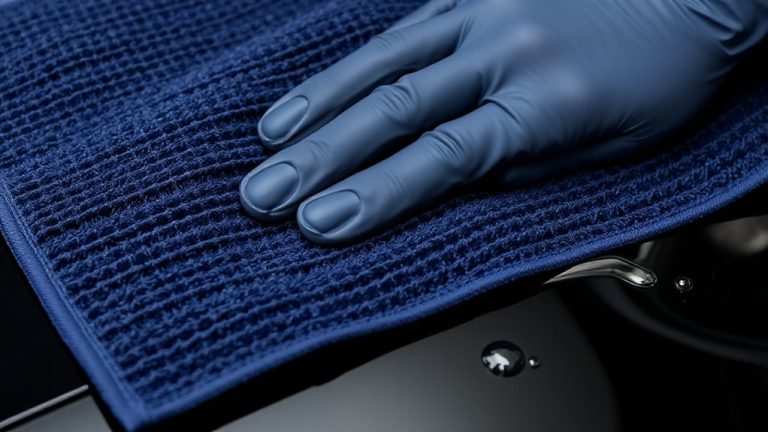
How do professionals achieve consistently flawless results without wasting product or risking surface damage? They start with precision-applying pro-grade cleaners using tools like foam cannons that deliver a thick, pH-balanced lather at 3–5 bar pressure. This foam clings for 5–7 minutes, safely loosening grime without agitation. You dilute cleaners per manufacturer specs-typically 1:50 for heavy-duty formulas-to maintain efficacy while conserving product. Next, use a two-bucket method with Grit Guard to prevent swirls. For wheels and trim, apply targeted cleaners with applicator brushes at 10 psi. After rinsing, apply drying aids like isopropyl-based quick detailers to lubricate surfaces. Use a plush microfiber towel-minimum 400 GSM-to wick water without marring. Foam cannons extend contact time; drying aids reduce water spots by accelerating evaporation. This systematic approach guarantees consistent outcomes, surface protection, and efficient product use-every time. A high-quality foam cannon ensures optimal foam thickness and coverage, with models like the best foam cannons delivering superior performance for professional-grade results.
Extend Your Paint’s Life With the Right Cleaning Routine
A proper wash routine doesn’t just deliver a spotless finish-it actively preserves your paint’s integrity over time. Regular use of high-quality cleaning agents helps prevent oxidation and maintain gloss. Washing every 2–3 weeks removes contaminants before they bond, reducing long-term damage.
| Frequency | Product Type | pH Level |
|---|---|---|
| Weekly | Pre-wash foam | 6.5–7.0 |
| Bi-weekly | Shampoo solution | 7.5–8.0 |
| Monthly | Iron remover | 4.5–5.0 |
| As needed | Clay lubricant | 7.0 |
Use pH-balanced shampoos to avoid stripping wax layers. Deionized water reduces spotting by up to 90%. Two-bucket methods cut swirl marks by 70%. Microfiber towels (300–400 GSM) safely dry surfaces without scratching. These steps slow degradation and protect clear coat thickness. Consistent technique and proper chemistry are essential to prevent oxidation and maintain gloss over years.
On a final note
You achieve superior results with high-quality cleaning agents. Premium formulas contain pH-balanced surfactants that lift contaminants without stripping wax. They preserve clear coat integrity, unlike alkaline household soaps that etch surfaces. Ceramic-coated vehicles need non-abrasive cleaners below 6.5 pH. Opt for isopropyl alcohol-free trim restorers to prevent cracking. Pro-grade products extend finish life by 2–3 years. Use microfiber-safe, biodegradable solutions for maximum efficiency and minimal environmental impact.