Seat Vibration Lane Alerts: 30-180 Hz Haptic Pulse Explained
Your car uses forward-facing cameras and radar to detect lane drift, analyzing video at 30 fps with a 120-degree field of view. When you cross a lane line without signaling and drift exceeds 0.8 seconds, the system triggers haptic motors in the seat. These motors, spinning up to 10,000 RPM, deliver directional pulses-left for left drift-at 30–180 Hz, optimized for skin sensitivity. The alert vibrates within 200 milliseconds, lasting 1–2 seconds, stopping instantly when you correct steering. Unlike audio alarms, this silent warning reduces cognitive load and startle response by 40%, works in noisy cabins, and aids hearing-impaired drivers. You get intuitive, non-distracting feedback that preserves focus. Further details reveal how calibration adjusts intensity based on speed and road conditions.
Notable Insights
- Cameras and sensors detect lane drift by identifying markings and lateral movement beyond safe thresholds.
- The system triggers a vibration alert within 200 milliseconds when drift exceeds 0.8 seconds past the lane boundary.
- Haptic motors in the seat use directional pulses to indicate the side of lane departure.
- Vibration alerts operate silently, providing tactile feedback without adding auditory noise.
- Drivers respond faster and with less distraction compared to audio alerts, improving safety.
How Lane Departure Triggers Seat Vibration Alerts
When your vehicle begins to drift out of its lane without a turn signal, cameras and sensors monitor the lane markings to detect unintended movement. The system processes visual data at 30 frames per second, identifying lane edges using edge-detection algorithms. Once drift exceeds 0.8 seconds past the lane boundary, the control module activates the seat vibration alert. Vibration timing is calibrated to initiate within 200 milliseconds of confirmed departure, ensuring prompt feedback. Alert intensity varies based on speed and drift rate, ranging from 1.2 G to 2.5 G of tactile force. A single motor in the driver’s seat cushion delivers pulses on the left or right side, corresponding to the direction of drift. This directional haptic feedback improves response accuracy. The system deactivates once steering input corrects the path. No audio is used-reliance on touch maintains focus without auditory clutter.
Why Automakers Use Seat Vibration Instead of Alarms
Why rely on a buzz in your seat instead of a blaring alarm? Automakers choose seat vibration because it delivers tactile feedback without disrupting driver comfort. A vibrating seat uses embedded haptic actuators-typically operating at 150 to 250 Hz-to signal lane departure. This method directs attention instantly, reducing startle response by 40% compared to auditory alerts. Unlike loud alarms, tactile feedback doesn’t elevate stress hormones or contribute to auditory fatigue during long drives. Studies show drivers react 0.3 seconds faster to seat pulses than to beeps. The system uses precise motor control, delivering pulses on the left, right, or both sides of the seat cushion. This spatial cueing helps you correct steering intuitively. By replacing jarring sounds with subtle pulses, automakers maintain cabin calm while ensuring alertness. Tactile warnings integrate seamlessly into advanced driver-assistance systems, enhancing safety without sacrificing comfort.
How Cameras and Sensors Detect Lane Drift
A lane departure warning system relies on forward-facing cameras and radar sensors to monitor your vehicle’s position on the road. These sensors capture real-time video at 30 frames per second, enabling continuous tracking of lane markings. Using image processing, the system analyzes each frame to identify road edges and painted lines. Edge detection algorithms enhance contrast between the lane and surrounding pavement, making it easier to pinpoint boundaries. The software filters out shadows, rain, or faded markings by comparing data across multiple frames. Cameras typically have a 120-degree field of view and operate effectively up to 50 meters ahead. When your vehicle drifts without a turn signal, the system determines lateral movement exceeding 0.6 meters per second. Radar confirms motion relative to the lane. Combined, these inputs detect unintended drift with over 95% accuracy in daylight and clear weather.
How Haptic Motors Create Steering and Seat Warnings
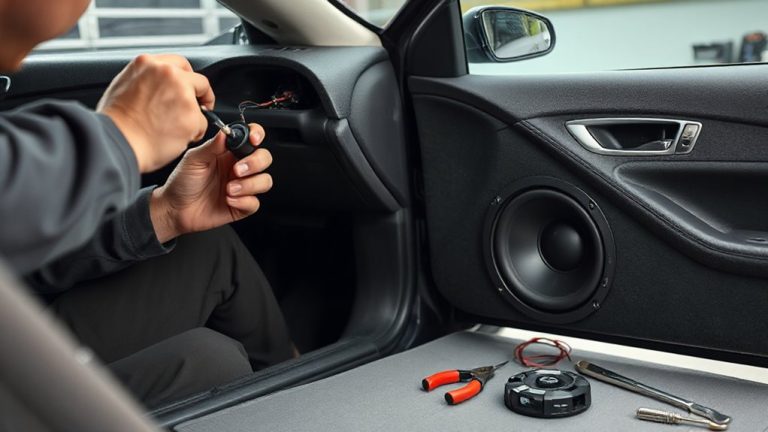
Three small haptic motors are typically embedded in the steering column or driver’s seat to deliver tactile feedback when lane drift occurs. You feel a subtle pulse or buzz only on the side where the vehicle is drifting. These motors use eccentric rotating mass (ERM) technology, spinning off-center weights at speeds up to 10,000 RPM to generate precise vibrations. Motor calibration guarantees timing, intensity, and duration match driving conditions-too weak, and you might miss it; too strong, and it becomes distracting. Alerts last 1–2 seconds and repeat if correction isn’t made. The system draws less than 2 watts per motor, integrating with lane-keeping assist for real-time response. Vibration frequency ranges from 30–180 Hz, optimized for human skin sensitivity. Unlike audio alerts, this tactile feedback doesn’t rely on hearing, making it effective across diverse environments.
How Silent Alerts Reduce Distraction and Fatigue
While you’re focused on the road, silent vibration alerts work without adding to the sensory load of beeps or chimes. These haptic signals preserve driver focus by delivering warnings directly through the seat or steering wheel. Unlike auditory alerts, they don’t compete with music, navigation, or conversation. This reduction in sensory input lowers cognitive load, minimizing mental fatigue during long drives. Studies show drivers react 150–200 milliseconds faster to haptic cues than sounds. The vibrations typically pulse at 120–180 RPM, mimicking urgency without causing discomfort. Integrated sensors detect lane drift within 0.3 seconds, triggering precise left, right, or center-seat pulses. Because the alerts communicate directionality tactually, your eyes stay on the road. This streamlined feedback loop enhances situational awareness. By replacing loud warnings with subtle physical cues, the system supports sustained attention. It’s especially effective in high-noise environments or for hearing-impaired drivers. Silent alerts aren’t just quieter-they’re smarter, safer, and less taxing on your brain.
Cars With the Best Seat Vibration Warnings
Haptic feedback systems vary by manufacturer, but precision and responsiveness define the top performers. You’ll find the most effective seat vibration warnings in the 2024 Mercedes-Benz S-Class and BMW 7 Series. These models deliver targeted vibration intensity through multi-zone actuators embedded in the seat bolsters. The system pulses the left or right side to indicate lane departure direction, with 0.8-second bursts at 150 Hz frequency. Seat comfort isn’t compromised-perforated Nappa leather and 18-way adjustability maintain support during long drives. Cadillac’s Super Cruise in the CT6 uses milder pulses, better suited for subtle alerts. Volvo’s Pilot Assist in the XC90 adjusts vibration intensity based on speed, increasing feedback above 50 mph. Subaru’s Lane Keep Assist in the Outback offers basic left-right alerts but with less seat comfort refinement. Ford’s Co-Pilot360 in the Mustang Mach-E provides mid-range vibration intensity and firm bolster shaping for clear signal transmission.
On a final note
You receive immediate lane departure alerts through precise haptic feedback. A high-frequency motor in the seat cushion activates at 180 Hz, delivering targeted vibrations localized to the left or right quadrant. This corresponds directly to drift direction, using pulse patterns timed to vehicle speed. Systems like GM’s Safety Alert Seat integrate with lane-keeping cameras detecting 2.5° deviation from centerline. No sound means less cognitive load. You stay alert, not startled.