The Effect of Vehicle Load on Suspension Performance and Ride Height
You risk overloading your suspension when exceeding GVWR, straining springs and shocks beyond design limits. Added weight compresses springs, dropping ride height by up to 1.5 inches under 600 lbs. Uneven loads cause misalignment, while coil springs fatigue and lose height over time. Air springs adjust to load, supporting 1,000–3,500 lbs with proper pressure. Overloading reduces tire contact, increases braking distance by 20%, and raises rollover risk. You’ll see how to maintain performance under heavy loads.
Notable Insights
- Increased vehicle load compresses springs, reducing ride height and limiting suspension’s ability to absorb road impacts.
- Exceeding GVWR strains suspension components, leading to frame flex, alignment issues, and reduced structural integrity.
- Uneven loading causes uneven spring compression, resulting in misalignment and compromised handling stability.
- Overloading increases braking distance, reduces tire contact, and raises rollover risk due to higher center of gravity.
- Air springs maintain ride height under heavy loads by adjusting pressure, while coil springs sag and fatigue over time.
What Happens to Suspension Under Heavy Loads
When you load your vehicle beyond its recommended capacity, the suspension system bears the brunt of the added stress. Components like springs and shocks compress beyond design limits, reducing their ability to absorb road impacts. This leads to diminished ride quality and increased wear. Frame flex becomes noticeable as the chassis twists under uneven loading, compromising structural integrity and alignment. Excessive frame flex can misalign suspension geometry, accelerating tire wear and reducing handling precision. Load shift occurs when cargo moves during cornering or sudden stops, creating unpredictable forces. This dynamic shift increases instability, requiring constant steering corrections. Your vehicle’s Gross Vehicle Weight Rating (GVWR) exists for a reason-exceeding it strains not just suspension parts but also brakes and tires. Maintaining even weight distribution helps minimize both frame flex and load shift. Always secure cargo properly. These factors directly impact control, safety, and long-term vehicle performance. Stay within limits to preserve system function.
Why Ride Height Drops When You Add Weight?
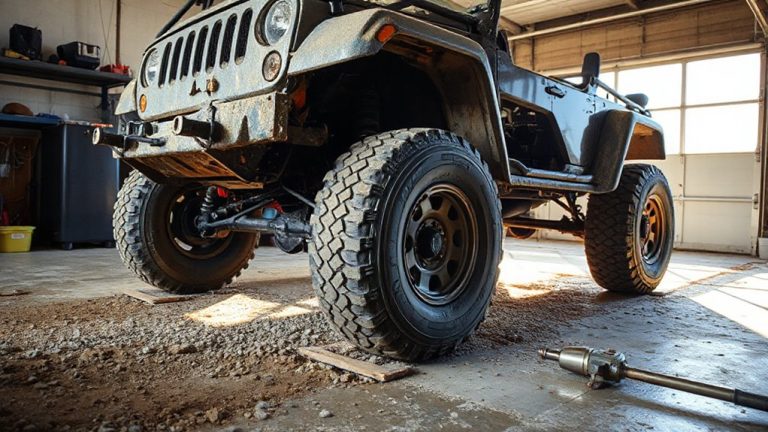
Although your vehicle’s suspension is engineered to handle varying loads, adding weight inevitably compresses the springs, lowering the ride height. This happens due to spring compression, where the suspension coils or leaf springs deform under force. The degree of drop depends on spring rate-measured in pounds per inch (lb/in)-and how much extra weight you add. Proper load distribution guarantees even compression across axles, maintaining stability. Upgrading to high-performance shocks for towing can help mitigate excessive sag and improve overall ride control under heavy loads.
| Load (lbs) | Spring Compression (in) | Ride Height Change (in) |
|---|---|---|
| 0 | 0.0 | 0.0 |
| 200 | 0.5 | -0.4 |
| 400 | 1.0 | -0.8 |
| 600 | 1.5 | -1.2 |
Uneven load distribution causes uneven spring compression, affecting alignment. Ride height drops because the suspension system operates within its designed travel range-exceeding maximum loads pushes components beyond intended limits.
How Overloading Affects Safety and Control
What happens when you exceed your vehicle’s maximum load capacity? Handling degrades, and safety risks increase. Overloading stresses your suspension, reducing tire-to-road contact and accelerating tire wear. Excess weight forces tires to work harder, generating more heat and promoting uneven tread wear-especially on the shoulders. Braking distance increases markedly; a fully overloaded vehicle can take up to 20% longer to stop due to added inertia. Your brakes and suspension can’t dissipate energy as efficiently. Steering response slows, making emergency maneuvers less precise. The center of gravity rises, increasing rollover risk on curves. Even small overloads, like 10% above the GVWR, compromise vehicle dynamics. Manufacturers set load limits based on tested safety margins-ignoring them undermines engineered performance. Consistently overloading causes premature system fatigue. For safe operation, always adhere to published payload ratings.
Air vs. Coil Springs: Which Handles Heavy Loads Best
Exceeding your vehicle’s load limit doesn’t just strain components-it exposes weaknesses in the very foundation of your suspension system. Air springs handle heavy loads better than coil springs due to superior load distribution and adjustable pressure. You can increase air pressure to match load weight, maintaining ride height and reducing sag. Coil springs, while durable, have a fixed spring rate-once overloaded, they compress beyond design limits, accelerating spring fatigue. This reduces their ability to rebound, degrading handling and comfort. Air springs typically support 1,000 to 3,500 pounds, depending on bellows size and pressure (up to 100 psi). Coils generally max out at 1,500 pounds, varying by wire diameter and coil count. Under constant heavy loads, coil springs lose up to 15% of their original height over time. Air systems, though more complex, adapt dynamically, maintaining performance and extending suspension life.
Signs Your Suspension Can’t Handle the Load
How do you know when your suspension is struggling under load? Your vehicle sags noticeably at the rear, indicating weakened springs or failed components. You may observe uneven tire wear or experience poor steering response. Bent control arms alter alignment specs, increasing camber deviation beyond ±0.5 degrees and compromising stability. Worn bushings, especially in control arms and sway bars, allow excessive movement-often more than 3 mm deflection under stress-leading to clunking noises and reduced handling precision. Ride height drops more than 1.5 inches below factory specifications when loaded, signaling inadequate support. Persistent bottoming out suggests insufficient suspension travel reserve. These symptoms worsen under heavy loads, reducing safety and control. Inspect your suspension system regularly for these indicators, especially if you routinely carry heavy cargo. Left unchecked, these issues accelerate component wear and degrade overall performance.
Keep Ride Quality When Carrying Heavy Loads
When you regularly carry heavy loads, maintaining ride quality demands more than just a sturdy frame-it requires a suspension system engineered for the added stress. Proper load distribution and cargo placement are critical to preserving handling and comfort. Uneven weight shifts can overload axles, reduce tire traction, and increase body roll. To optimize performance, always balance weight front-to-rear and side-to-side.
| Factor | Ideal Practice | Benefit |
|---|---|---|
| Load Distribution | Even axle loading | Prevents sagging, maintains alignment |
| Cargo Placement | Low and centered | Reduces rollover risk |
| Tire Pressure | Increase per manual | Supports extra weight |
| Suspension Type | Heavy-duty shocks | Dampens load bounce |
| Vehicle Rating | Stay under GVWR | Guarantees safety and compliance |
Use these guidelines to maintain stability, control, and ride quality under load.
Towing? Optimize Your Suspension Performance
Why does your vehicle feel unstable when towing? Poor load distribution and inadequate shock tuning compromise handling. When you tow, weight shifts affect your vehicle’s center of gravity, increasing body roll and reducing tire contact. Proper load distribution guarantees 60% of cargo weight stays over the axle midpoint, minimizing sway. Use a weight-distributing hitch with spring bars to balance front and rear axle loads, restoring intended ride height. Shock tuning becomes critical under load; stock dampers often lack valving to control increased mass. Upgraded performance shocks with velocity-sensitive valving improve damping force by 30–50%, enhancing stability. They resist bottoming during sudden compression, like hitting potholes. Maintain manufacturer-recommended tire pressures, typically 4–6 psi above standard, to support added load. These adjustments keep suspension travel within design limits, guaranteeing safer, smoother towing.
On a final note
You must consider load when evaluating suspension performance. Heavy loads compress springs, reducing ride height by up to 2 inches on standard coil systems. This alters alignment, decreasing control and increasing stopping distances by as much as 15%. Air springs maintain ride height within ±0.5 inches under equivalent load. Overloading beyond GVWR risks component failure. Use load-leveling shocks or air assist to maintain damping efficiency and safe handling.