Using Breaker Bars Safely When Loosening Seized Wheel Lug Nuts
Apply penetrating oil like Kroil or PB B’Lister to seized lug nuts using a precision straw nozzle. Let it soak 10–15 minutes-or overnight for heavy corrosion-to boost breakout torque by up to 50%. Use a 1/2-inch drive breaker bar, 18 to 24 inches long, made from chrome-molybdenum steel. Match the socket size exactly-commonly 17mm, 19mm, or 21mm-and guarantee full engagement. Stand with a balanced, shoulder-width stance and apply steady, linear force. Never use cheater pipes; they risk tool failure or stud damage. Maintain control with both hands, palms inward, elbows slightly bent. Use only solid, non-ratcheting bars to transfer full torque without internal gear stress. Proper technique safely generates up to 300 ft-lbs, avoiding slips and injury. There’s more to mastering this process efficiently.
Notable Insights
- Apply penetrating oil to the lug nut and stud, allowing 10–15 minutes (or overnight) for capillary action to break corrosion bonds.
- Use a 1/2-inch drive breaker bar with an 18–24 inch handle made of chrome-molybdenum or chrome vanadium steel for maximum strength.
- Ensure the socket matches the lug nut size exactly and is fully seated to prevent slippage and rounding.
- Maintain a balanced, shoulder-width stance with knees bent and back straight to apply steady, controlled force.
- Never use cheater pipes or impact force, and avoid exceeding the breaker bar’s 600 ft-lb torque limit to prevent tool failure.
How to Break Loose a Seized Lug Nut (Safely and Without Damage)
If you’ve ever encountered a seized lug nut, you know it won’t budge with a standard lug wrench. A breaker bar is your best option for safe, effective torque application. Use a 1/2-inch drive breaker bar with at least a 24-inch handle to maximize leverage without risking tool failure. Fit a high-quality six-point socket snugly over the nut to prevent rounding. Position the bar horizontally and apply steady, increasing force-don’t jerk. This controlled impact technique multiplies input force through mechanical advantage, not shock. You’re generating up to 300 ft-lbs of torque, depending on effort and bar length. Avoid cheater pipes-they can snap the bar or damage wheel studs. Always pull, not push, to maintain control and body stability. Proper torque application reduces injury risk and guarantees consistent force transfer directly to the fastener, breaking corrosion bonds safely and efficiently-no hammering needed.
Use Penetrating Oil First: When and How for Stubborn Nuts
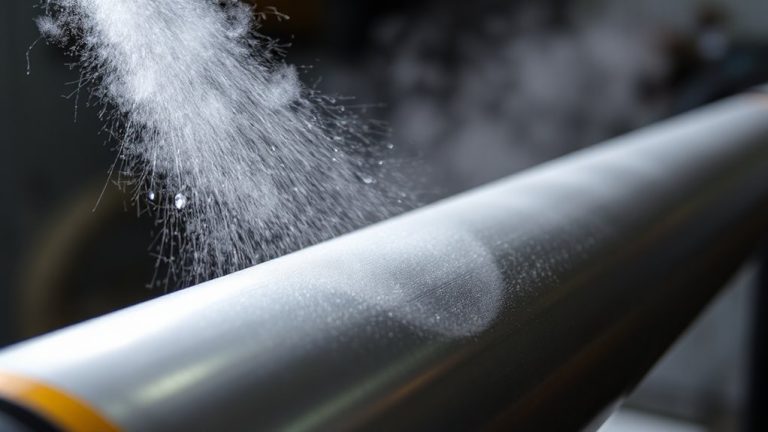
Most seized lug nuts respond best when you apply penetrating oil before attempting removal. Choose quality penetrating oil types like Kroil, PB B’Lister, or Liquid Wrench, which contain low-surface-tension solvents that creep into thread boundaries. These formulas reduce friction by dissolving rust and corrosion at a molecular level. Apply oil directly to the nut’s base and stud threads. Use the precision straw nozzle to target gaps between nut and stud. Ideal application timing means waiting at least 10 to 15 minutes after application. For extreme cases, let it soak overnight. Reapply once midway through. This dwell time allows capillary action to draw the fluid deep into corroded zones. Treat each nut individually if multiple are seized. Avoid excessive pooling, which dilutes effectiveness. Proper penetration increases breakout torque efficiency by up to 50%, reducing stress on tools and wheel components during loosening.
Choose the Right Breaker Bar: Length and Drive Size
You’ve given the penetrating oil time to work, and now it’s time to apply real force-this is where your breaker bar choice makes or breaks the job. Choose a bar between 18 and 24 inches long for maximum torque without excessive bulk. Longer bars increase leverage, but too much length risks over-torquing or tool failure. Guarantee drive compatibility-most lug nuts require a 1/2-inch drive. Using a 3/8-inch drive risks shearing under load. Breaker bar material matters; hardened chrome-molybdenum steel resists twisting and lasts longer than standard alloys. It maintains structural integrity when force is applied. Match the socket to the drive and lug size precisely-typically 17mm, 19mm, or 21mm. A poor fit rounds nuts. High torque demands quality materials and correct sizing. Always inspect for wear before use. The right breaker bar turns stubborn jobs into controlled, predictable tasks.
Position Yourself for Maximum Leverage and Control
Proper positioning is essential when applying force with a breaker bar, as your stance and body alignment determine both leverage and control. Use a proper stance to maximize efficiency and reduce injury risk. Position your feet shoulder-width apart for secure footing, ensuring balance during force application. Your dominant foot should be slightly behind the breaker bar’s handle, allowing a straight-line push with your body weight. Bend your knees slightly and keep your back straight to transfer power effectively. For horizontal leverage, align your shoulders with the bar. For vertical force, stand directly over the tool.
| Factor | Benefit |
|---|---|
| Proper stance | Reduces strain and increases power transfer |
| Secure footing | Prevents slipping on uneven or oily surfaces |
| Shoulder alignment | Enhances control during torque application |
| Bent knees | Improves balance and force modulation |
Why a Breaker Bar Works Better on Seized Lug Nuts
When dealing with seized lug nuts, a breaker bar outperforms a standard ratchet due to its longer handle and rigid, non-swiveling design. The extended length-typically 18 to 24 inches-gives you greater mechanical advantage. Mechanical advantage allows you to apply more force with less effort, essential when breaking stubborn fasteners. Torque multiplication occurs as force increases with distance from the pivot point. For example, applying 100 pounds of force on a 24-inch bar generates twice the torque of a 12-inch wrench. Breaker bars are made from high-strength chrome vanadium steel, resisting bending under extreme loads. Their square drive accepts standard sockets securely. Unlike ratchets, they don’t contain internal gears that can fail under high stress. This solid construction guarantees all your input force transfers directly to the nut. Breaker bars deliver maximum torque multiplication where you need it-right on the fastener.
Don’t Make These Breaker Bar Mistakes
Though built for brute force, a breaker bar can fail-or cause injury-if used incorrectly. Never exceed the torque rating stamped on the tool’s handle; doing so increases over tightening risks and may deform fasteners. Most standard 1/2-inch drive breaker bars are rated for up to 600 ft-lbs, but always verify your model’s limit. Using an extension or pipe to extend leverage multiplies force unpredictably and risks tool fracture. Always engage the full socket seat-partial contact causes slippage and damage. Allow for proper load distribution by applying steady, linear pressure. Avoid sudden jerks or impacts, which compromise tool integrity. Improper storage leads to corrosion and weakened metal-keep your breaker bar in a dry, organized toolbox away from moisture and chemicals. Hang it or lay it flat to prevent bending. Regularly inspect for cracks or wear at stress points.
Stop Slips and Injury: Staying Safe During Use
To prevent slips and reduce injury risk, always position your body for maximum control and stability before applying force. Proper foot placement guarantees balance-stand with feet shoulder-width apart, one foot slightly forward to brace yourself. Avoid slippery surfaces or oily garage floors, which compromise traction. Your grip technique is equally critical: grasp the breaker bar’s end with both hands, palms facing in, elbows slightly bent. A firm, controlled grip maximizes leverage and minimizes sudden shifts. Use a rubber-handled bar for better traction-handles measuring 14–18 inches offer ideal torque without excessive strain. Never jerk the tool; apply steady, increasing pressure. If the nut resists, stop and reassess. Incorrect form can cause muscle strain or tool slippage, risking hand or foot injury. Maintain alignment between your body, arms, and the bar to concentrate force efficiently.
On a final note
Always use a 1/2-inch drive breaker bar with at least 24 inches of length for maximum torque. This reduces strain and increases leverage. Pair it with a six-point socket to prevent rounding. Apply penetrating oil 15 minutes before use for better results. Position the bar low and pull smoothly to avoid slips. Never use extensions or pipes. They risk tool failure. Safety glasses are essential.