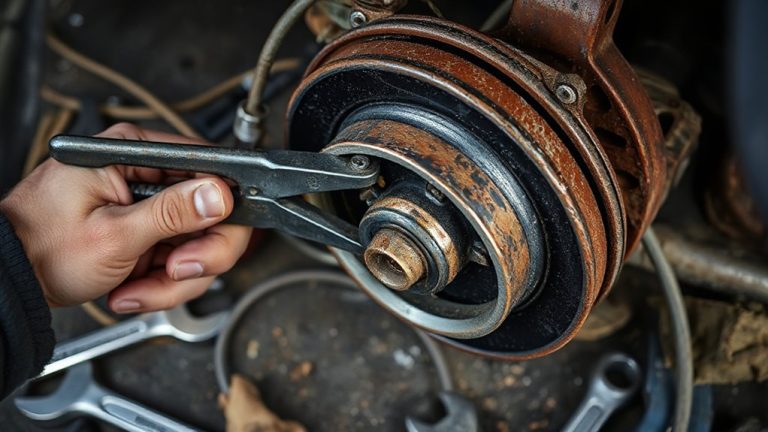
When to Replace Aging Rubber Components Beyond 100,000 Miles
Replace aging rubber components by 100,000 miles or 10 years-whichever comes first. Hoses exceeding 90 Shore A durometer hardness lose elasticity and crack. Belts with fraying, glazing, or cracks need immediate replacement; timing belts fail between 90K–120K miles. Worn bushings cause thuds and misalignment. Leaking valve cover, axle, or oil seals indicate material fatigue. Environmental exposure accelerates degradation, even with low mileage. Proactive replacement prevents cascading failures and costly damage-key indicators await further evaluation.
Notable Insights
- Replace coolant and vacuum hoses every 100,000 miles or when hardness exceeds 90 Shore A durometer.
- Inspect timing belts between 90,000–120,000 miles and serpentine belts every 60,000 miles for cracks or glazing.
- Replace control arm and sway bar bushings if cracked, hardened, or causing thuds and steering wander.
- Address oil, axle, and valve cover seal leaks promptly, especially with visible seepage or residue.
- Swap rubber components proactively at 100,000 miles or 10 years, even with low mileage, due to age-related degradation.
Hose Deterioration: When to Replace Rubber After 100K Miles
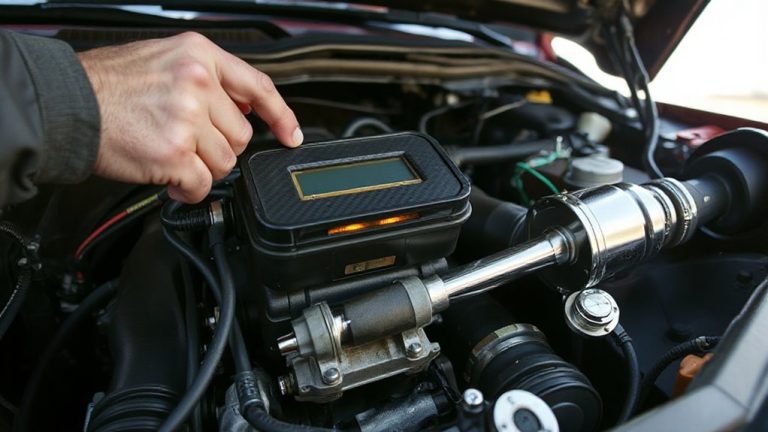
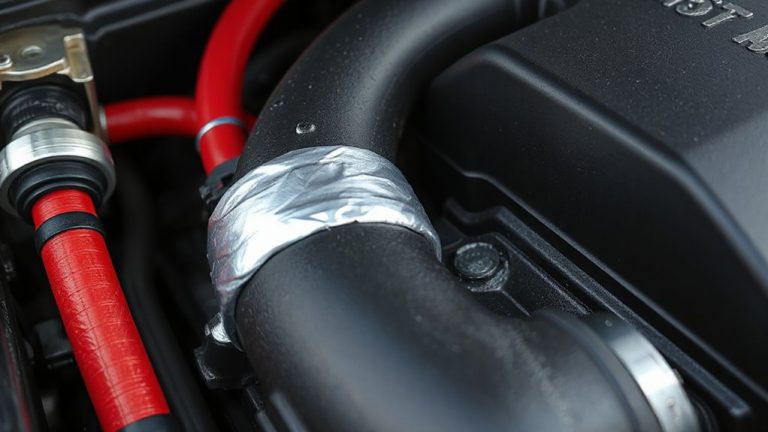
While age and mileage aren’t the only factors, most OEM rubber coolant and vacuum hoses begin to degrade considerably after 100,000 miles due to prolonged exposure to heat, ozone, and fluid contaminants. You’ll notice loss of elasticity, making hoses prone to leaks or sudden failure. Cracked insulation along the hose exterior signals advanced deterioration, often accompanying internal wall weakening. These microfractures invite coolant leaks or vacuum loss, disrupting engine performance. Stiff connectors resist proper seating, increasing the risk of disconnection under vibration. Replace any hose showing hardness exceeding 90 Shore A durometer readings. Modern silicone aftermarket hoses withstand temperatures from -60°C to 200°C and resist ozone better than OEM rubber. They maintain flexibility longer, reducing failure risk. Inspect annually past 100K miles. Replace all suspect lines-even if only one shows cracked insulation or stiff connectors-to prevent cascading failures.
Timing and Serpentine Belts: Signs They’re Near Failure
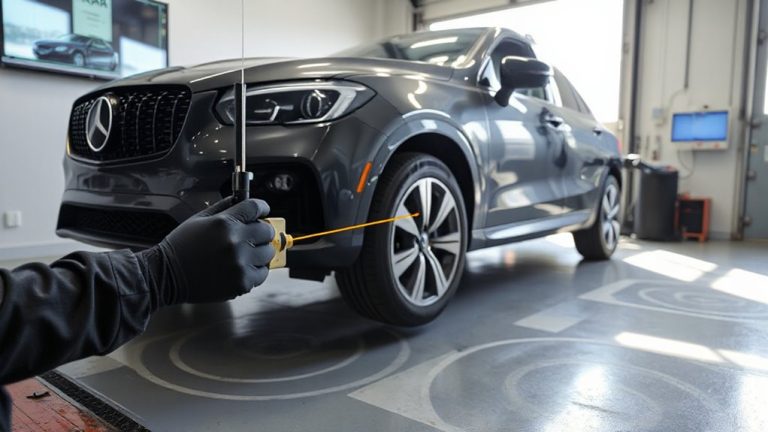
If you’ve put more than 90,000 miles on your engine, the timing and serpentine belts are nearing the end of their service life. Timing belts typically fail between 90,000 and 120,000 miles; ignoring this risks catastrophic engine damage. Serpentine belts should be inspected every 60,000 miles and replaced by 100,000. Loss of proper belt tension leads to slipping, overheating, or alternator failure. Use a belt tension gauge to verify force: most serpentine belts require 20–30 pounds of deflection. Misaligned pulley alignment accelerates wear and causes belt edge cracking. Check alignment with a straightedge or laser tool-misalignment beyond 1 degree causes premature failure. Visible fraying, glazed sidewalls, or deep cracks mean immediate replacement. Don’t wait for squeals or slippage-by then, failure is imminent. Replace both belts proactively to maintain reliability.
Control Arm and Sway Bar Bushings: Handling Clues Past 100K
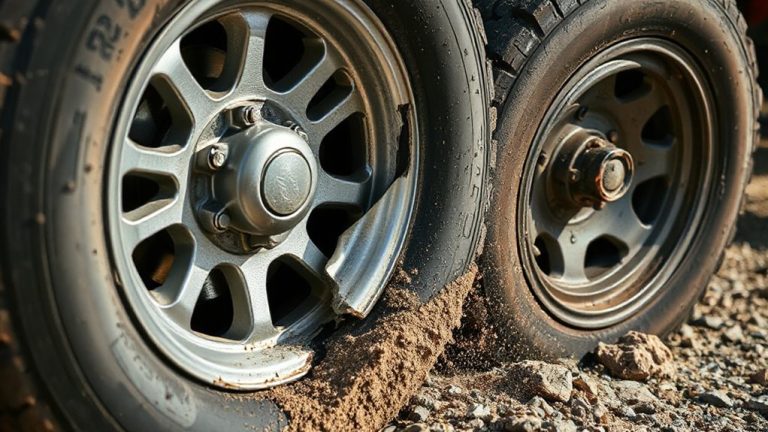
Ever notice a dull thud over bumps or a wandering steering feel after hitting 100,000 miles? These could be signs your control arm and sway bar bushings are failing. Made of rubber or polyurethane, they isolate vibration and maintain alignment. Over time, the rubber hardens and cracks, reducing compliance. Worn bushings allow excessive suspension movement, accelerating ball joint wear and causing suspension misalignment. Misaligned suspensions lead to uneven tire wear, reduced grip, and unstable handling. You might see camber or toe values out of factory specs-often beyond ±0.5 degrees. On most vehicles, control arm bushings last 80,000–100,000 miles; sway bar links and bushings slightly longer. Replacing them restores precision. Use OEM-spec materials to maintain ride quality. Ignoring symptoms risks further damage and costly repairs down the road.
Oil, Axle, and Valve Cover Seals: Where Leaks Begin
You’ve likely noticed minor fluid stains under your car after parked for hours-what once seemed like isolated drips may now trace back to aging rubber seals throughout the drivetrain. Oil, axle, and valve cover seals degrade past 100,000 miles, losing elasticity and forming leaks. Modern seals resist seal swelling from contaminated oil, but prolonged exposure still compromises integrity. Cracked valve cover gaskets often leak near cylinder heads, dripping oil onto hot exhaust manifolds. Differential axle seals fail under torque load, leaking gear oil where shafts meet the housing. Left unchecked, low fluid levels accelerate wear. Pressure testing the system helps identify weak points by simulating operating conditions. Technicians use nitrogen or hydraulic pressure to expose microfractures invisible during visual inspection. Early detection prevents costly damage. Replacing compromised seals restores containment, maintaining lubricant integrity and preventing environmental contamination. Precision fit guarantees proper seating and long-term reliability.
Rubber Replacement Rules: Age vs. Mileage Guidelines
While mileage offers a useful benchmark, the age of rubber components often matters more when determining replacement timing. Rubber degrades over time regardless of use, with material fatigue setting in after about 10 years. Even if your car has low mileage, aging rubber loses elasticity and tensile strength. You’ll often see rubber cracking-especially on boots, hoses, and seals-indicating structural breakdown. Cracks wider than 0.5 mm or deeper than 1 mm signal imminent failure. Temperature swings, UV exposure, and ozone accelerate this deterioration. Most OEM rubber lasts 8–12 years before performance declines. After 100,000 miles or 10 years, inspect all major rubber parts annually. Replace suspension bushings, motor mounts, and coolant hoses proactively. Don’t wait for leaks or clunks. Preventive replacement avoids costly secondary damage and keeps your vehicle reliable. Age, not just miles, dictates rubber’s lifespan.
On a final note
You should replace aging rubber components after 100,000 miles regardless of visible wear. Hoses degrade internally due to heat and pressure cycles, risking sudden failure. Belts lose tensile strength; a serpentine belt typically lasts 60,000–100,000 miles but can crack microscopically beyond that. Bushings compress over time, reducing suspension geometry accuracy. Seals dry out, leading to oil leaks at gasket interfaces. Age matters-ethanol in fuel systems accelerates rubber breakdown even with low mileage.