Choosing Microfiber Materials That Enhance Your Detailing Efforts
Choose microfiber towels with a tight 180+ threads per inch weave for superior dirt trapping and scratch resistance. Opt for 300–400 GSM weight to balance absorbency and durability. A 70/30 polyester-nylon blend offers strong capillary action, absorbing up to 1.8 times its weight in liquid. Use ultra-fine 0.5 denier fibers in twill or suede weaves to prevent streaks and lint. Larger 16”x24” formats reduce seams and overlap marks. Color coding improves contamination control. The right specs mean better results-details matter when performance is non-negotiable.
Notable Insights
- Choose microfiber with 300–400 GSM for optimal absorbency and streak-free drying on vehicle surfaces.
- Opt for a 70/30 or 80/20 polyester-polyamide blend to balance durability, absorbency, and lint-free performance.
- Select ultra-fine 0.3–0.5 denier fibers in twill or suede weaves for maximum softness and scratch resistance.
- Use cloths with at least 180 threads per inch to ensure tight weaves that reduce lint and surface abrasion.
- Match cloth color to task-blue for glass, gray for interiors, black for wheels-to prevent cross-contamination and enhance results.
What Microfiber Weave Works Best for Your Car?
What makes one microfiber weave better than another for your car? Fiber density and weave tightness determine cleaning effectiveness. High fiber density means more split fibers per square inch-typically 200,000 to 400,000-capturing fine particles without scratching. A tighter weave increases surface contact, improving dirt entrapment and reducing lint. Weave tightness is measured in threads per inch (TPI), with premium weaves exceeding 180 TPI. Looser weaves, below 120 TPI, risk abrasion and leave residue. Dense, tightly woven microfiber removes contaminants efficiently while preserving wax and sealants. The ideal blend uses ultra-fine 0.3–0.5 denier fibers in a twill or suede pattern for maximum softness and durability. These specs guarantee superior wipe performance on paint, glass, and trim. You need this precision to protect your finish. Not all microfiber is equal-choose weave quality first. For optimal results, consider the best microfiber towels for car care that meet these technical standards.
How Weight Affects Microfiber Performance
Weight matters when it comes to microfiber performance, measured in grams per square meter (GSM). You’ll find most detailing cloths range from 200 to 500 GSM. Higher GSM means greater fiber density, which boosts durability and softness. A dense weave traps more dust and debris without scratching surfaces. Fiber density directly impacts absorbency rate-cloths above 350 GSM absorb more water and polish residue due to increased surface area. Lightweight microfibers (200–300 GSM) work well for dusting and dry wiping but lack liquid retention. Medium-weight options (300–400 GSM) balance absorbency rate and lint-free performance, ideal for glass and paint. Heavy microfibers (400+ GSM) offer maximum absorbency and cushioning but may streak if overloaded. Choose GSM based on task precision and material surface. For trusted product selections, check out the Best Microfiber Towels for Car Care.
70/30 vs. 80/20: Which Blend Wins for Detailing?
Microfiber performance hinges on more than just weight-blend composition plays a decisive role. The 30/70 (polyester/nylon) and 80/20 (polyester/nylon) blends offer distinct advantages. For absorbency comparison, 30/70 microfibers outperform-higher nylon content increases capillary action, absorbing up to 1.8 times their weight in liquid. This makes them ideal for liquids and damp detailing tasks. However, 80/20 blends exhibit superior durability analysis results-tighter weave and higher polyester concentration resist fraying, maintaining integrity over 300+ washes. They’re less absorbent but more resilient under aggressive wiping. If you prioritize liquid pickup, 30/70 wins. For extended towel lifespan with moderate moisture, 80/20 is better. Both require proper care. Choose based on your primary task: absorption or endurance. Performance isn’t one-size-fits-all-it’s a tradeoff defined by fiber science.
Dry Like a Pro: Best Microfiber Towels Without Streaks
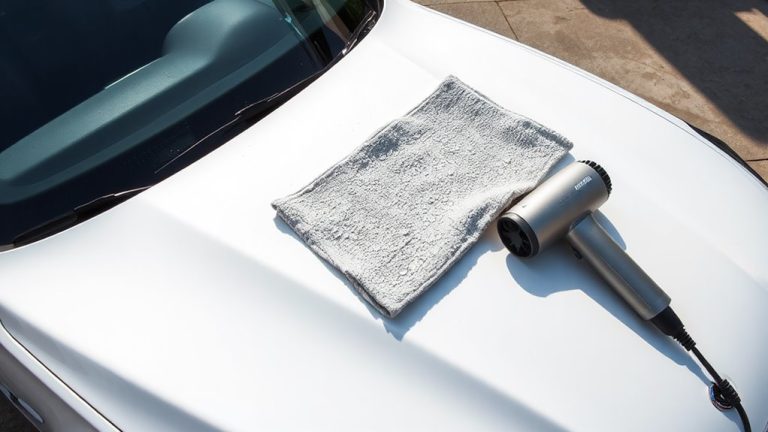
A streak-free finish starts with the right towel, and not all microfibers deliver equal results. For streak free drying, choose a microfiber with a 70/30 or 80/20 polyester-polyamide blend. These ratios guarantee rapid moisture absorption and even evaporation, minimizing water spotting. Opt for a dense, 300–400 GSM towel with ultra-fine 0.5 denier fibers-this weave lifts water without scratching or leaving residue. A tightly bound edge stitch prevents fraying and maintains a lint free finish over hundreds of washes. These towels use split-fiber technology, increasing surface area for better contact and drying efficiency. Avoid low-density weaves below 250 GSM; they retain less water and require multiple passes. Use larger 16”x24” formats for full-panel drying, reducing seams and overlap marks. Your drying towel should feel smooth but grippy, never slick. Properly cared for, it lasts 300+ washes. Top-performing options are included in the best car microfiber towel kits available today, with kit recommendations based on blend quality, GSM, and durability.
Polishing Without Swirls: The Right Microfiber Matters
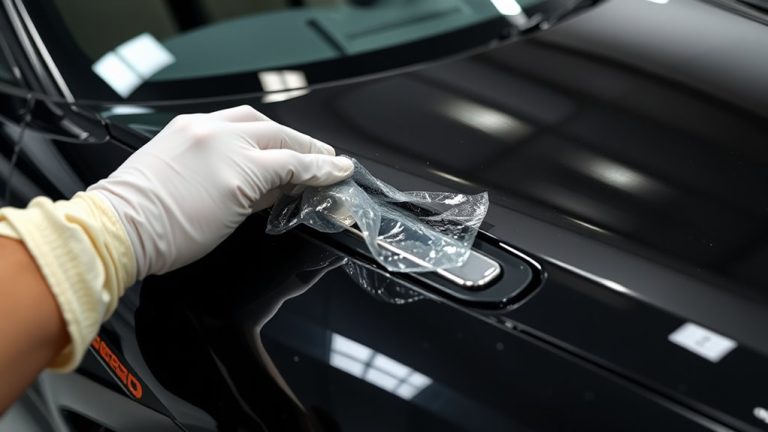
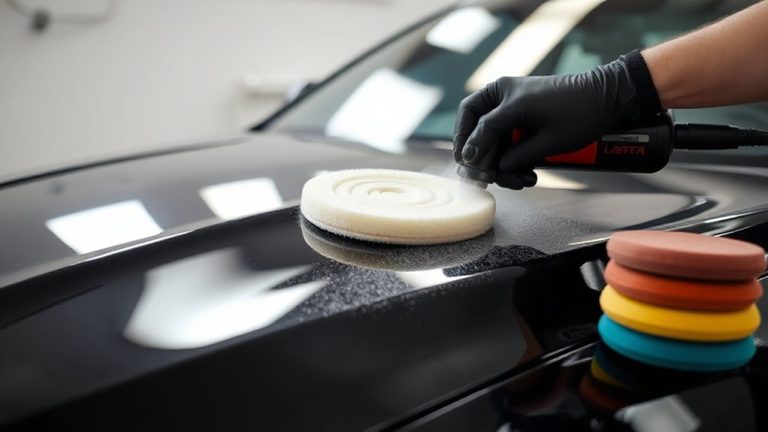
While many assume swirl marks come only from improper technique, your choice of microfiber plays an equal role in whether scratches appear after polishing. For effective swirl prevention, always match your cloth to the task. Poor buffer compatibility can introduce friction, increasing marring risk. High-quality microfiber with split fibers removes polish residue cleanly, reducing the need for aggressive wiping.
| Feel | Result | Risk Level |
|---|---|---|
| Gritty | Swirls, scratches | High |
| Smooth | Clean finish | Low |
| Dragging | Buffer burn | Moderate |
Choose a 50/50 blend with 300 GSM and a medium-nap weave for ideal buffer compatibility. These specs guarantee even pressure distribution and efficient residue lift. Never reuse cloths without washing-lurking abrasives compromise swirl prevention. A properly selected microfiber isn’t just soft-it’s engineered for precision. Your car’s gloss depends on it.
Dusting and Interior: Lightweight Microfiber Picks
That soft touch you feel matters more than you think when cleaning delicate surfaces. Lightweight microfiber towels, typically 150–200 g/m², are engineered for dusting edges and reaching tight interior seams without scratching. Their low pile height-around 0.5 mm-glides smoothly over vents, buttons, and dash contours. A tight weave of 70% polyester and 30% polyamide lifts dust without leaving lint. These towels generate minimal lint and resist fiber shedding, critical when working around sensitive audio or climate controls. You’ll find them most effective when dry or slightly damp, as excess moisture reduces electrostatic attraction that traps dust. Use a flat fold technique to maximize surface contact and reduce creasing. Precision cleaning demands precision tools-lightweight microfibers guarantee you maintain control, protect surfaces, and capture debris others miss. They fit seamlessly into routines where grit removal comes first.
Match the Towel to the Task: Microfiber Made Simple
Don’t treat all microfiber towels the same-each is built for a specific job. Choose based on thread count and intended use. High thread count (70/30 or 80/20 polyester-polyamide blends) means more fibers per square inch, increasing absorbency and scratch resistance. For glass and final wiping, use 1600–2000 thread count towels; they’re lint-free and leave no streaks. For heavy-duty tasks like degreasing, opt for denser 300–500 GSM towels with lower thread count but superior durability. Color fastness guarantees dyes won’t bleed during washing, preserving towel integrity and preventing cross-contamination. Always sort by color to avoid marring surfaces-black for wheels, gray for interiors, blue for glass. Poor color fastness leads to fading and potential staining. Match weight, weave, and fiber blend to the task. Using the right microfiber maximizes efficiency, protects finishes, and extends towel life.
On a final note
Choose the right microfiber to match your task. Heavier 80/20 blends (300–400 g/m²) offer superior absorption for drying and polishing, reducing swirls. Lighter 70/30 weaves (200–250 g/m²) excel in dusting and interior work. A tight, split-fiber weave traps more particles, acting like a dust magnet. Always verify GSM and weave ratio-these specs directly impact performance, durability, and finish quality on automotive surfaces.