Adapting Pro-Touring Muscle Cars With Modern Coilovers While Retaining Classic Ride Feel
You can upgrade your pro-touring muscle car with modern coilovers while keeping a classic ride feel by selecting adjustable systems that offer precise damping and spring rate tuning. Stock leaf springs and twin I-arms limit travel to under 3 inches and lose up to 60% of rebound control when worn. Coilovers with 10–30-way adjustment allow fine-tuned balance between grip and comfort. Use 350 lb/in front and 250 lb/in rear springs for a 3,500 lb, 500 hp build. Set ride height at 26–28 inches front, 27–29 inches rear with 1/2 inch tire clearance. Pre-tuned kits from Ridetech, QA1, or Viking provide bolt-in performance with nitrogen-charged shocks and forged mounts. Properly calibrated valving controls body roll without sacrificing compliance. Medium rebound settings around 12–14 clicks maintain traction and reduce harshness. You’ll find setups that blend vintage aesthetics with modern handling limits. Further refinements await in real-world test data and application-specific tuning.
Notable Insights
- Choose adjustable coilovers with 10–30-way damping to balance ride comfort and handling precision.
- Select spring rates matched to vehicle weight and horsepower for optimal front-rear balance.
- Set ride height to maintain classic stance while improving suspension travel and tire clearance.
- Tune rebound damping to control body motion without sacrificing compliance over road imperfections.
- Use pre-tuned bolt-in kits from Ridetech or QA1 for proven performance and simplified installation.
Why Stock Suspension Fails on Modern Roads
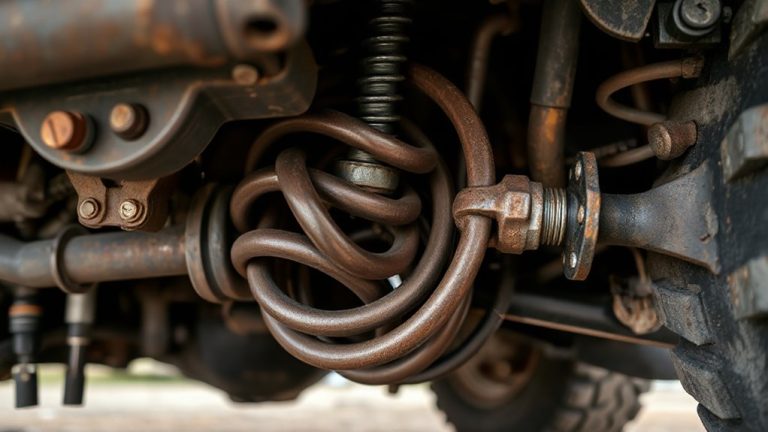
While your classic muscle car was built for straight-line speed in the ’60s and ’70s, its original suspension wasn’t designed for today’s uneven pavement, potholes, or high-speed cornering. Factory leaf springs and twin I-arms lack damping control, leading to excessive body roll and poor tire contact. You’ll feel every harsh bump due to minimal suspension travel-often under 3 inches front and rear. Stock shocks degrade over time, reducing rebound control by up to 60%, worsening ride quality. On uneven pavement, the rigid axle setups compromise stability, especially above 50 mph. The original geometry doesn’t correct camber during turns, wearing tires prematurely. Without modern spring rates-typically 250–350 lb/in front, 150–225 lb/in rear-handling suffers. Sway bars, often absent or undersized, provide little resistance to roll. Combined, these factors reduce safety, comfort, and control. Upgrading isn’t optional-it’s essential for modern driving conditions.
How Adjustable Coilovers Transform Classic Muscle Cars
When you upgrade to adjustable coilovers, you’re not just improving ride quality-you’re fundamentally reengineering the vehicle’s dynamic behavior. Precision valving and tunable damping let you control body roll, dive, and squat with accuracy unmatched by stock systems. Best coilovers for daily driving provide an ideal balance of comfort and performance, making them perfect for classic muscle cars driven regularly.
| Feature | Impact |
|---|---|
| Ride height adjustment | +2” to -4”, enabling ideal stance without sacrificing clearance |
| Rebound/compression tuning | 10- to 30-way adjustability, adapting to road or track |
| Coilover aesthetics | Clean lines, polished housings-form meets function, boosting curb appeal |
These upgrades foster brand loyalty, as performance consistency builds trust. You maintain the classic ride feel while gaining modern responsiveness. Threaded shock bodies and matched spring seats guarantee stability. With forged mounts and high nitrogen gas pressure (250+ psi), harsh rebound is eliminated. You get measurable gains: up to 30% better lateral grip, verified by lateral g-testing. No fluff-just calibrated, repeatable control.
Choosing Spring Rates for Weight and Power
Every pound of weight and every horsepower matters when selecting spring rates for your classic muscle car. Spring selection directly impacts how well your vehicle handles and rides. Too soft, and you’ll bottom out under hard cornering; too stiff, and the ride becomes harsh. You need to match spring rate to total vehicle weight and power output. High horsepower demands stiffer springs to control wheel hop and squat. Load distribution plays a key role-front-heavy muscle cars often need a higher front spring rate to balance roll stiffness. For example, a 3,500-pound Chevelle with 500 horsepower typically uses 350 lb/in front and 250 lb/in rear springs. Always calculate rate based on corner weights and suspension geometry. Proper spring selection maintains ride quality while supporting added performance.
Dialing in Damping for Grip and Comfort
You’ve picked the right springs to match your muscle car’s weight and power, but without proper damping, even the best spring rates can’t deliver consistent grip or a controlled ride. Damping controls spring movement, and rebound control determines how quickly the shock extends after compression. Too little rebound causes the body to oscillate, reducing tire contact. Too much makes the ride harsh and unsettled over bumps. Adjustable coilovers let you fine-tune this via valve tuning, altering internal oil flow through precision shims and pistons. Proper valve tuning balances comfort and grip by matching damping to your spring rate and driving style. For pro-touring, start with medium rebound settings-around 12 to 14 clicks out from full stiff-then adjust in small increments. Test on mixed roads, noting weight transfer and wheel control. Accurate damping increases stability during cornering and braking, keeping the tire planted without sacrificing ride compliance. For daily-driven pro-touring builds, consider pairing your coilovers with best all-season tires to maintain year-round traction and handling balance.
Setting Ride Height for Handling and Style
Although lowering your muscle car improves aerodynamics and visual appeal, setting the correct ride height is critical for maintaining suspension geometry and maximizing tire contact. You need to balance handling performance with ride aesthetics and proper wheel fitment. Too low, and you’ll compromise suspension travel and alignment angles. Too high, and you lose the aggressive stance and cornering precision you want. Most coilovers offer 2–3 inches of adjustability, but ideal height depends on your chassis and tire combo. Use a measuring tape from fender to ground for consistency-typical front ride heights range from 26 to 28 inches. Enthusiasts often choose performance-oriented best coilovers for Dodge Challenger to achieve optimal ride quality and handling precision.
| Factor | Ideal Range |
|---|---|
| Front Ride Height | 26–28 inches |
| Rear Ride Height | 27–29 inches |
| Tire Clearance | 1/2 inch minimum |
| Fender Gap | 1–2 fingers (style-based) |
| Wheel Fitment | Flush with outer lip |
Coilovers That Keep the Vintage Ride Feel
Lowering your muscle car sharpens its look and improves handling, but going too low often sacrifices comfort and daily drivability. You want ride quality that mirrors the original suspension’s compliance without wallowing. Modern coilovers can retain vintage comfort when designed with progressive spring rates and valved dampers tuned for street use. Look for units with 200–300 lb/in front and 180–250 lb/in rear spring rates-close to OEM wheel loads. Aluminum monotube designs offer responsive damping without harshness. Adjustable preload lets you fine-tune ride height without over-compressing the suspension. These coilovers use longer shock strokes to preserve wheel travel, maintaining compliance over bumps. Properly spec’d, they deliver modern control while keeping the soft roll and isolated feel classic car drivers expect. You’re not trading comfort for performance-you’re balancing both.
Pro-Tested Coilover Setups for Classics
When selecting coilovers for a classic muscle car, real-world testing reveals that pre-tuned street packages from brands like Ridetech, QA1, and Viking Suspension deliver consistent performance without guesswork. These coilover brands engineer systems specifically for vintage platforms, balancing ride comfort and handling precision. Most kits include adjustable dampers and progressive-rate springs calibrated for street driving-typically 250–350 lb/in front and rear. Mounting solutions are designed to bolt directly into OEM control arms or chassis rails, minimizing fabrication. For example, Ridetech’s ShockWave system integrates air springs and shocks into one unit, allowing ride-height adjustability. QA1’s threaded body coilovers offer 36 positions of rebound adjustment, fine-tuning response. Viking’s double-adjustable units provide independent compression and rebound control, ideal for Pro-Touring duty. All maintain a classic ride feel while improving cornering and stability.
On a final note
You achieve balanced performance by selecting coilovers with progressive spring rates matched to your car’s weight and power. Adjustable damping lets you fine-tune rebound and compression for grip and ride quality. Set ride height to lower center of gravity without compromising suspension travel. Use heritage-style coilovers with valving tuned for classic body dynamics. This preserves the original ride feel while delivering modern handling precision.