Blocking EVAP Canister Access Points That Often Harbor Nests in Midsize SUVs
You’ll find the EVAP canister near your fuel tank, usually along the driver’s side frame rail behind the rear axle. The breather line is a 6–8 mm rubber hose venting to atmosphere-commonly chewed or nested in by rodents. Pack 304 stainless steel wool tightly into openings up to 1 inch wide, then cover with 1/8-inch galvanized mesh, secured with UV-resistant ties. Use only non-shedding, fuel-vapor-compatible materials to avoid clogging. Guarantee the mesh stays porous like a sieve to maintain proper vent flow-restrictions can trigger P0440 codes or cause vacuum issues at the fuel cap. Monitoring post-installation vacuum (1.5–2.8 inches water) helps verify performance. Further validation steps and model-specific tips are available for your SUV’s configuration.
Notable Insights
- EVAP canisters in midsize SUVs are commonly located along the frame rail near the fuel tank or behind the rear bumper.
- Breather lines, often 6–8 mm in diameter, are vulnerable entry points for rodents seeking nesting sites.
- Inspect all EVAP system openings with a flashlight and mirror to identify potential nesting access points.
- Pack 304 stainless steel wool into small openings and cover with 1/8-inch galvanized steel mesh for durable blocking.
- Secure protective mesh with UV-resistant zip ties or stainless steel fasteners to maintain airflow and prevent rodent intrusion.
Find Your SUV’s EVAP Canister and Breather Lines
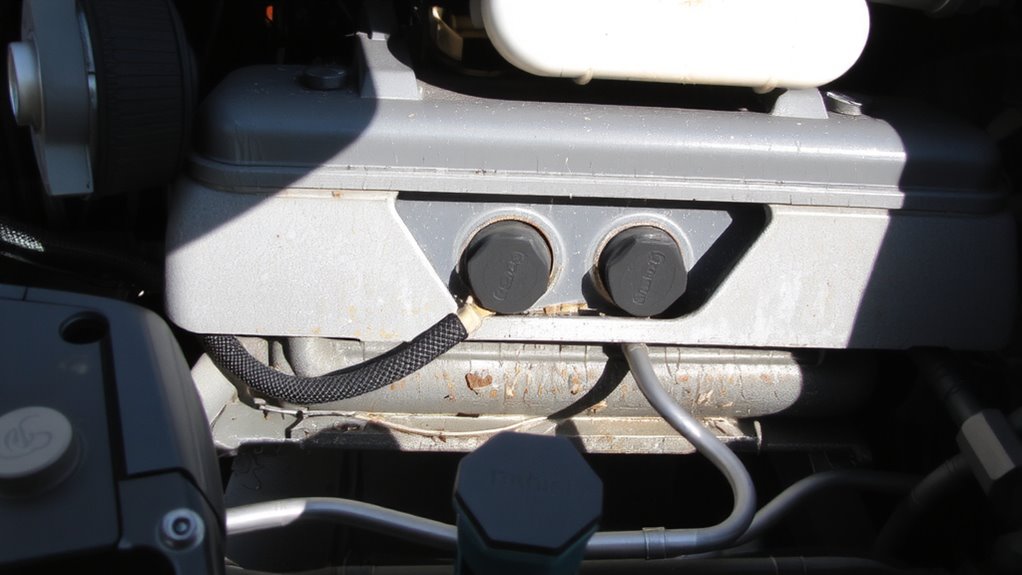
Where is your SUV’s EVAP canister located? It’s typically near the fuel tank, mounted on the vehicle’s frame rail, often behind the rear axle or along the driver’s side chassis. Evap location identification varies by model, so consult your service manual-common examples include the 2018 Ford Explorer (under cargo floor access) or Toyota 4Runner (behind rear bumper). The canister stores fuel vapors to prevent emissions. Attached breather lines, usually 6–8 mm in diameter, vent pressure and connect to the atmosphere via plastic tubes. Perform a breather line inspection routinely; check for cracks, disconnections, or nesting debris. Rodents target these soft rubber or plastic components. Use a flashlight and mirror to trace lines from the canister to vent points. Confirm secure fittings and unobstructed airflow. Proper inspection guarantees emissions compliance and prevents system damage or false diagnostic trouble codes.
Use Steel Wool and Mesh to Rodent-Proof EVAP Access Points
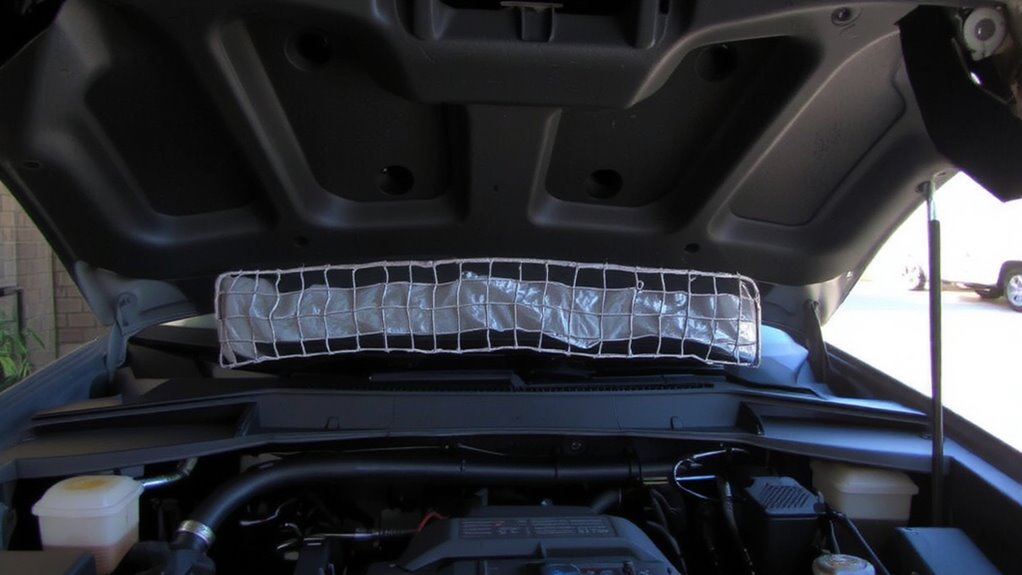
A proven way to stop rodents from damaging your EVAP canister and breather lines is to install steel wool and metal mesh around vulnerable access points. Use 304 stainless steel wool (grade #3 or coarser) for its superior material durability and resistance to corrosion. Pack it tightly into openings up to 1 inch in diameter. Over this, secure galvanized steel mesh with a 1/8-inch aperture, cut 1 inch larger than the gap. Fasten it with UV-resistant zip ties or stainless combustible screws to withstand underhood temperatures up to 250°F. Proper installation techniques guarantee long-term protection-avoid loose fits or compression, which reduce effectiveness. The mesh must make full contact with surrounding surfaces to seal gaps. This dual-layer method leverages steel wool’s abrasiveness and mesh’s rigidity, creating a physical barrier rodents won’t chew through. It’s a reliable, cost-effective defense when applied correctly.
How to Block Entry Without Damaging the EVAP System
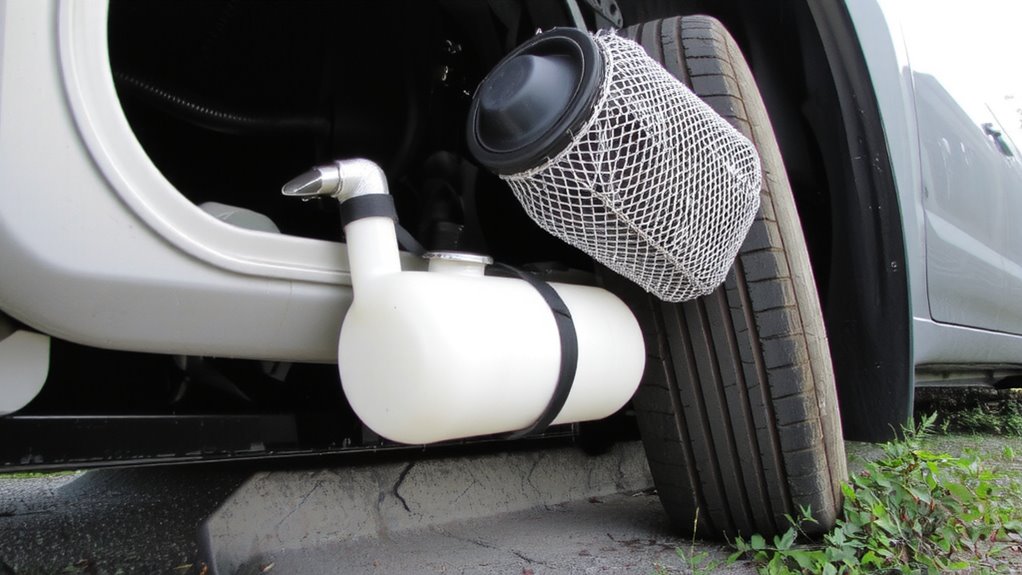
While protecting your EVAP system from rodents, you can’t afford to restrict vapor flow or trap pressure where it doesn’t belong. You must maintain airflow balance to guarantee proper fuel vapor management. Use only 304 stainless steel mesh with 1/8-inch openings-small enough to block rodents but large enough to preserve vapor throughput. Avoid steel wool alone; it degrades and can shed fibers into the system. Guarantee material compatibility by selecting UV-resistant, non-corrosive materials that won’t react with fuel vapors or degrade in underhood temperatures exceeding 250°F. Install mesh securely over access points using 316 stainless clamps, not adhesives, to prevent leaks or restrictions. Never compress mesh tightly-it must remain porous. Think of it like a sieve: it stops intruders but lets vapor pass freely. Preserving these conditions prevents codes, fuel pressure issues, and unnecessary repairs down the line.
What to Check After Sealing the EVAP Vents
You’ve installed the 304 stainless steel mesh and secured it with 316 stainless clamps to keep rodents out while maintaining proper vapor flow. Now, verify the system’s integrity. Confirm vapor flow isn’t restricted by measuring vacuum draw at the canister vent valve; it should pull between 1.5 and 2.8 inches of water. Restricted flow impedes purging, triggering check engine lights. Use a scan tool to monitor fuel pressure in real time during idle and acceleration; fluctuations beyond ±3 psi from baseline indicate issues. Stable fuel pressure guarantees consistent air-fuel ratios. Inspect all seals and connections near the canister and purge valve for leaks. Even small gaps compromise emissions performance. Guarantee the mesh remains clear of debris. A blocked filter mimics a clogged vent, increasing tank pressure. Test the system under simulated temperature changes to confirm expansion and contraction don’t damage seals. Record measurements for future comparison.
Signs Your EVAP System Is Over-Blocked
Why does your SUV’s fuel cap release a strong vacuum when opened? That’s a sign your EVAP system may be over-blocked. Restricted airflow prevents proper vapor purging, trapping pressure in the tank. You’ll notice a loud hiss or even resistance when removing the cap. This creates a fuel pressure imbalance, which the engine control module (ECM) detects. It can trigger a check engine light, often with codes like P0440 or P0455. Charcoal canisters operate under tolerances as tight as 0.02 psi; any deviation affects emissions performance. Over-blocking vents disrupts the system’s ability to manage vapor flow during scheduled purge cycles. Failed emissions tests and poor fuel economy may follow. Inspect all modifications-if seals are too aggressive or vents fully closed, airflow stops entirely. Restore minimal venting to maintain pressure equilibrium without compromising protection against animal intrusion.
On a final note
You’ve secured your SUV’s EVAP system against rodents. Use 3/8-inch stainless steel wool and aluminum mesh to block entry points without restricting vapor flow. Guarantee all seals maintain factory-specified permeability. Over-blocking can trigger check engine lights or fuel tank vacuum issues. Inspect lines monthly for damage. Properly sealed, the system prevents nesting while preserving emissions performance. Always follow OEM venting requirements to avoid pressure imbalances.