Step-By-Step Brake Pad Replacement for a 2017 Toyota RAV4 With Caliper Slide Pin Service
You’ll need a 17mm socket for lug nuts and a 14mm for caliper bolts, plus a C-clamp to compress the piston. Lift the RAV4 safely on jack stands, remove the wheel, and inspect rotors for warping or thickness below 23.0 mm. Replace pads with ceramic or semi-metallic types, lubricate slide pins with high-temperature grease, and torque caliper bolts to 76 ft-lbs. Reinstall the wheel, torque lugs to 83–95 ft-lbs in a star pattern, then perform a controlled break-in cycle. A proper bedding process guarantees peak contact between pads and the 11.69-inch front and 11.30-inch rear rotors, minimizing noise and maximizing performance-details on each step follow.
Notable Insights
- Use a 17mm socket to remove lug nuts and lift the vehicle securely on jack stands before starting work.
- Inspect rotors for warping and measure thickness, ensuring it’s above 23.0 mm minimum for 2017 RAV4 front rotors.
- Compress the caliper piston with a C-clamp before installing new brake pads to ensure proper fit.
- Lubricate caliper slide pins with high-temperature brake grease to prevent seizing and ensure even pad wear.
- Torque lug nuts to 83–95 ft-lbs in a star pattern and perform a proper pad break-in procedure for optimal performance.
Gather Tools for RAV4 Brake Pad Replacement
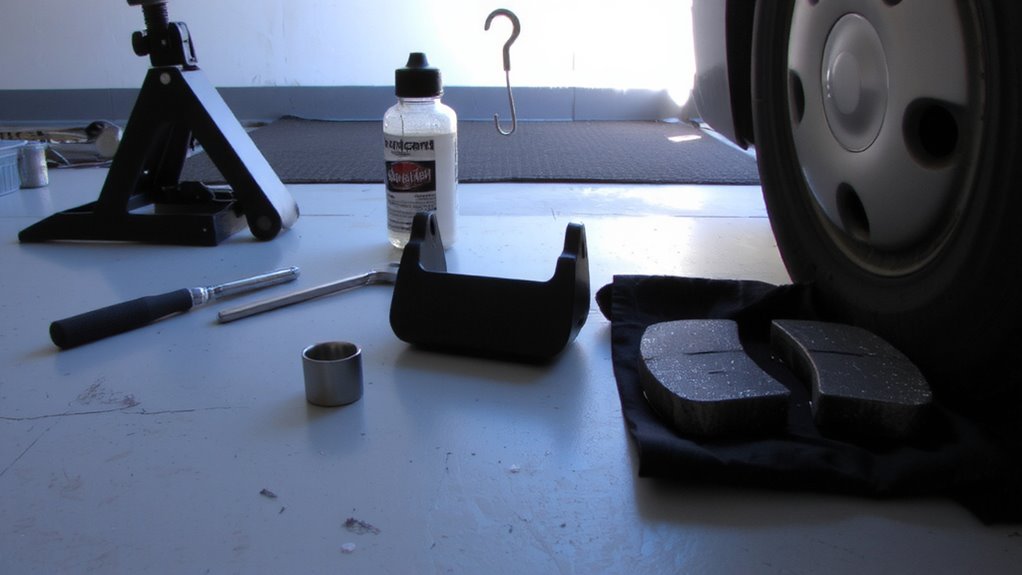
You’ll need the right tools to complete this job efficiently and safely. Start with a 17mm socket and breaker bar for lug nuts, plus a 14mm for caliper bolts. Use a C-clamp or brake caliper tool to compress the piston. A torque wrench is essential-caliper bracket bolts require 76 ft-lbs. For brake pad selection, choose ceramic for longevity and reduced dust, or semi-metallic for better heat resistance under heavy loads. Always match pads to your RAV4’s trim level and driving needs. Include anti-squeal compound and pad insulation shims for noise prevention. For tool organization, lay out all equipment on a magnetic tray or roll mat for quick access and to prevent loss. Label each socket and extension. Keep containers for small hardware. Proper setup guarantees accuracy, reduces errors, and streamlines brake work.
Remove Wheel and Inspect Rotors and Calipers
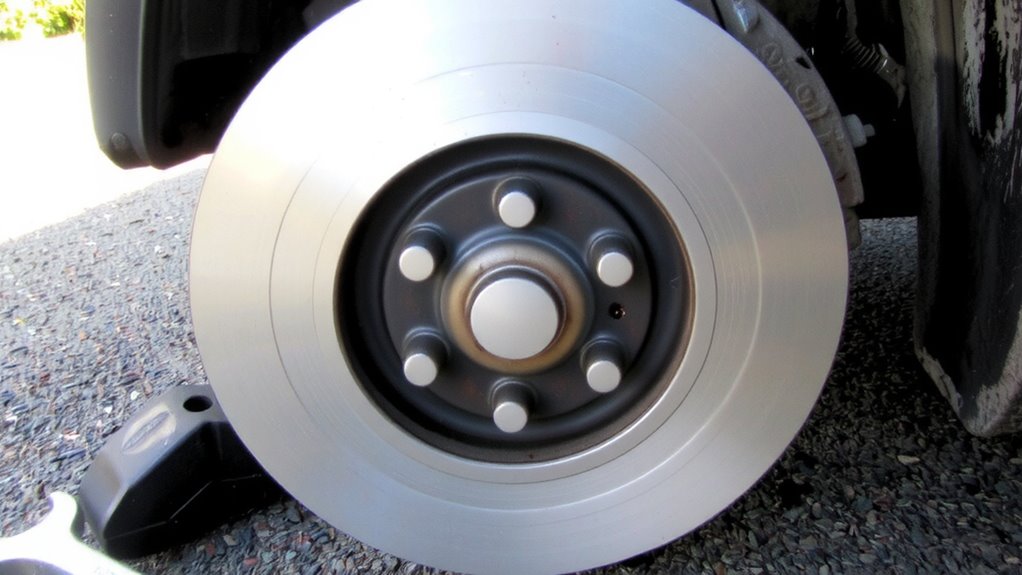
Once the vehicle is securely lifted on jack stands and the tires are chocked, begin by removing the wheel to access the brake assembly. Use a lug wrench to loosen the lug nuts before lifting, then fully remove them to pull the wheel off. With the brake components exposed, inspect for excessive brake dust accumulation around the caliper and rotor surfaces. This can indicate dragging pads or deteriorating friction material. Examine the rotor face closely for rotor warping signs, such as bluish discoloration, grooves, or a wavy edge. Measure rotor thickness using a micrometer; minimum thickness for a 2017 RAV4 front rotor is 23.0 mm. If below, replacement is required. Check caliper slide pins for corrosion or binding. Make certain the caliper body is free of leaks and cracks. Document any abnormalities before proceeding. For optimal safety and performance, use a heavy-duty floor jack rated for trucks when lifting the vehicle.
Install New Brake Pads and Lubricate Slide Pins
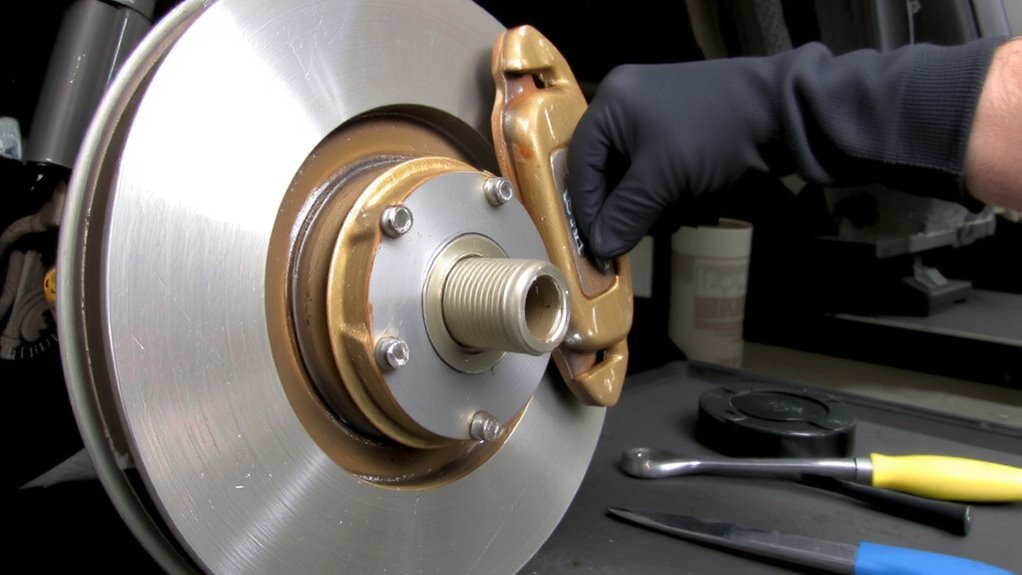
With the rotors and calipers inspected and confirmed to meet service specifications, the next step is installing the new brake pads. Begin by compressing the caliper piston with a C-clamp or piston tool-this guarantees proper caliper clearance for the thicker new pads. Incorrect caliper piston compression can make pad installation impossible or damage the brake system. Place the new inner and outer pads into the caliper bracket, guaranteeing correct brake pad alignment with the rotor edges and caliper housing. Misalignment causes noise, uneven wear, and reduced braking. Lubricate the caliper slide pins with high-temperature brake grease-this allows free caliper movement during braking. Use only silicone-based lubricant rated to at least 400°F. Dry or seized pins lead to premature pad wear. Proper lubrication and alignment restore balanced clamping force and extend pad life. For optimal performance, choose a best caliper pin grease that resists water washout and maintains consistency under extreme temperatures.
Reattach Wheel After Brake Replacement
After confirming the brake pads are properly seated and the caliper is securely fastened, reinstall the wheel. Align the wheel squarely onto the hub, guaranteeing the lug studs pass cleanly through the mounting holes. Hand-thread each lug nut to prevent cross-threading. Use a star pattern to tighten them evenly, but only snug them at this stage. Before lowering the vehicle, torque the lug nuts to the factory Torque specifications-83–95 ft-lbs (113–129 Nm) for the 2017 Toyota RAV4. Proper torque prevents warping and maintains wheel alignment. Uneven tightening can distort the rotor or compromise hub centricity, affecting ride quality and safety. Always use a calibrated torque wrench; never rely on impact tools alone. Correct lug nut tension guarantees consistent clamping force, critical for maintaining wheel alignment and preventing loosening over time. Final torque guarantees safety, stability, and reliable braking performance-don’t skip it. For vehicles with modified wheel setups, ensure compatibility with your best brand wheel spacers to maintain proper fitment and safety standards.
Test Drive and Break In New Brake Pads
Though new brake pads may seem ready to perform immediately, they require a proper break-in period to achieve maximum stopping power and longevity. This process, known as the pad bedding technique, transfers an even layer of brake pad material onto the rotor surface. Perform this by driving at 35 mph, then firmly applying the brakes to reduce speed to 5 mph without stopping. Repeat this sequence 8–10 times per axle, allowing 30 seconds of driving between stops to dissipate heat. Avoid dragging the brakes. Complete the cycle with 5 minutes of gradual, normal driving to cool components. Proper bedding enhances friction consistency, improves response, and supports brake squeal prevention by minimizing uneven deposits. The 2017 Toyota RAV4’s front ventilated (11.69 in) and rear solid (11.30 in) rotors must develop a uniform transfer film for ideal performance. Skip this step, and you risk glazing, noise, and reduced life.
On a final note
You’ve completed a proper brake pad replacement on your 2017 RAV4 with caliper slide pin service. Always use high-quality ceramic pads measuring 11.4 mm thickness when new. Lubricate slide pins with silicone-based brake grease to prevent sticking. Torque lug nuts to 80 ft-lbs in a star pattern. Test brakes at low speed first. Allow 200 miles for ideal bed-in. Proper maintenance guarantees reliable stopping power and extends rotor life.