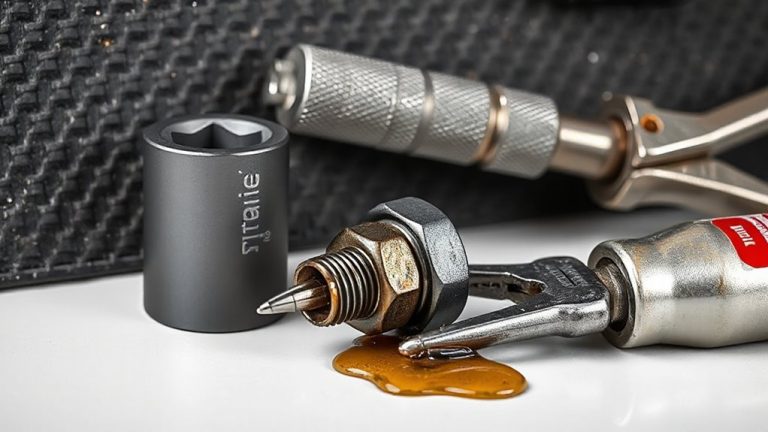
Diesel Fuel Injector Leak-Off Testing Protocol at Elevated Mileage
You should test diesel injector leak-off by 120,000 miles to catch wear early. Excessive backpressure from leaking nozzles stresses the high-pressure pump and disrupts combustion. Use a calibrated tester measuring ml/min up to 2,500 psi with engine-specific adapters. At 1,600 bar rail pressure, measure leakage over 30 seconds-more than 25 drops signals trouble. Normal flow stays under 15 ml/min; beyond 40 drops means replacement is needed. Worn clearances exceed 5 microns, allowing fuel to bypass the needle seat. Contamination or carbon buildup worsens leakage. Replace injectors if leakage exceeds 15% of spec or scoring is visible. Accurate testing prevents costly damage down the line. There’s more to take into account in timing and flow balance.
Notable Insights
- Perform leak-off testing before 120,000 miles to detect early injector wear and prevent pump damage.
- Measure fuel leakage at 1,600 bar rail pressure; over 15 ml/min or 25 drops in 30 seconds indicates trouble.
- Use calibrated tools: high-pressure hoses, digital gauge, and NIST-traceable timer for accurate ml/min readings.
- Excessive leakage (>40 drops/min) signals failed injectors due to worn nozzles or carbon-induced seating issues.
- Replace injectors showing leakage over 15% of spec or visible scoring from contamination and metal fatigue.
Diagnose Diesel Injector Leak-Off Early
Why wait for symptoms to worsen when early detection can save costly repairs? You should perform diesel injector leak-off testing before mileage exceeds 120,000. High fuel backpressure during operation indicates stress on injector seating, a critical seal point between the injector and cylinder head. When seating degrades, even slightly, excess fuel bypasses the nozzle and returns to the tank prematurely. That’s measured as leak-off-anything over 15 ml/min per injector signals trouble. Modern common rail systems operate above 29,000 psi; at those pressures, microscopic wear affects combustion. You’ll see hard starts, rough idling, or elevated hydrocarbon emissions. Using a calibrated leak-off kit, isolate each injector and monitor flow rates under simulated operating pressure. Consistent readings below 10 ml/min mean proper seating and seal integrity. Catch issues early, and you avoid compounding damage to the fuel pump or combustion chamber.
Understand Why Worn Injectors Leak Fuel
A diesel injector’s precision sealing surfaces wear over time, and that’s where leak-off starts. You’ll see increased clearance between the nozzle needle and its seat due to injector wear, compromising the tight seal needed for proper injection. As fuel viscosity changes with temperature and contamination, the worn clearances allow more fuel to bypass the needle, increasing leak-off volume. Normal clearance is under 2 microns; wear beyond 5 microns markedly raises leakage. This excess flow reduces available fuel for combustion and disrupts spray pattern timing. Over thousands of miles, microscopic metal fatigue and carbon buildup accelerate this wear. High-pressure zones in the injector body magnify the effect of even minor gaps. You’re not just losing fuel-you’re degrading atomization, which hurts efficiency and emissions. Fuel viscosity directly influences how easily leaked fuel flows through these compromised seals. Understanding this guarantees accurate diagnosis before performance drops.
Gather Tools for Diesel Injector Leak-Off Testing
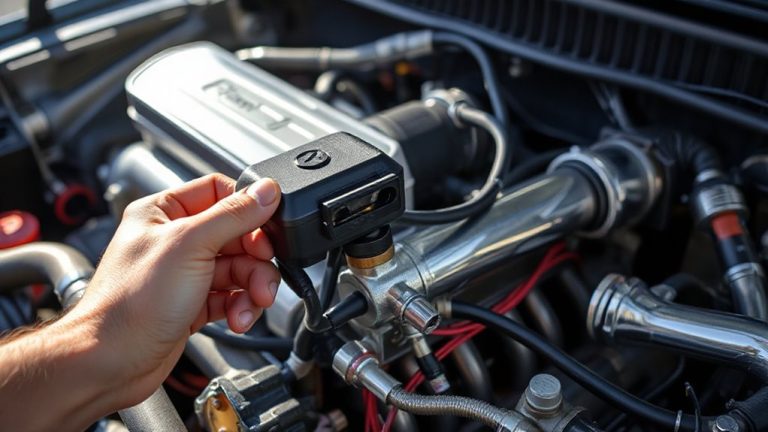
You’ve identified how internal wear and fuel properties contribute to excessive leak-off, so now it’s time to get the right tools for accurate measurement. Start with a calibrated leak-off tester capable of measuring flow rate in milliliters per minute. It must handle fuel pressure up to 2,500 psi for modern common rail systems. Use high-pressure hoses rated to 3,000 psi to prevent leaks or bursts. Include precision clamps and injector adapters specific to your engine’s injector type-this guarantees a secure seal. A digital fuel pressure gauge with 1% accuracy provides real-time pressure monitoring. A graduated collection tube lets you visually confirm flow rate over a timed interval. Pair it with a stopwatch traceable to NIST standards. These tools together allow repeatable, reliable results. Without proper equipment, measurements can drift, leading to misdiagnosis.
Test Common Rail Injectors for Leak-Off
How accurately can you measure fuel leak-off when even minor internal wear skews results? You must test common rail injectors under simulated operating conditions to guarantee reliability. Attach each injector to a calibrated leak-off tester, maintaining rail pressure at 1,600 bar. Any deviation disrupts pressure balance, reducing combustion efficiency. Measure leak-off over 30 seconds; more than 25 drops indicates excessive internal leakage. Injector flow should stay within ±5% of manufacturer specs. Use only clean, deaerated diesel to prevent false readings. Conduct tests with injectors energized at 170 Hz, mimicking ECU signal patterns. Repeat three times per injector for consistency. Temperature matters-keep fuel at 40°C (104°F) to reflect real-world conditions. Even microscopic wear in the needle seat alters flow dynamics, compromising test accuracy. Precision matters-small anomalies today can signal failure tomorrow.
Read Your Leak-Off Results: What’s Normal?
What does your leak-off test actually reveal about injector health? It shows how well your injectors maintain fuel pressure and uphold precise injection timing. Excessive leakage disrupts both, leading to poor combustion and reduced efficiency. Normal leak-off is typically 10–15 drops per minute per injector. Deviations beyond this range signal wear or internal damage.
| Leak-Off Rate (drops/min) | Injector Condition | Impact on Fuel Pressure & Timing |
|---|---|---|
| < 10 | Ideal | Stable fuel pressure, accurate timing |
| 10–15 | Acceptable | Minimal timing variation |
| 16–25 | Caution | Slight pressure loss, minor delay |
| 26–40 | Worn | Noticeable timing drift |
| > 40 | Failed | Severe pressure drop, misfires |
Stay within specs to maintain performance.
Decide: Clean, Rebuild, or Replace Injectors?
Why do some injectors respond well to cleaning while others demand replacement? It depends on injector lifespan and the extent of fuel contamination. If your injectors show moderate varnish and minor flow inconsistencies, cleaning with an ultrasonic bath and detergent can restore performance-typically effective up to 150,000 miles under clean fuel conditions. However, internal wear, cracked nozzles, or plunger erosion means cleaning won’t cut it. These issues compromise sealing and spray patterns beyond correction. Rebuilding suits high-mileage injectors with salvageable bodies but worn internals; new nozzles and seals can extend service life by 70,000+ miles. But when leakage exceeds 15% during leak-off testing or fuel contamination has caused scoring, replace them. New or remanufactured injectors guarantee calibrated performance at 18,000–30,000 psi, critical for modern diesel efficiency and emissions compliance.
On a final note
You now know how to diagnose leak-off early. Worn injectors increase internal clearance, causing excessive fuel seepage past the nozzle valve. Use a calibrated leak-off tester to measure flow rate; anything over 20 ml/min at 350 bar indicates failure. Common rail injectors require precise pressure control; even 5% deviation affects combustion. Replace or rebuild based on test data. This protocol extends engine life and maintains ideal injection timing, fuel atomization, and emissions compliance. Precision matters.