Complete Guide to Choosing Between Cat-Back, Axle-Back, and Touring Exhaust Systems
You gain more horsepower and deeper sound with a cat-back exhaust, typically 5–15 hp and improved flow from mandrel-bent tubing. An axle-back offers mild gains-just 2–5 hp-and slight tone changes, replacing only the rear section. Touring systems balance refinement and modest power, around 3–8 hp, with resonated mufflers and enhanced heat shielding. They maintain OEM-like backpressure (1.5–2.5 psi) for durability exceeding 100,000 miles. Your choice shapes performance, sound, and long-term value more than you might expect.
Notable Insights
- Cat-back systems replace components from the catalytic converter back, offering greater performance gains and a more aggressive sound than axle-back systems.
- Axle-back exhausts are easier to install and cost less, providing minor horsepower increases and a mild sound enhancement.
- Touring exhaust systems prioritize refinement and durability, using resonated mufflers for a smooth, OEM-like sound with moderate performance gains.
- Choose based on goals: cat-back for power and tone, axle-back for affordability and ease, touring for luxury and longevity.
- Pipe diameter, material (stainless vs. aluminized steel), and heat shielding impact performance, sound, and system lifespan.
What Each Exhaust System Replaces: Cat-Back, Axle-Back, Touring
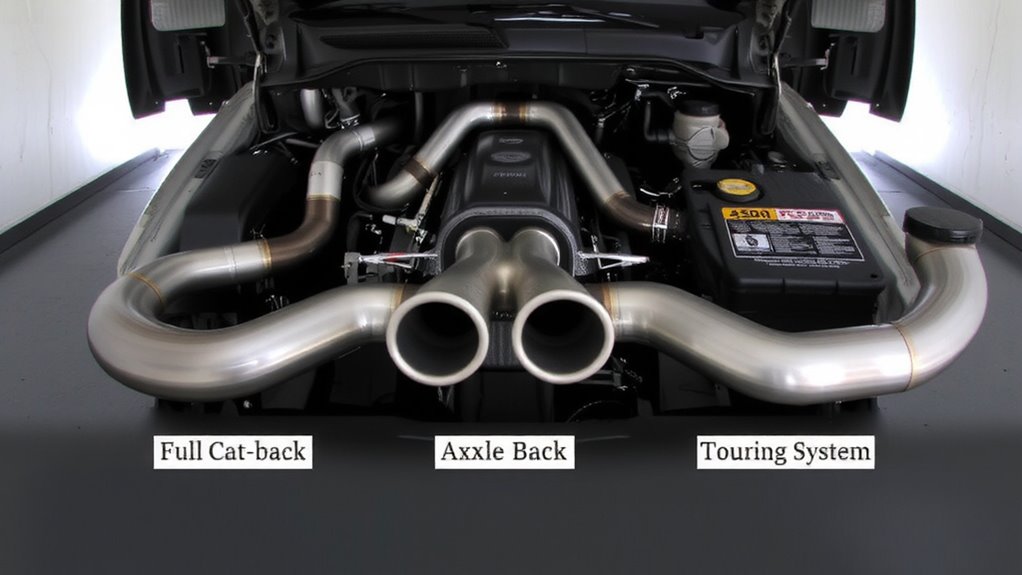
An exhaust upgrade starts with understanding what parts you’re replacing-and how deep you want to go. An axle-back system replaces the section from the rear axle to the tailpipe, offering moderate improvements in flow and weight savings. Most use stainless steel or titanium exhaust material for durability and corrosion resistance. A cat-back system replaces everything from the catalytic converter back, including the mid-pipe and muffler, markedly improving exhaust velocity and engine efficiency. Touring exhausts focus on subtle enhancements, often using thicker-gauge exhaust material and enhanced heat shielding to protect surrounding components. Heat shielding is critical in all systems, especially near the passenger compartment or fuel lines. Each system varies in complexity, with cat-back setups requiring more precise fitment. Your choice determines performance gains, installation difficulty, and long-term reliability-match it to your driving needs and emissions requirements. Top-performing setups often feature mandrel-bent tubing for consistent best V6 exhaust systems performance across RPM ranges.
Exhaust System Sound: How Each Changes Your Car’s Tone
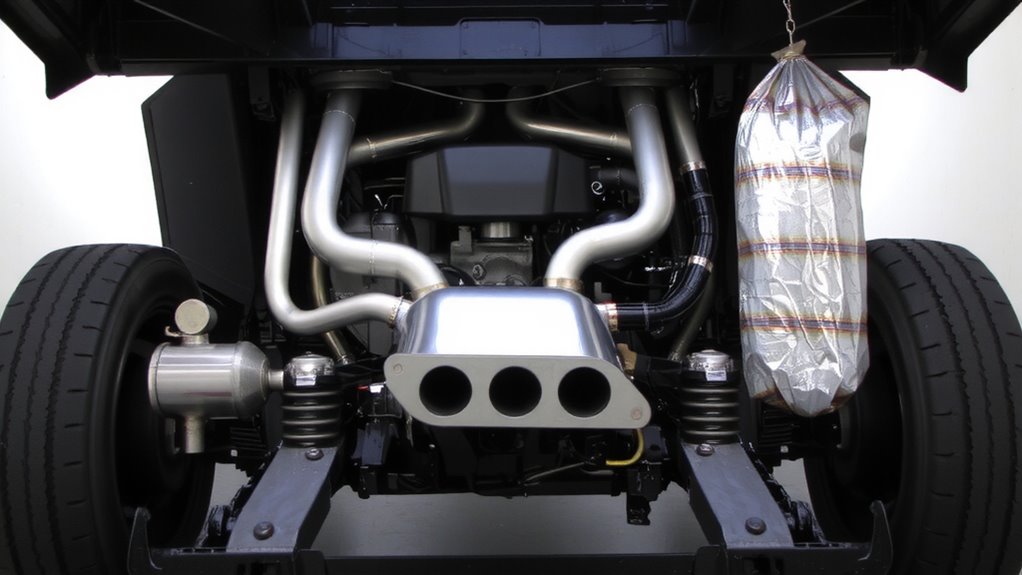
Why does your exhaust note change so dramatically with different systems? Because each system alters exhaust resonance and sound frequency. An axle-back replaces only the rear section, offering a mild tone increase-typically raising sound frequency by 10–15%. A cat-back replaces everything from the catalytic converter back, allowing freer flow and deeper resonance. It lowers sound frequency slightly while increasing volume, producing a throatier, more aggressive tone. Touring systems prioritize sound dampening, using resonated mufflers to reduce frequency peaks and maintain a subdued, OEM-like note. Exhaust resonance depends on pipe diameter, muffler design, and tailpipe configuration. A 2.5-inch system resonates at lower frequencies than a 2.25-inch, deepening the tone. Muffling materials absorb specific sound frequencies, flattening harshness. You’ll hear the difference immediately-subtle or sharp, depending on setup. Each design shapes sound through engineering, not accident. For those seeking optimal performance and sound, selecting the right best exhaust pipes can significantly enhance both auditory and mechanical output.
Performance Gains: Horsepower and Flow by System Type
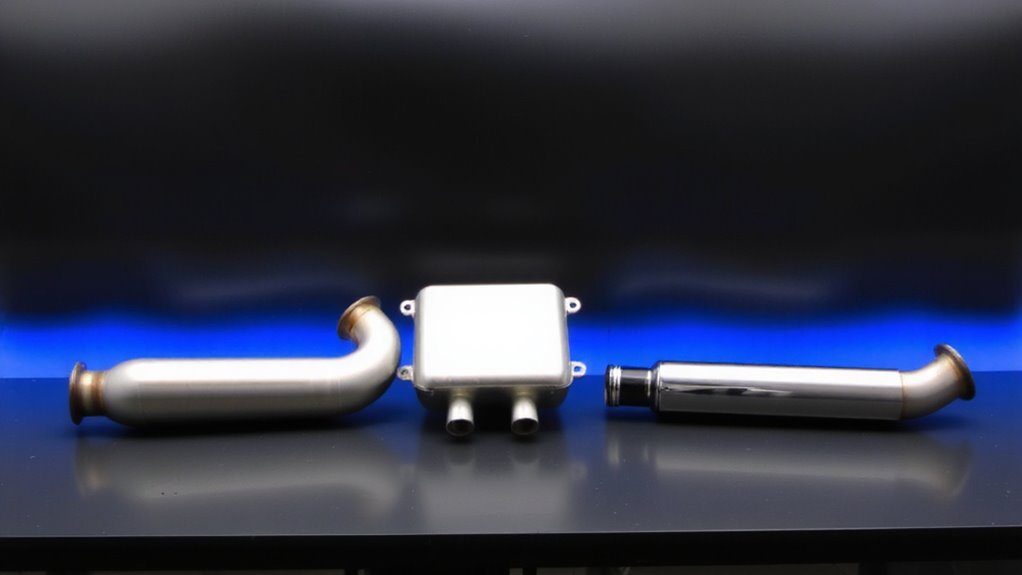
You might not see massive horsepower jumps with every exhaust upgrade, but the right system can make a real difference in engine efficiency and output. Flow efficiency improves when restrictive factory components are replaced, allowing exhaust gases to exit faster. Cat-back systems typically offer better flow efficiency than axle-backs due to full piping upgrades. Touring systems prioritize refinement but still enhance flow over stock. Actual gains depend on engine type, tuning, and supporting modifications. Dyno testing shows most gains in the mid-to-high RPM range.
| System Type | Avg. HP Gain (dyno testing) |
|---|---|
| Axle-back | 2–5 hp |
| Cat-back | 5–15 hp |
| Touring | 3–8 hp |
Gains result from reduced backpressure and improved scavenging. Verify proper fitment and O2 sensor compatibility for peak performance.
Exhaust System Cost: Balancing Price and Performance
Upgrading your exhaust affects both performance and your wallet, so picking the right system means weighing gains against cost. The exhaust system cost varies considerably-axle-backs start around $250, cat-backs range from $400–$900, and touring systems can exceed $1,200. Your budget vs. value decision hinges on performance goals and sound preference. Axle-backs offer modest horsepower gains-typically 5–10 hp-due to limited piping changes. Cat-back systems improve flow across the entire exhaust path, often adding 10–25 hp with full 2.5″ to 3″ mandrel-bent tubing. Touring systems prioritize refinement, using active valves and resonators to balance volume and comfort. Materials matter: stainless steel resists corrosion but raises price; aluminized steel cuts cost but shortens lifespan. Choose based on measurable returns, not just brand appeal. For a comprehensive overview, check out the top picks and buying guide in the Best Aftermarket Exhaust Systems roundup.
Installation Difficulty: Can You DIY These Upgrades?
How hard is it to install an aftermarket exhaust yourself? It depends on the system and your experience. Axle-backs are easiest-most attach with basic DIY tools and require no welding. They typically replace components behind the rear axle, minimizing exhaust weight and complexity. Cat-back systems are heavier and may need two people to lift due to increased exhaust weight, especially with stainless steel mufflers averaging 40–60 lbs. You’ll need socket sets, jack stands, and possibly a torque wrench for proper fitment. Touring exhausts often mirror cat-back installation but may include resonators or valving that demand precise alignment. All systems use factory hangers, but slight modifications might be needed. Without advanced mechanical skills or a lift, tight clearances under modern vehicles can complicate the job. While feasible, improper installation risks leaks or rattles.
Best For: Daily Driving vs. Performance Enthusiasts
When prioritizing comfort and long-term reliability over raw power, a touring exhaust is typically the best choice for daily drivers. You value daily comfort, and touring systems deliver with factory-like noise levels and smooth exhaust flow. These systems use high-grade 409 stainless steel, resist corrosion, and maintain OEM backpressure specs-usually between 1.5 and 2.5 psi at 3,000 RPM. That guarantees consistent engine performance and fuel efficiency. Touring mufflers feature straight-through baffle designs with sound-absorbing packing, reducing drone during commutes. For you, long term reliability means minimal maintenance and proven durability-often exceeding 100,000 miles. Performance enthusiasts, however, often choose cat-back or axle-back systems for freer flow and increased horsepower-sacrificing some comfort. These offer louder tones and reduced backpressure but may require more frequent inspections. Your driving needs define the right choice.
Key Features: Flow, Backpressure, and Muffler Design Compared
While flow, backpressure, and muffler design differ greatly between exhaust types, your choice will directly impact engine efficiency and sound quality. Cat-back systems offer improved flow over stock, reducing backpressure by up to 40% with larger 2.5–3-inch tubing. Axle-backs change only the rear section, so flow gains are minimal-usually under 10%. Touring exhausts prioritize low sound levels and durability, often using thicker exhaust materials like aluminized steel. Muffler design affects tone and restriction; chambered mufflers enhance sound moderately, while glasspacks increase volume and flow. High-end systems use stainless steel for weight savings and corrosion resistance. Tuning potential is greatest with cat-back setups, especially when paired with ECU adjustments. Backpressure below ideal levels can hurt low-end torque, so balance is critical. Your driving needs and exhaust materials dictate real-world performance and longevity.
On a final note
You get maximum performance from a cat-back system, boosting horsepower by 5–15 hp through reduced backpressure and improved exhaust flow. Axle-back systems offer mild gains-2–5 hp-and mainly alter sound. Touring exhausts prioritize refinement, with minimal power changes but enhanced flow for daily driving. Choose based on your needs: performance, noise, or comfort. All systems use mandrel-bent tubing for consistent diameter and ideal gas velocity.