The Importance of Cleaning Wash Mitts After Each Panel on PPF Vehicles
You must clean your wash mitt after each panel to protect your PPF. Contaminants like quartz dust and metal particles-just 3–5 microns-can scratch the film’s 8–10 mil urethane layer. Even plush 360–400 g/m² microfiber mitts trap grit deep in split fibers (80% polyester, 20% polyamide). Rinsing under warm water (>100°F) with squeezing removes embedded debris, especially with a grit guard. Reusing a soiled mitt spreads abrasives, causing swirls and hazing; seamless, high-pile (1.5–2.0 cm) mitts reduce risk, but only consistent cleaning guarantees safety. Further insights await.
Notable Insights
- Cleaning your wash mitt after each panel prevents embedded grit from scratching the PPF’s delicate topcoat.
- Reusing a soiled mitt transfers contamination between panels, increasing swirl marks and surface marring.
- Even invisible dirt trapped in mitt fibers can abrade 8–10 mil PPF during washing.
- Rinsing the mitt thoroughly with a grit guard removes abrasive particles before they damage the film.
- High-density microfiber mitts with split fibers help trap debris, reducing cross-panel contamination risk.
Wash PPF Panels With a Clean Mitt Every Time
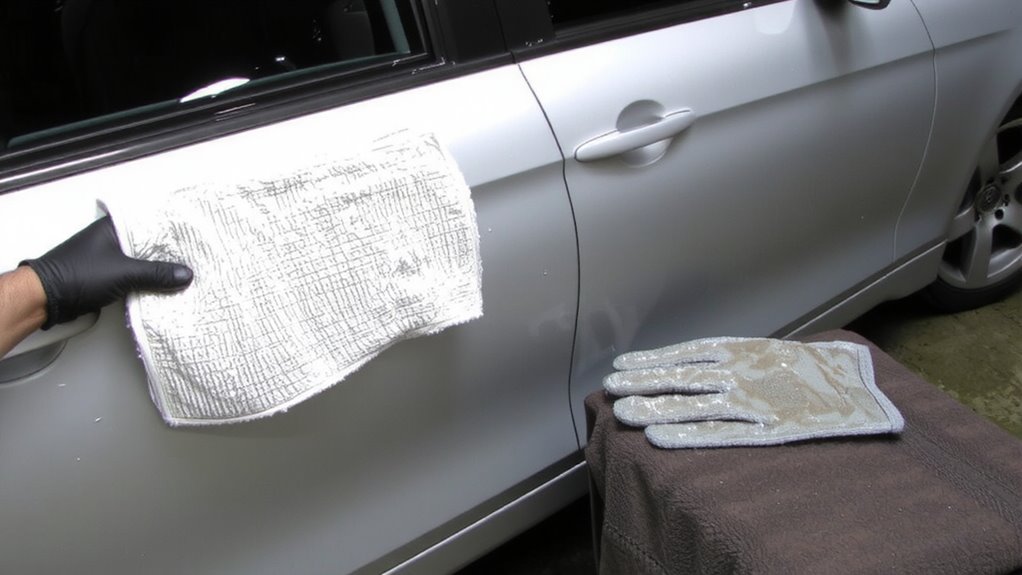
Always start with a clean wash mitt when working on PPF-covered surfaces-this isn’t optional, it’s essential. Mitt contamination from prior use introduces embedded grit that can scratch the film’s topcoat. PPF is only 8–10 mils thick; even minor abrasives compromise its protective layer. You must prevent cross panel dirt by using a fresh mitt or decontaminating it after each panel. Reusing a soiled mitt transfers contaminants from fenders to hoods, increasing swirl risk. High-quality microfiber mitts hold up to 7 times their weight in water, but they also trap dirt deep in fibers-making visual inspection insufficient. Use a 400+ thread count mitt with dual textures: smooth for paint, nubby side for grime. Change mitts every 2–3 panels on dirty vehicles. This protocol maintains PPF clarity and preserves self-healing performance. For optimum results, consider using a best car microfiber towel kit designed specifically for sensitive surfaces like PPF.
See How Grime Builds in Your Wash Mitt
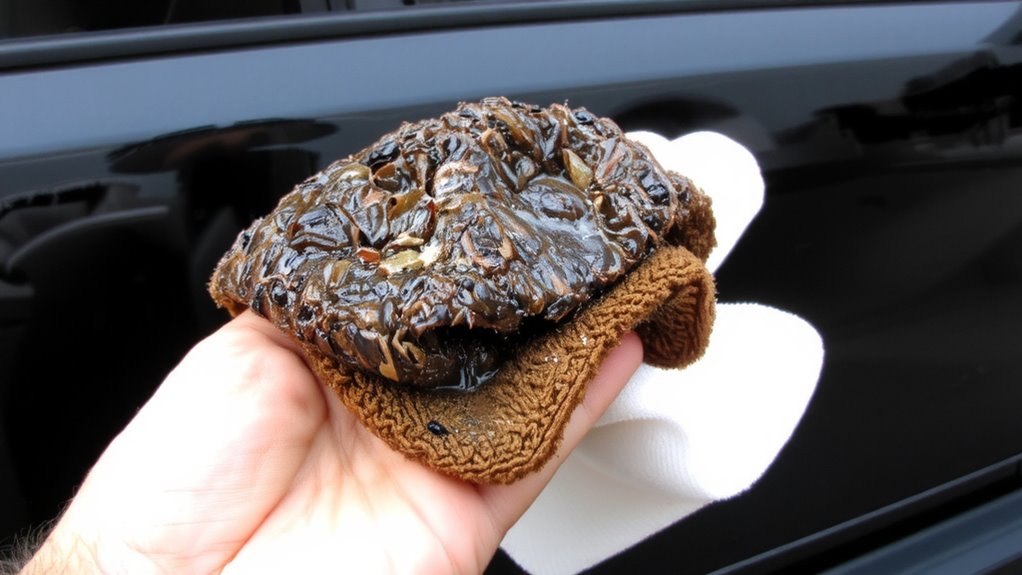
You can’t judge a mitt’s condition by sight alone-grime accumulates below the surface where it’s invisible. Contaminants embed deep within the mitt texture, especially in plush microfiber blends with 300–400 g/m² density. These fibers trap dirt, metal particles, and environmental fallout even after a single panel wash. Warm water temperature above 100°F helps loosen grime, but it won’t fully flush contaminants from the inner layers. Once the mitt absorbs abrasive particles, it becomes a vector for surface damage. The trapped debris remains hidden until pressure compresses the mitt, releasing grit during the next pass. High-density mitts retain more moisture and dirt, increasing risk. Cold water below 70°F reduces particle suspension, worsening retention. Always assume your mitt is contaminated after contact. Internal soiling compromises cleaning efficiency and substrate safety, regardless of outward appearance. Inspect and rinse thoroughly after every use. Choosing the right best car cleaning mitts can significantly reduce the risk of swirl marks and improve contaminant removal.
Stop Swirls: Don’t Reuse a Dirty Mitt on PPF
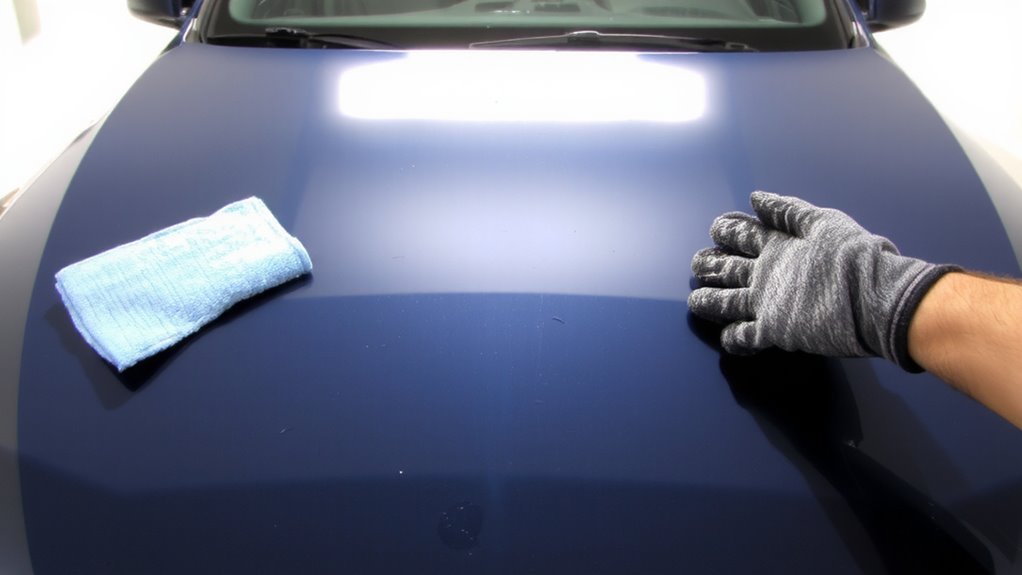
A single swipe with a contaminated wash mitt can undo hours of careful detailing. PPF is durable but not impervious-embedded debris in a soiled mitt creates micro-scratches, commonly known as swirl marks. To avoid cross contamination, never reuse a dirty mitt on a clean panel. Grime transfers instantly, compromising both finish and protection. Maintain mitt integrity by treating it like a precision tool, not a rag. A compromised mitt harbors quartz dust, metal particles, and bonded contaminants that exceed 3–5 microns-easily scratching urethane film rated at 12–15 mils thickness.
| Risk | Consequence |
|---|---|
| Reusing dirty mitt | Swirls and hazing |
| Contaminant transfer | Film degradation |
| Poor mitt care | Reduced lifespan |
| Cross-panel dirt | Uneven finish |
| Compromised fibers | Surface marring |
Clean Your Wash Mitt Between Panels (Step by Step)
While washing one panel at a time, your wash mitt picks up dirt, metal particles, and bonded contaminants that can scratch PPF if not removed promptly. Proper mitt maintenance prevents cross-contamination and preserves finish integrity. After washing each panel, rinse the mitt thoroughly under running water, squeezing it multiple times to expel trapped debris. Use a dedicated grit guard in your wash bucket to flush out contaminants effectively. This routine supports strict panel separation, minimizing the risk of transferring abrasive material. For dual-bucket methods, designate one bucket for washing and another for rinsing the mitt-never let a used mitt sit in soapy water. Microfiber or plush sheepskin mitts retain more particles, making post-panel rinsing essential. Clean mitts reduce surface friction, maintaining PPF’s optical clarity and protective function. Consistent technique guarantees every panel receives contaminant-free contact, extending the coating’s lifespan.
Choose the Best Mitts for PPF-Safe Washing
Proper mitt selection directly impacts the safety and effectiveness of washing vehicles with paint protection film. You need a wash mitt designed specifically for PPF to avoid marring. Microfiber quality is critical-choose mitts with split fibers of 80% polyester and 20% polyamide for superior particle trapping. These fibers lift contaminants without scratching. Mitt density should be at least 360 g/m²; higher densities offer more cushioning and reduce swirl risk. A dense, plush pile (1.5–2.0 cm) guarantees dirt is suspended away from the film surface. Avoid coarse or degraded mitts, as they can act like sandpaper. Seamless construction prevents seams from dragging across PPF seams. Always rinse the mitt thoroughly after each panel to maintain its cleaning efficiency. A high-quality mitt preserves PPF clarity and extends its life. Your technique is only as good as your tools.
On a final note
Always clean your wash mitt after each panel when washing PPF-covered vehicles. A contaminated mitt contains abrasive particles measuring 50–200 microns, which can scratch the film’s surface. Microfiber mitts with 300–400 g/m² density and split-fiber construction trap more debris but require thorough rinsing. Use a grit guard in your wash bucket to remove embedded grit. Reusing a dirty mitt increases swirl risk by 70%. Clean mitts preserve PPF’s optical clarity and 8–10 mil protective layer.