Preserving Rubber Fuel Hoses by Eliminating Oxidative Exposure During Downtime
You lose up to 40% of your rubber fuel hose’s elongation at break within one year due to oxidation during downtime. Oxygen permeates NBR/PVC and EPDM hoses at 2.5–6.0 cm³·mm/m²·day·atm, causing chain scission and embrittlement. Seal hoses using nitrogen purging at 30–50 psi for two minutes, reducing oxidation by 95%. Use airtight polyethylene bags with oxygen barrier film (<0.5 cc/m²/day) and silica gel desiccants to maintain humidity below 40%. Proper storage extends service life beyond 36 months. There’s more to optimizing hose longevity effectively.
Notable Insights
- Purge hoses with dry nitrogen at 30–50 psi for two minutes to reduce oxidation by up to 95%.
- Seal hose ends with 300 psi-rated brass caps and FKM O-rings to prevent air and moisture ingress.
- Use airtight polyethylene bags with oxygen barrier film to limit oxygen exposure below 0.5 cc/m²/day.
- Include silica gel desiccants to maintain internal humidity below 40% during storage.
- Store coiled hoses under 50 lux lighting with UV-resistant caps to minimize environmental degradation.
Why Oxygen Ruins Idle Rubber Fuel Hoses
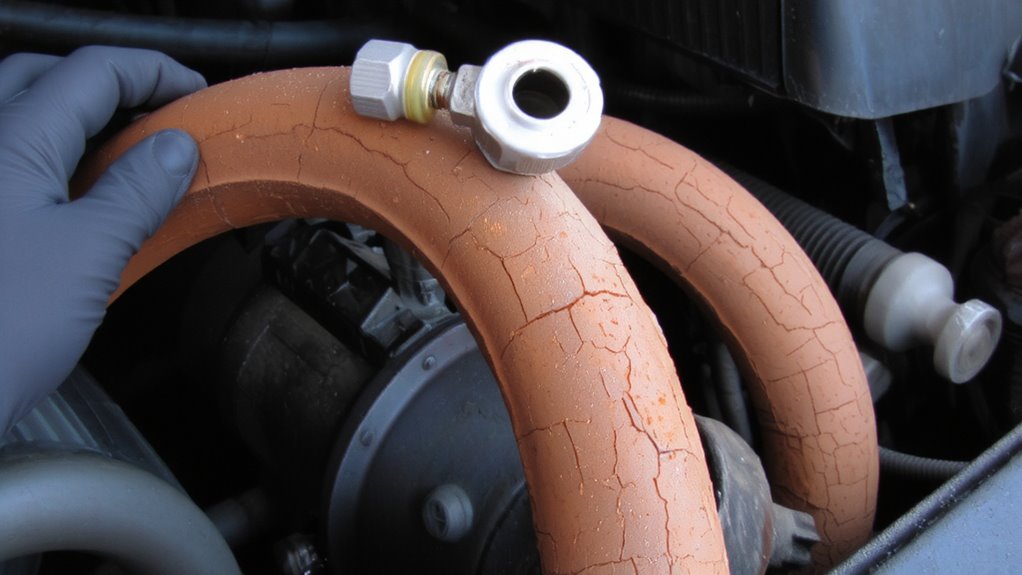
While you might not think about it, oxygen plays a key role in degrading idle rubber fuel hoses over time. Oxygen permeation occurs even when hoses are not in use, allowing oxygen molecules to diffuse through the rubber matrix. This gradual infiltration leads to molecular degradation, weakening the hose’s structural integrity. Standard NBR/PVC rubber compounds typically allow oxygen permeation rates of 2.5–4.0 cm³·mm/m²·day·atm. Over months of inactivity, this causes embrittlement, microcracking, and reduced burst strength. You won’t see immediate damage, but permeation initiates irreversible chemical changes at the polymer chain level. Ethylene propylene diene monomer (EPDM) hoses are worse, with permeation rates up to 6.0 cm³·mm/m²·day·atm. The resulting molecular degradation reduces elongation at break by as much as 40% after one year of storage in ambient air. These changes compromise safety and performance, even if the hose appears intact.
How Oxidation Breaks Down Rubber
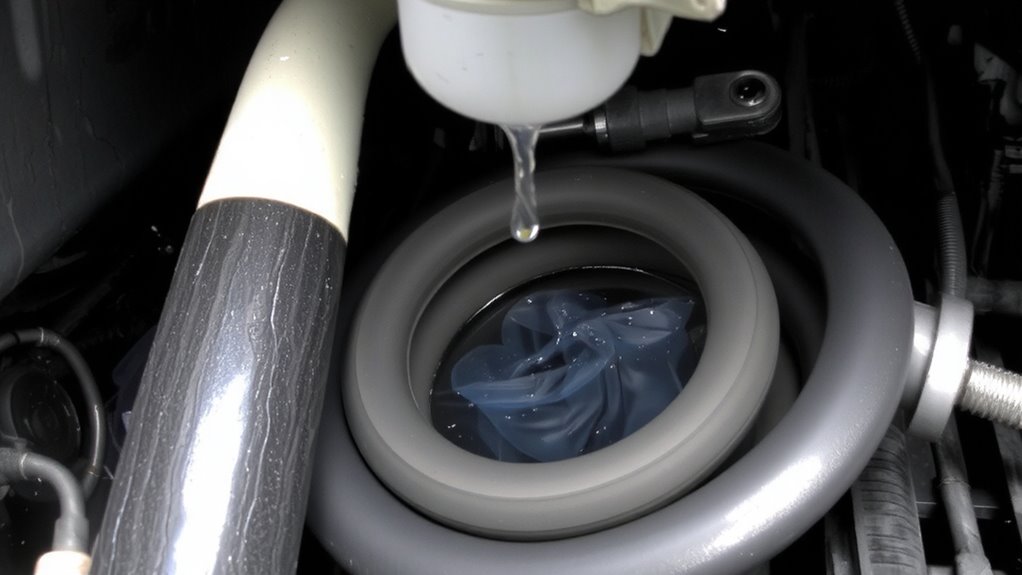
Because oxygen reacts with rubber at the molecular level, oxidation gradually weakens fuel hoses even when they’re not in use. This process causes molecular degradation, leading to loss of elasticity and strength. Oxygen attacks polymer chains, triggering chain scission-where bonds break and the material’s integrity declines. Over time, the hose becomes brittle and prone to cracking.
| Stage | Effect on Rubber |
|---|---|
| 1 | Oxygen diffuses into the rubber matrix |
| 2 | Free radicals form along polymer chains |
| 3 | Chain scission reduces molecular weight |
| 4 | Cross-linking density decreases |
| 5 | Surface cracks appear, compromising function |
You’ll notice hardness changes of up to 10 Shore A points within six months of idle exposure. Without intervention, molecular degradation accelerates, shortening service life by more than 50%.
Block Air Exposure During Storage
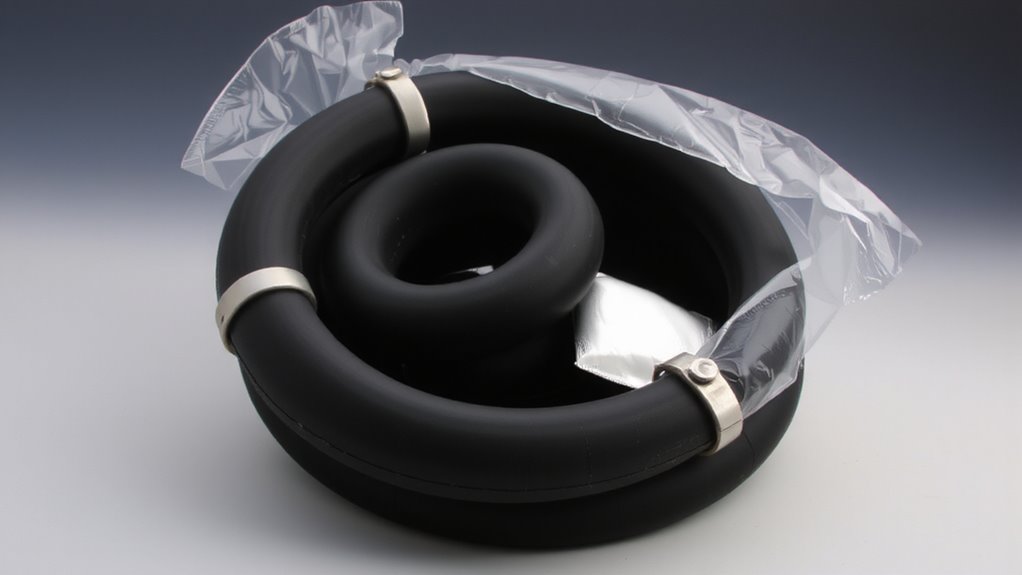
Sealing rubber fuel hoses from air exposure during storage halts oxidative degradation before it starts. Oxygen accelerates rubber aging, but you can prevent this by displacing air with inert gas. Nitrogen purging replaces oxygen inside the hose bore, reducing oxidation risk by up to 95%. Use dry nitrogen at 30–50 psi to flush the interior for at least two minutes before sealing. This process maintains molecular stability in synthetic rubber compounds like NBR and EPDM. Pair nitrogen purging with desiccant packing to control moisture. Pack silica gel desiccant tubes inside sealed hose bundles; they maintain relative humidity below 40%, preventing hydrolytic breakdown. Desiccants typically absorb 20–25% of their weight in water vapor. Store hoses in airtight polyethylene bags with oxygen barrier film (less than 0.5 cc/m²/day transmission rate). Block all air contact this way-oxidation stops, and service life extends up to five years.
How to Seal Fuel Hoses for Long-Term Storage
Your fuel hose’s longevity starts with the right seal. Use precision-machined brass end caps rated for 300 psi to airtightly seal both hose ends. These caps prevent air ingress, which can degrade inner liners over time. Pair them with O-rings made from fluorocarbon (FKM) rubber, which resist fuel swell and thermal breakdown up to 400°F. After sealing, apply clear, UV-resistant caps over metal fittings to block moisture and debris. Proper hose labeling is essential-mark each hose with date sealed, fuel type, and ID number using oil-resistant tags. This guarantees tracking and correct reinstallation. Store hoses coiled loosely, no tighter than a 12-inch minimum bend radius, to avoid stressing reinforcement layers. Keep storage lighting under 50 lux, using cool-white LEDs mounted at least 3 feet from hoses. Low-intensity, indirect lighting minimizes thermal buildup and UV exposure, both of which accelerate elastomer aging.
Cut Costs by Preventing Hose Oxidation
While oxidation silently degrades rubber fuel hoses over time, proactive protection can extend service life and reduce replacement costs. You face unnecessary expenses when fuel degradation and material fatigue accelerate wear. Preventing oxidative exposure isn’t just smart-it’s cost-effective. Each failed hose leads to downtime, safety risks, and unplanned spending. Consider these key factors:
| Factor | Without Protection | With Oxidation Protection |
|---|---|---|
| Avg. Hose Life | 18 months | 36+ months |
| Failure Rate | 22% annually | 6% annually |
| Fuel Degradation | High (resin buildup) | Minimal |
| Material Fatigue | Cracking at 1.5 yrs | Delayed beyond 3 yrs |
| Cost per Replacement | $180 | $0 (avoided) |
Sealing hoses from oxygen cuts deterioration by over 60%. You reduce fuel degradation by limiting hydrocarbon breakdown. Material fatigue slows when ozone and heat exposure drop. You preserve elasticity and structural integrity-keeping hoses operational longer.
Extend Hose Life: Stop Oxidation Before It Starts
You can stop rubber fuel hose degradation before it begins by controlling the conditions that drive oxidation. Exposure to heat and oxygen accelerates chemical breakdown in elastomers. Hose insulation reduces thermal transfer, slowing oxidative reactions during downtime. Insulated covers lower surface temperatures by up to 50°F, effectively doubling service life in high-heat environments. Material compatibility is critical-ensure inner liners resist fuel permeation and thermal aging. Nitrile rubber (NBR) handles petroleum fuels well, with a typical operating range of -40°F to 257°F. Fluorocarbon (FKM) offers better heat and chemical resistance but requires secure fittings to prevent stress cracking. Always verify compatibility with additives like ethanol or biodiesel. Oxidation starts at microscopic levels, attacking polymer chains. Prevent it with protective caps, blanking plugs, and storage below 77°F. Proper care means longer intervals between replacements. You’re not just maintaining hoses-you’re extending functional lifespan through precision control.
On a final note
You prevent oxidation by sealing hoses airtight. Store them in closed containers with oxygen absorbers to halt degradation. Rubber hardness increases 5–10 points Shore A after six months of air exposure; blocking oxygen reduces that to 1–2 points. Use nylon caps on both ends and vacuum-seal in anti-static poly bags. Properly stored hoses last 5+ years, doubling field life. Oxidation control isn’t optional-it’s essential for fuel system reliability.