The Impact of Stop-and-Go Driving on Automatic Transmission Fluid Degradation Over Time
Stop-and-go driving degrades your transmission fluid faster by spiking temperatures above 175°F, where oxidation begins. Each cycle of acceleration and braking stresses the fluid, halving its life with every 20°F rise beyond 250°F. Oxidation breaks down additives, reducing viscosity and lubricity, while sludge clogs narrow 0.002-inch passages. Dark, burnt-smelling fluid signals advanced breakdown. You risk poor clutch engagement below 0.06 friction coefficient. Protection strategies and timely changes become critical under these conditions.
Notable Insights
- Stop-and-go driving accelerates transmission fluid oxidation due to repeated heat cycles above 175°F.
- Frequent shifting depletes friction modifiers and anti-wear additives faster than normal driving conditions.
- Sustained temperatures over 220°F reduce fluid viscosity by up to 50%, impairing hydraulic performance.
- Oxidized fluid forms sludge that clogs narrow oil passages, leading to poor lubrication and component wear.
- Service intervals should be halved to 30,000 miles in city driving to prevent irreversible transmission damage.
How Stop-And-Go Driving Breaks Down Transmission Fluid
While driving conditions vary, stop-and-go traffic puts far more stress on your transmission fluid than most people realize. Each acceleration and deceleration cycle increases internal transmission temperatures and pressure. This repeated thermal cycling accelerates chemical oxidation, degrading the fluid’s molecular structure over time. Oxidized fluid loses viscosity, reducing its ability to maintain proper lubrication. Effective friction reduction depends on stable additives, but frequent shifts deplete them faster. Original equipment manufacturers specify ATF with an initial friction coefficient between 0.08 and 0.12; degraded fluid can fall below 0.06, impairing clutch engagement. Microscopic wear particles accumulate as the fluid’s detergents become overwhelmed. Without consistent friction reduction, components experience premature wear. Chemical oxidation also forms sludge, clogging narrow fluid passages. Unlike highway driving, where flow remains steady, stop-and-go patterns disrupt thermal equilibrium. This constant on-off operation stresses both fluid chemistry and mechanical integrity. You need fluid that resists breakdown under these repeated demands. Regular maintenance, including the use of a high-quality engine flush product, can help remove accumulated sludge and contaminants that compromise transmission performance.
Why Heat From Traffic Accelerates Fluid Degradation
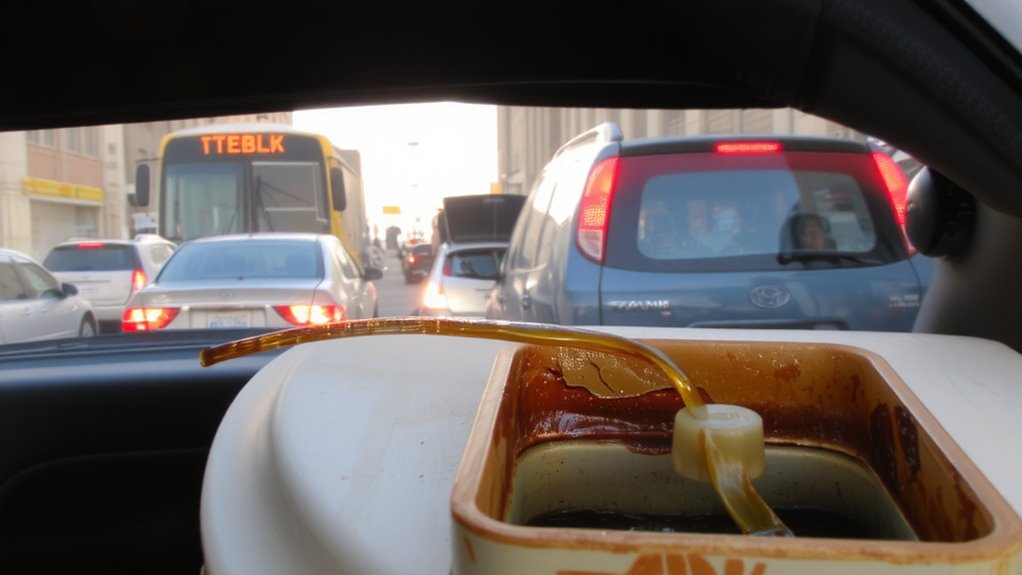
Because stop-and-go traffic forces your transmission to cycle repeatedly between acceleration and braking, heat builds up faster than it can dissipate. This sustained heat accelerates fluid oxidation, a chemical reaction where transmission fluid reacts with oxygen, degrading its molecular structure. Fluid oxidation typically begins around 175°F and doubles in rate with every 20°F increase. Prolonged exposure to high temperatures also causes thermal breakdown, compromising the fluid’s viscosity and lubricating properties. Modern automatic transmission fluids are formulated to withstand up to 250°F under normal conditions, but constant overheating exceeds these limits. Thermal breakdown reduces film strength, increasing wear on clutches and bearings. The fluid’s additive package, including detergents and anti-wear agents, depletes faster under thermal stress. As oxidation byproducts form sludge and varnish, flow efficiency drops. This creates a feedback loop, worsening heat retention. Your transmission’s longevity depends on maintaining stable fluid chemistry-which traffic heat relentlessly undermines.
What Happens When Transmission Fluid Overheats?
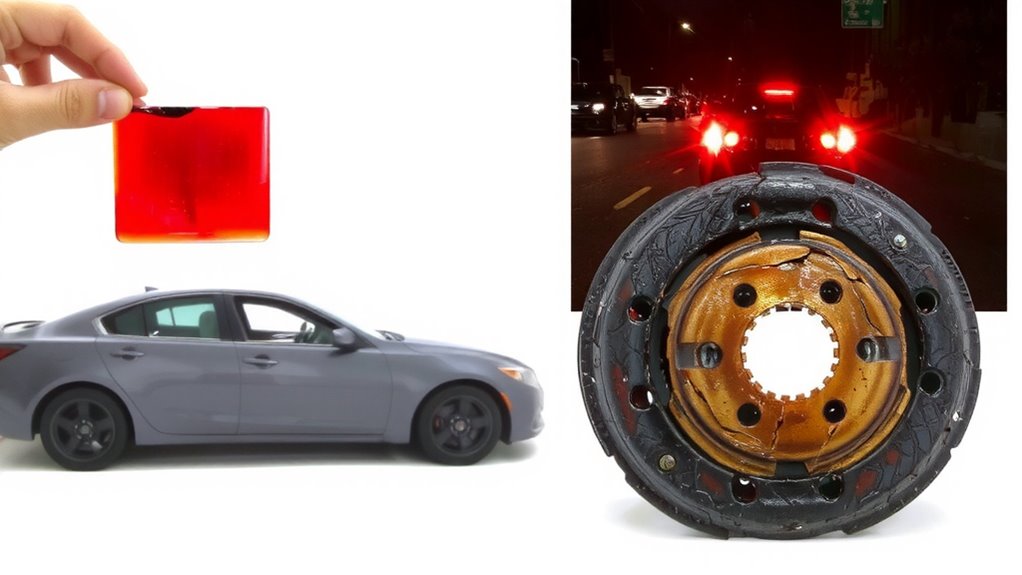
When transmission fluid exceeds its thermal limits, critical performance failures begin within minutes. You initiate fluid oxidation as temperatures rise above 175°F, degrading additives and reducing lubricity. Thermal breakdown accelerates beyond 220°F, where the fluid’s viscosity drops by up to 50%, compromising hydraulic pressure. Without proper viscosity, clutch engagement suffers, increasing wear. Oxidized fluid forms sludge and varnish, clogging narrow oil passages-some as small as 0.002 inches-disrupting valve body operation. You lose efficient heat dissipation, creating a destructive cycle. At 250°F, fluid life halves for every additional 20°F due to rapid molecular decomposition. Seal materials harden, risking leaks. Component surface temperatures can exceed 300°F during prolonged stop-and-go driving, pushing the fluid past safe operational thresholds. This degradation directly impairs transmission response and longevity without immediate visual warning signs.
5 Signs Your Fluid Is Deteriorating in City Traffic
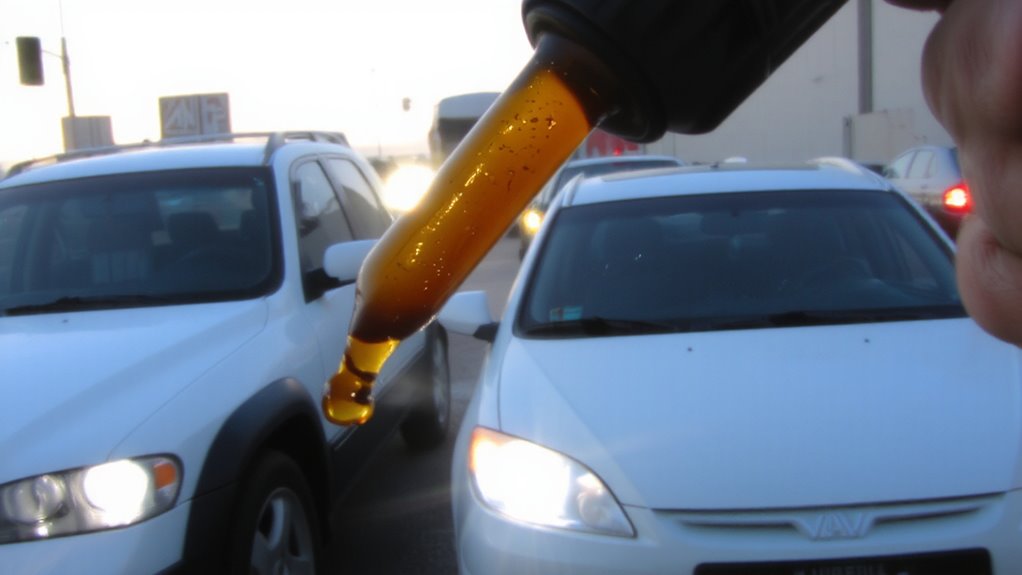
How do you know your transmission fluid is breaking down from relentless city driving? Check the fluid color. Fresh transmission fluid is bright red and translucent, designed to flow smoothly at temperatures up to 175°F. If it’s dark brown or black, oxidation and thermal stress have degraded its performance. Pull the dipstick after warming the engine-dirty fluid suggests additive depletion, reducing lubricity and increasing wear. You may also notice strange odors. A burnt smell indicates overheated fluid breaking down under repeated stop-and-go cycles. This is not normal. Modern automatic transmissions rely on consistent viscosity-typically 6.5 to 7.5 cSt at 100°C. When fluid degrades, slippage, delayed engagement, or rough shifts follow. These signs mean the fluid can no longer protect internal components like clutches and valve bodies. Address it before irreversible damage occurs.
How Daily Commuting Wears Out Transmission Fluid
City driving doesn’t just wear on you-it takes a toll on your transmission fluid, too. Every stoplight, merge, and slowdown forces your transmission to cycle repeatedly, generating excess heat up to 250°F-well beyond the ideal 175°F range. This thermal stress breaks down additives, reducing lubricity and increasing friction. As fluid degrades, its ability to protect against mechanical wear diminishes, especially in gear synchronizers and clutch packs. Microscopic metal shavings from moving parts circulate, accelerating fluid contamination. These contaminants act like sandpaper, promoting further wear. Oxidation thickens the fluid, impairing flow and hydraulic efficiency. Over time, varnish and sludge form, clogging narrow fluid passages critical for pressure regulation. Even sealed systems aren’t immune-heat and shear forces still degrade fluid performance. Daily commuting creates a relentless cycle: heat, breakdown, contamination, and wear.
When to Change Fluid If You Drive in Stop-And-Go Traffic
Many drivers in heavy stop-and-go conditions should plan on changing their transmission fluid every 30,000 miles-half the interval recommended for highway driving. This increased maintenance frequency helps prevent wear caused by heat cycles and fluid breakdown. Check your fluid color regularly; healthy fluid is cherry red, while dark brown or black indicates degradation. Oxidation from frequent heating and cooling reduces lubricity and increases friction. Following a strict service schedule guarantees peak performance and longevity.
| Condition | Service Interval |
|---|---|
| Highway driving | 60,000 miles |
| Stop-and-go traffic | 30,000 miles |
| Towing or hauling | 25,000 miles |
| City driving (moderate) | 40,000 miles |
| Fluid color (ideal) | Cherry red |
How to Protect Your Transmission in Heavy City Traffic
Why does your transmission face tougher conditions in relentless city traffic? Stop-and-go driving generates excessive heat, accelerating fluid breakdown. Every shift cycle stresses components, increasing wear. You need proactive transmission shielding to maintain performance. High-quality fluid additives enhance thermal stability and reduce oxidation. They contain detergents that prevent sludge buildup in valve bodies operating at 350 psi. Use fluids meeting ATF specification GM 9986147 or Ford Mercon LV for maximum protection. These include friction modifiers that maintain shift accuracy over 200,000 cycles. Install an auxiliary cooler if towing or idling more than 30% of drive time. It reduces fluid temperatures by up to 40°F. Regular inspections every 15,000 miles guarantee internal components remain within tolerance. Maintaining clean fluid extends clutch pack life by preventing glazing. With proper maintenance and the right fluid additives, your transmission resists degradation even in the harshest urban environments.
On a final note
You face increased transmission fluid degradation in stop-and-go driving due to repeated thermal cycling. Each traffic stop traps heat in the transmission, pushing fluid temperatures past recommended 175°F, accelerating oxidation. Prolonged exposure above 220°F reduces fluid lifespan by up to 50%. Additives deplete, viscosity drops, and sludge forms. This leads to poor lubrication, increased wear, and potential valve body malfunction. Change fluid every 30,000 miles under heavy city conditions using ATF rated for high-temperature stability.