Flame Arrestors for Gas Can Fill Ports: ASTM E1371 Guide
You rely on flame arrestors to prevent explosions by blocking flames from entering gas cans through the fill port. These devices use tightly spaced stainless steel or brass meshes-pore sizes 0.1 to 0.5 mm-to quench flame fronts and dissipate heat below ignition thresholds. Certified to ISO 16852 and ASTM E1371, they allow vapor flow while stopping flashback in gasoline vapor concentrations from 1.4% to 7.6%. Install securely and inspect monthly. Pair with proper storage and handling-safety goes beyond the arrestor. There’s more to optimizing protection effectively.
Notable Insights
- Flame arrestors on gas can fill ports block external flames from igniting internal fuel vapors.
- They use fine metal mesh to quench flames by dissipating heat below fuel autoignition temperatures.
- Effective arrestors comply with ASTM E1371 and ISO 16852 safety standards for flammable vapors.
- Proper installation and monthly inspection ensure uninterrupted function and vapor ventilation.
- Flame arrestors complement, but don’t replace, safe storage, handling, and static discharge practices.
Why Flame Arrestors Prevent Gas Can Fires
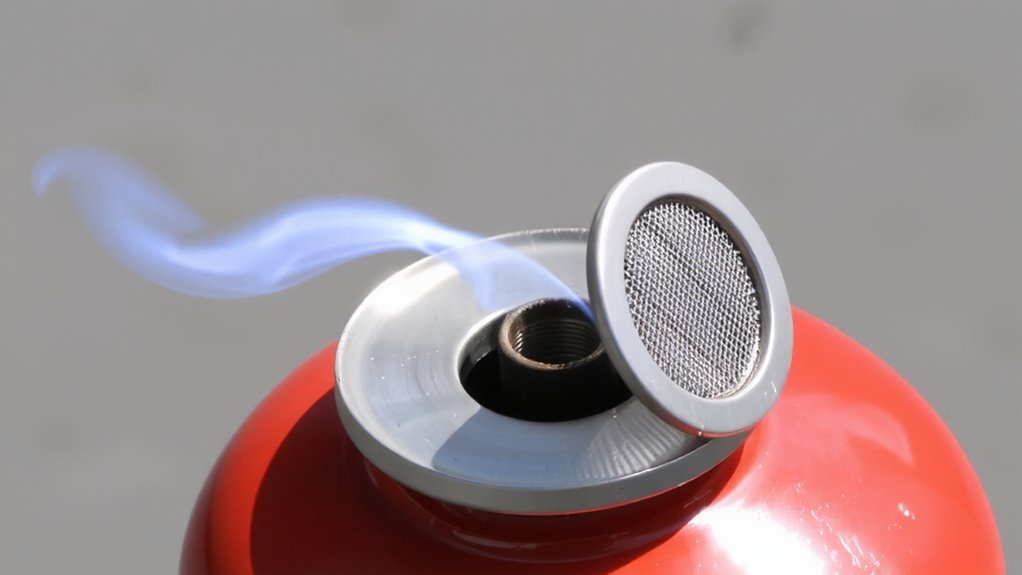
Even though a gas can may seem like a simple container, it can become a dangerous fuel source during accidental ignition. Fuel vaporization inside the can produces flammable vapors that mix with air, creating a combustible environment. When an external flame or spark reaches the fill port, it can trigger rapid chemical reactions, leading to flash fires or explosions. Flame arrestors prevent this by acting as a passive safety barrier. They consist of tightly packed metal meshes or crimped ribbons-typically made of stainless steel or brass-with pore sizes between 0.1 to 0.5 mm. These fine passages allow vapor to vent during pouring or temperature changes but block flame propagation. The arrestor absorbs and dissipates heat from an approaching flame front through metal conduction, halting ignition before it reaches the fuel reservoir. This precise design guarantees reliable, maintenance-free protection without altering the can’s functionality.
How Flame Arrestors Stop Flashback Explosions

Flame arrestors stop flashback explosions by interrupting the path of a flame front before it enters the vapor space of a gas can. They work by dissipating heat through tightly spaced metal meshes or laminar channels, which quench flame propagation. These components are precisely engineered-typically with gap sizes under 0.5 mm-to cool the flame below the autoignition temperature of fuel vapors. You can rely on this physical barrier to stop flames from traveling back into the can, even when exposed to common ignition sources like sparks or open flames. Flame arrestors don’t prevent ignition, but they block its spread. The metal matrix absorbs thermal energy, breaking the combustion chain reaction. Under ASTM E1371 testing, quality arrestors resist flame passage at vapor concentrations from 1.4% to 7.6% gasoline in air. This rapid heat exchange halts deflagration, protecting you during routine refueling operations.
What to Look for in a Flame Arrestor
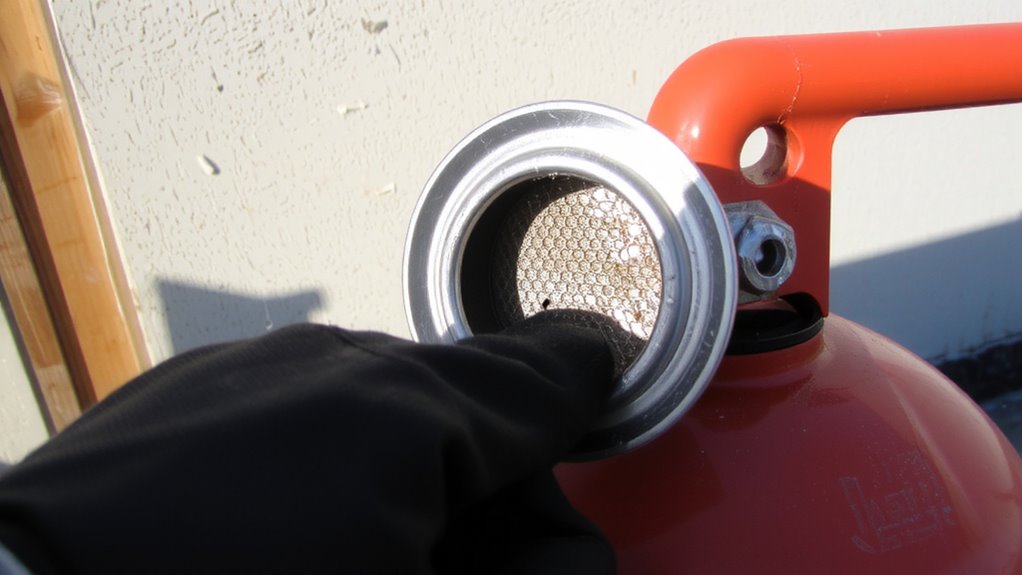
Safety starts with smart design-so when choosing a flame arrestor for a gas can fill port, look for one built to meet strict performance standards. It must comply with ISO 16852 and ASTM E1371 to guarantee reliable flashback protection. Choose a model with proven material compatibility-stainless steel or brass cores resist corrosion from gasoline, ethanol blends, and common fuels. Avoid plastics that degrade over time. Airflow efficiency matters too; a good arrestor maintains vapor flow above 0.8 m³/h with minimal pressure drop-typically under 250 Pa. The element’s mesh density, usually between 0.2 and 0.5 mm pore size, stops flames while allowing ventilation. Guarantee the flame-arresting core is UL-listed and tested for Group IIA gases. Thermal shut-off valves are a plus, but not a substitute for proper airflow efficiency. Pick one with a durable, tamper-resistant housing that fits standard 2-inch NPT ports.
How to Install and Maintain Flame Arrestors
You’ve selected a flame arrestor that meets ISO 16852 and ASTM E1371 standards, with a stainless steel or brass core and a mesh pore size between 0.2 and 0.5 mm-now it’s time to install it correctly. Proper installation techniques guarantee a gas-tight seal. Screw the arrestor firmly into the fill port until snug; overtightening can damage threads. Use thread sealant if specified by the manufacturer. Confirm alignment so vapors pass directly through the mesh.
Follow recommended maintenance schedules to preserve function. Inspect monthly for debris, corrosion, or dents. Clean with isopropyl alcohol and a soft brush if clogged.
| Inspection Step | Frequency | Action Needed |
|---|---|---|
| Visual check | Monthly | Look for physical damage |
| Flow test | Quarterly | Guarantee unrestricted vapor |
| Mesh cleaning | As needed | Use non-abrasive solvent |
When Flame Arrestors Aren’t Enough: Pair With Safe Practices
Why do some gas can incidents still occur even with a certified flame arrestor in place? Because flame arrestors are secondary controls, not standalone solutions. You must pair them with proper storage and user training to reduce risk effectively. Proper storage means keeping containers upright in well-ventilated areas, away from heat sources, and at temperatures below 100°F (38°C). Never store gas cans inside vehicles or living spaces. User training guarantees handlers understand fuel properties, flash points (around 53°F/12°C for gasoline), and safe pouring techniques. Flame arrestors limit flame propagation at fill ports but can’t prevent ignition from static sparks or improper handling. Even a UL-listed arrestor with 0.018-inch (0.46 mm) mesh won’t help if the can is tipped or exposed to open flames. Combine certified safety devices with strict operational practices to achieve real protection. For off-grid safety, consider installing motorhome deep-cycle batteries to reduce reliance on fuel-based generators.
On a final note
Flame arrestors are essential safety devices for gas can fill ports. They stop flashback flames by quenching ignition sources through tightly spaced metal mesh. Most models meet ASTM F2517 standards, with crimped ribbon design and 0.018–0.022 inch gap tolerances. They limit flame propagation at speeds up to 430 m/s. Install them securely to prevent gaps. Replace if damaged or corroded. Always pair with safe handling-arrestors reduce risk, but proper storage and grounding remain critical for full protection.