Best Carburetor Cleaner Fuel Additives for Small Engines That Work
You get fast, no-disassembly carburetor cleaning with STA-BIL Fast Fix (8oz), treating up to 20 gallons using 1 oz per 2.5 gallons. Its alcohol-free formula removes water and prevents corrosion. For deeper system cleaning, Red Line 60103 (15 oz) delivers near 100% deposit removal in one tank with PEA technology. Gumout Spray (14oz) dissolves varnish on contact. Lucas 10003 (1 qt) works in gasoline and diesel, boosting MPG and neutralizing sulfur. Top choices combine detergents, corrosion inhibitors, and ethanol protection-discover which formula matches your engine’s needs and fuel type.
We are supported by our audience. When you purchase through links on our site, we may earn an affiliate commission, at no extra cost for you. Learn more. Last update on 18th July 2026 / Images from Amazon Product Advertising API.
Notable Insights
- STA-BIL Fast Fix cleans carburetors without disassembly and treats up to 20 gallons with an alcohol-free formula safe for small engines.
- Gumout Carburetor Cleaner Spray removes gum, varnish, and carbon quickly with a concentrated, residue-free formula ideal for small engine maintenance.
- Lucas Oil 10003 cleans carburetors and fuel injectors while improving fuel economy and protecting both gasoline and diesel small engines.
- Red Line 60103 delivers near 100% cleaning efficiency in one application, removing deposits from carburetors, injectors, and combustion chambers in gasoline engines.
- STA-BIL Pro includes corrosion inhibitors and lubrication to protect against ethanol damage and keep small engine fuel systems running smoothly.
STA-BIL Fast Fix Small Engine Treatment (8oz)

If you’re dealing with a stubborn small engine that won’t start or runs roughly, the STA-BIL Fast Fix Small Engine Treatment (8 oz) is the best choice for quickly restoring performance without disassembling the carburetor. I use it to clean carburetors and fuel injectors, removing gum and varnish caused by stale fuel. It treats up to 20 gallons, with a simple ratio: 1 oz per 2.5 gallons. The alcohol-free formula eliminates water throughout the fuel system, acting as a powerful dryer. It works in all 2-cycle and 4-cycle engines-lawn mowers, trimmers, generators. I add it to fresh gas and run the engine for 15 minutes. It remains effective for up to 2 years after opening.
Best For: Small engine owners dealing with ethanol-blended fuel issues, gum and varnish buildup, or water contamination who need a quick, no-disassembly fix to restore engine performance.
Pros:
- Effectively cleans carburetors and fuel injectors without engine disassembly
- Removes water from the fuel system and acts as a fuel system dryer with alcohol-free formula
- Treats up to 20 gallons of fuel and works in all 2-cycle and 4-cycle small engines
Cons:
- Requires the engine to run for 15 minutes to circulate properly, which may not be possible with severely fouled engines
- Limited shelf life of up to 2 years after opening, requiring date tracking
- May not fully restore engines with extensive mechanical damage or clogs beyond fuel system deposits
STA-BIL Small Engine Pro Additive (16 fl. oz.)
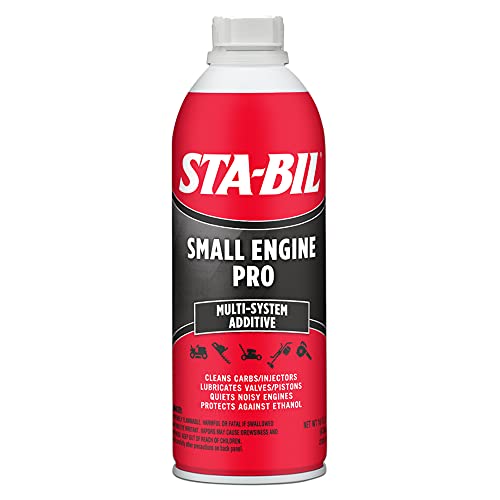
STA-BIL Small Engine Pro Multi-System Additive stands out as the best carburetor cleaner fuel additive for owners of multiple types of small engine equipment. I rely on this 16 fl. oz. red container (model 22305) to clean carburetors and fuel injectors thoroughly. It removes gum, varnish, and restores lost power. The formula protects against ethanol damage and includes corrosion inhibitors to prevent rust. I notice improved fuel system efficiency and smoother engine operation. It lubricates internal parts like valves and pistons, reducing noise and wear. I safely use it in lawn mowers, trimmers, chainsaws, snow blowers, and generators.
Best For: Small engine equipment owners who need a versatile fuel additive to clean and protect engines across multiple devices like lawn mowers, chainsaws, snow blowers, and generators.
Pros:
- Effectively cleans carburetors and fuel injectors, removing gum and varnish
- Protects against ethanol-related damage and includes corrosion inhibitors
- Lubricates internal engine components, improving performance and reducing noise
Cons:
- Limited to gasoline-powered engines, not suitable for diesel or other fuels
- May require multiple applications for severely fouled engines
- Smaller 16 fl. oz. bottle may not be cost-effective for frequent, large-volume users
Gumout Carburetor Cleaner Spray 14oz

For small engine maintenance where reliability meets precision, the Gumout Carburetor Cleaner Spray 14oz stands out as a top-tier solution for both routine upkeep and restoring compromised performance. I’ve found it effectively dissolves gum, varnish, and carbon deposits in seconds. Its concentrated formula works on carburetors, choke valves, linkages, and intake valves. At 14 ounces, the can weighs 1 pound and measures 20.3 x 8.1 x 7.3 inches. It leaves no residue, dries fast. With a 4.7-star rating from 16,521 users, it’s #1 in its category. It’s not discontinued-available since 2017.
Best For: DIY mechanics and small engine owners seeking a reliable, high-performance carburetor cleaner for routine maintenance or restoring engine efficiency.
Pros:
- Effectively removes gum, varnish, and carbon deposits from carburetors, choke valves, and intake valves
- Fast-drying formula leaves no residue, improving engine performance and fuel economy
- Highly rated with a 4.7-star average from over 16,500 reviews and ranks #1 in its category
Cons:
- Strong chemical odor requires use in well-ventilated areas or with protective gear
- Not suitable for use on painted or plastic surfaces due to its concentrated formula
- Larger size may be excessive for users needing only occasional, light cleaning
Lucas Oil 10003 Fuel Treatment – 1 Quart

I rely on Lucas Oil 10003 Fuel Treatment when I need a versatile cleaner that keeps small engines running like new. It cleans fuel injectors, carburetors, and combustion chambers, removing harmful deposits. It also lubricates critical components, improving fuel flow and engine performance. I’ve seen noticeable gains in power and acceleration due to more efficient combustion. It boosts fuel economy and increases MPG by promoting complete burn. The treatment neutralizes sulfur and prevents rust, protecting fuel pumps and injectors. It’s safe for gasoline and diesel engines, on- and off-road equipment, and meets federal low sulfur standards. I use it regularly-it’s a reliable, one-quart solution that works.
Best For: DIY mechanics and vehicle owners seeking a reliable, multi-purpose fuel treatment to maintain engine performance and fuel efficiency in both gasoline and diesel engines.
Pros:
- Cleans and lubricates fuel systems, including injectors, carburetors, and combustion chambers, improving engine performance
- Enhances fuel economy and reduces emissions by promoting more complete combustion
- Safe for a wide range of engines and equipment, including on-road, off-road, marine, and locomotive applications
Cons:
- May require consistent use to maintain optimal results, not an instant fix for severely clogged systems
- One-quart size may be excessive for users with smaller fuel tanks or infrequent maintenance needs
- Performance benefits may be less noticeable in newer engines with already clean fuel systems
Red Line 60103 Fuel System Cleaner (15 oz)

One bottle of Red Line 60103 SI-1 Complete Fuel System Cleaner treats a full tank of gasoline, making it the best choice for owners of small engines who demand a one-and-done cleaning solution. I rely on its 15 ounces of concentrated formula to dissolve deposits in carburetors, fuel injectors, intake valves, and combustion chambers. It delivers near 100% cleaning efficiency in a single application. The additive combines high- and low-temperature detergents to handle all deposit types. It prevents corrosion, resists gum and varnish, stabilizes fuel, and improves combustion efficiency. I notice better fuel economy and increased power. No special tools are needed-just pour it in.
Best For: Small engine owners seeking a powerful, one-time-use fuel system cleaner that delivers comprehensive cleaning and performance enhancement.
Pros:
- Delivers near 100% cleaning efficiency in a single application, effectively removing deposits from fuel injectors, carburetors, intake valves, and combustion chambers
- Combines high- and low-temperature detergents to prevent corrosion, gum, varnish buildup, and fuel degradation while improving fuel economy and power
- Easy to use with no special equipment required-simply pour one 15-ounce bottle per full tank of gasoline
Cons:
- May be over-formulated for smaller or less problematic fuel systems, potentially leading to unnecessary additive buildup with repeated use
- Limited to gasoline engines, making it unsuitable for diesel engines or alternative fuel vehicles
- Higher price point compared to some competing fuel additives on a per-ounce basis
Gumout Multi-System Tune-Up Fuel Cleaner (16 oz)

The Gumout Multi-System Tune-Up Fuel Cleaner (16 oz) is engineered for small engine owners who demand full-system protection and peak performance. I use it to clean GDI injectors, carburetors, and fuel tanks in gasoline, diesel, and ethanol engines. Its Polyether Amine (PEA) formula removes carbon deposits and prevents new buildup. It fights ethanol-related corrosion and stabilizes fuel up to 12 months. I add it directly to the tank, crankcase, or induction system-flexible for lawn mowers, snowblowers, or cars. It’s safe for catalytic converters and oxygen sensors. This treatment boosts fuel economy, lowers emissions, and restores lost power.
Best For: Small engine owners and vehicle operators seeking comprehensive fuel system cleaning and long-term engine protection across gasoline, diesel, and ethanol-powered equipment.
Pros:
- Cleans and maintains fuel injectors, carburetors, and combustion chambers with premium Polyether Amine (PEA) technology
- Stabilizes fuel for up to 12 months, preventing degradation and ethanol-related damage like corrosion and water buildup
- Compatible with all engine types and application methods, including direct tank, crankcase, and induction system use
Cons:
- May be overkill for newer engines with minimal carbon buildup, offering less noticeable benefits
- 16 oz size may be more than needed for small fuel tanks, leading to potential waste
- Not specifically formulated for high-mileage engines with severe wear or mechanical issues
Gumout 510021W-6PK Fuel System Cleaner, 6 Pack

Perfect for routine maintenance on small engines, Gumout 510021W-6PK Fuel System Cleaner stands out for owners prioritizing long-term engine health and consistent performance. I rely on its concentrated formula to prevent carbon buildup on carburetors, intake valves, and fuel injectors. Each 6-ounce bottle treats up to 21 gallons of fuel, making it efficient and precise. I add it to a near-empty tank, then fill up for ideal mixing. It’s safe for oxygen sensors and won’t void OEM warranties. Compatible with turbocharged and supercharged engines, it helps reduce emissions while maintaining fuel economy. I use it every 3,000 miles.
Best For: Drivers seeking reliable, long-term fuel system maintenance to preserve engine performance and fuel efficiency in gasoline-powered vehicles, including those with turbocharged or supercharged engines.
Pros:
- Effectively prevents carbon buildup on fuel injectors, carburetors, intake valves, and ports
- Safe for use with oxygen sensors and won’t void manufacturer warranties
- Helps maintain fuel economy and reduces emissions with regular use
Cons:
- Requires near-empty tank for optimal use, which may be inconvenient for some drivers
- Treats up to 21 gallons, making it less suitable for larger fuel tanks without additional dosage
- Some users may prefer a ready-to-use formulation over a concentrated product
Red Line Fuel System Cleaner (2-Pack)

Because maintaining a clean fuel system is critical for small engines that often sit for long periods, I rely on the Red Line 60103 SI-1 Complete Fuel System Cleaner when I need dependable, high-efficiency cleaning in a dual-bottle pack. Each 15-ounce bottle treats a full tank of fuel. It uses a concentrated blend of high-temperature and low-temperature detergents to clean injectors, carburetors, valves, and combustion chambers. It removes nearly 100% of deposits in one treatment. The formula prevents corrosion and reduces gum and varnish buildup. It stabilizes gasoline, supporting efficient combustion. I use it regularly to maintain peak engine performance.
Best For: Small engine owners who need reliable, high-efficiency fuel system cleaning and protection, especially for equipment that sits unused for extended periods.
Pros:
- Cleans nearly 100% of deposits in one treatment, targeting injectors, carburetors, valves, and combustion chambers
- Contains both high- and low-temperature detergents for comprehensive fuel system maintenance
- Stabilizes gasoline and prevents corrosion, gum, and varnish buildup
Cons:
- May be more expensive than basic fuel additives
- Primarily formulated for gasoline engines, not suitable for diesel systems
- Overuse could potentially lead to cleaner residue if not dosed properly
Hot Shot’s Secret Gasoline Additive 12 oz

You’ll get the most out of Hot Shot’s Secret Gasoline Additive 12 oz if you run older small engines or equipment prone to carbon buildup. I rely on its P.E.A. technology to dissolve gum, varnish, and combustion deposits. One 12 oz bottle treats up to 20 gallons of fuel. It cleans injectors, valves, pumps, rings, pistons, and upper cylinders. I’ve seen it restore power and smoothness in rough-running engines. It boosts MPG by up to 7.9%. I use it every 10,000 miles to prevent buildup and maintain efficiency. Just pour it in at fill-up.
Best For: Drivers of older gasoline engines or equipment prone to carbon buildup seeking improved performance and fuel efficiency.
Pros:
- Effectively cleans fuel injectors, valves, pistons, and combustion chambers with P.E.A. technology
- Restores engine power, smoothness, and throttle response in a single treatment
- Increases fuel economy by up to 7.9% and lubricates to extend fuel system life
Cons:
- May be too strong for newer engines not experiencing deposit buildup
- Limited treatment capacity-only 12 oz per 20 gallons of fuel
- Requires regular use every 10,000 miles for sustained benefits
Red Line 60102 Complete Powersports Fuel System Cleaner – 4 Ounces

When engine deposits start cutting into performance, Red Line 60102 Complete Powersports Fuel System Cleaner becomes my go-to for small-displacement, high-revving engines. I add one 4 fl oz bottle directly to the fuel tank. It works in just one tank of gas. It cleans intake valves, combustion chambers, and fuel systems. It restores power and improves fuel economy. I’ve seen it reduce octane demand by stabilizing fuel combustion. It’s compatible with pump gas, race fuel, and both pre-mix and direct-injected two-strokes. I use it on my street bike, dirt bike, ATV, or PWC. Red Line has engineered additives since 1979. No compromises. Just results.
Best For: Riders and owners of high-performance small-displacement engines in street bikes, dirt bikes, ATVs, and PWCs seeking quick fuel system cleaning and restored power.
Pros:
- Restores lost performance and improves fuel economy with just one treatment
- Compatible with a wide range of fuels including pump gas, race fuel, and both pre-mixed and direct-injected two-stroke engines
- Quickly cleans critical engine components like intake valves, combustion chambers, and fuel systems in one tank
Cons:
- Small 4 fl oz size may require multiple bottles for larger fuel tanks
- Noticeable results depend on existing deposit buildup; minimal effect on well-maintained engines
- Premium price point compared to generic fuel additives
Factors to Consider When Choosing a Carburetor Cleaner Fuel Additive for Small Engines
You need to match the additive to your fuel type-ethanol blends demand alcohol-free formulas to prevent moisture buildup and corrosion. Small engines vary by size and design, so choose a cleaner with the right concentration level and treat rate, typically 4 ounces per 5 gallons for effective carbon removal. Frequent use requires a product balanced for monthly application without harming seals, while still delivering strong cleaning power through detergents like PIBA or polyether amines.
Fuel Type Compatibility
While fuel type compatibility may seem obvious, overlooking it can lead to poor performance or engine damage. You must guarantee the additive matches your fuel-ethanol-blended, pure gasoline, or alcohol-free-so it works effectively and safely. Most carburetor cleaners are designed for gasoline engines and won’t work in diesel or alternative fuel systems. If your fuel contains ethanol, use an ethanol-compatible formula to reduce moisture absorption and prevent phase separation. These additives stabilize oxygenated fuels and protect internal components. For two-stroke engines, pick a cleaner that supports oil mixing and proper combustion without leaving residue. Always confirm the product is rated for high-ethanol blends like E15 or E85 if you use them regularly-many aren’t. Check the label for exact fuel compatibility to avoid costly mistakes.
Engine Size Matching
One ounce per 2.5 gallons is all it takes to keep your small engine’s fuel system clean-provided you match the additive’s treatment capacity to your tank size. If you’ve got a small engine with a tank under 5 gallons, go with a concentrated formula-just 1–2 ounces per dose guarantees full coverage without waste. For larger tanks, like those in 10-gallon systems, pick an additive rated for that volume to maintain effectiveness. Overdosing risks residue buildup and disrupts combustion, especially in delicate small engines. Always stick to the recommended dosage ratio. Bigger displacement engines need higher-volume treatments so the cleaner circulates fully through extended fuel lines. Matching treatment capacity to your engine size keeps internal parts clean, fuel flow steady, and combustion efficient. Choosing right means peak performance-too little leaves gunk behind, too much harms engine balance.
Cleaning Power Level
Cleaning power determines how effectively a fuel additive removes harmful deposits from a small engine’s fuel system. You need a formula with high concentrations of advanced detergents to dissolve gum, varnish, and carbon buildup. Products using Polyether Amine (PEA) break down stubborn deposits without leaving behind residue, ensuring clean fuel pathways. Look for blends that include both high- and low-temperature detergents-these deliver near-complete deposit removal in a single treatment. Effective additives clean critical components like carburetors, fuel injectors, intake valves, and combustion chambers. They also reach external metal parts such as choke valves and linkage systems. For maximum results, follow the manufacturer’s dosage instructions precisely. Allow the additive to circulate fully through the system for the recommended time. Strong cleaning power means thorough, reliable performance across all engine areas-just what your small engine needs to run smoothly.
Application Frequency
You’ll typically use carburetor cleaner fuel additives at different intervals depending on the product’s concentration and intended purpose. For preventive maintenance, apply additives every 3,000 miles to stop carbon and varnish buildup. Some formulas recommend every-tank use-adding treatment with each fill-up-to sustain clean injectors and consistent combustion. Deep-cleaning additives work in a single dose, typically one bottle per full tank, removing up to 90% of deposits after one use. For long-term storage, apply stabilizing additives at fill-up; they prevent fuel degradation for up to 24 months. High-concentration restorative treatments are for intermittent use-once every 10,000 miles-to clear heavy deposits and recover lost power. Always match application frequency to your engine’s fuel system demands and usage patterns. Overuse can lead to additive residue; underuse reduces effectiveness. Follow manufacturer dosage specs for best results.
Alcohol Free Formula
Alcohol-free formulas protect your small engine’s fuel system by eliminating the risk of swelling or cracking in rubber seals and plastic components, which alcohol-based cleaners can cause over time. You prevent premature degradation of fuel lines, floats, and diaphragms, especially in older carbureted engines not designed for ethanol exposure. These additives work safely in ethanol-blended fuels, reducing the chance of phase separation by limiting moisture attraction. Without alcohol, the cleaner won’t pull water from the air into the fuel, maintaining stability during storage. You minimize varnish and residue because alcohol-free solvents don’t break down into harmful byproducts. Carburetors stay cleaner with fewer deposits on jets and passages. For long-term protection, especially in seasonal equipment, choosing an alcohol-free formula guarantees compatibility and prevents avoidable damage from solvent reactivity.
Corrosion Protection
Your small engine’s longevity hinges on preventing corrosion, especially in fuel systems exposed to ethanol-blended gasoline. Ethanol attracts moisture, which leads to rust in fuel tanks and lines. You need a carburetor cleaner additive with corrosion inhibitors to protect metal components. These additives form a protective molecular layer on metal surfaces, blocking contact with water and oxygen. They also neutralize acidic byproducts from fuel combustion, reducing internal corrosion in carburetors and fuel passageways. During long-term storage, this protection is critical-metal stays shielded even when the engine sits idle for months. Look for formulations that specifically list rust and corrosion inhibitors in their ingredients. Products with dual-action chemistry tackle both water contamination and oxidative damage. Effective corrosion protection guarantees clean fuel flow and consistent engine performance, avoiding costly repairs or part replacements down the line. Choose additives proven to work in ethanol-rich environments.
Ease Of Use
How simple should a carburetor cleaner additive be to use? Extremely simple. You just pour it directly into your fuel tank-no tools or disassembly needed. Most cleaners mix easily with gasoline, requiring a standard ratio like 1 ounce per 2.5 to 3 gallons of fuel. This makes dosing accurate and repeatable across mowers, trimmers, or generators. Once added, run the engine for 10 to 15 minutes to circulate the cleaner through the system. The cleaning process happens during normal operation, so you don’t need to idle for hours. Many formulas are fast-acting, restoring power and smooth starts after just one treated tank. You can even use some additives preventively every time you refuel, keeping the carburetor clean without downtime. Ease of use means efficient, consistent, and hassle-free maintenance.
Shelf Life Duration
A carburetor cleaner additive’s shelf life plays a critical role in long-term reliability and performance. You should expect opened additives to remain effective for up to 2 years if sealed and stored properly. Exposure to extreme temperatures or moisture accelerates degradation, compromising chemical stability and cleaning power. Unopened additives typically last 3 to 5 years, depending on formulation. You’ll get better shelf stability with alcohol-free products-alcohol-based versions can separate or evaporate over time, reducing efficacy. Always check the label for storage instructions and formulation type. Mark the bottle with the date of first use so you can track freshness. Using expired additives may leave deposits uncleaned or cause fuel system harm. Shelf life isn’t just about age-it’s about storage, formulation, and chemical integrity. Choose wisely to protect your small engine’s performance.
Frequently Asked Questions
Can I Use Carburetor Cleaner in a Fuel-Injected Small Engine?
Yes, you can use carburetor cleaner in a fuel-injected small engine, but only if it’s specifically labeled safe for fuel injection systems. Most aerosol carb cleaners are designed for throttle body cleaning, not internal fuel system components. You’re risking damage to sensitive O2 sensors, catalytic converters, or fuel injectors with improper formulas. Always check the product’s solvent base-non-chlorinated versions are safer. Use it sparingly and only as directed.
How Often Should I Use Fuel Additives for Small Engines?
You should use fuel additives every 3 to 6 months in small engines. Regular use prevents varnish and gum buildup in fuel pathways. For ethanol-blend fuels, additive treatment every 50 hours of operation maintains fuel stability. Products with PEA or polyetheramine clean injectors and carburetors at molecular levels. Always follow manufacturer dosage-typically 1 ounce per 5 gallons. Overuse offers no benefit and may harm seals. Store fuel-treated tanks up to 12 months without degradation.
Are Carburetor Cleaner Additives Safe for Use With Ethanol Blends?
Yes, most carburetor cleaner additives are safe with ethanol blends up to E10. You can use them without risking damage to fuel lines or carburetor components. Ethanol attracts moisture, which promotes corrosion-these additives contain detergents and water dispersants to counteract that. Always check the label for ethanol compatibility. Using them regularly helps prevent gum and varnish buildup in small engines exposed to oxygenated fuels.
Do Fuel Additives Expire if Stored for Long Periods?
Yes, fuel additives can expire if stored long-term. Their chemical stability degrades over time, especially after 3–5 years. You’ll notice reduced solvent strength and diminished detergency. Sealed containers help, but exposure to temperature swings or moisture accelerates breakdown. Check the manufacturer’s printed expiration date. Using outdated additives may leave deposits or fail to clean effectively, like using weakened bleach-it technically works, but not well.
Can I Mix Multiple Fuel Additives Together in One Tank?
You shouldn’t mix multiple fuel additives unless the manufacturer explicitly allows it. Combining additives can cause chemical incompatibility, leading to reduced efficacy or engine damage. Different formulations contain solvents, detergents, and alcohol levels that may react unpredictably. For instance, overlapping solvent concentrations can exceed safe limits, harming fuel system seals. Stick to one multi-purpose additive per tank. Always read labels-some products specify no mixing. When in doubt, use one proven solution to avoid risking engine performance or component failure.