Multi-Layer Steel Head Gaskets: Layer Composition and Sealing Force Distribution
You rely on multi-layer steel (MLS) head gaskets to seal extreme combustion pressures up to 1,500 psi. These gaskets use 3–5 layers of cold-rolled stainless steel, with 0.25–0.30 mm outer layers conforming to surface flaws. The 0.15 mm spring-steel core provides rebound under thermal cycling. Layers bond via laser welding to prevent shifting, while elastomeric coatings enhance sealing. This design evenly distributes clamping force and resists permanent deformation-critical for aluminum heads and high-performance engines. Further details reveal even greater precision in their engineering.
Notable Insights
- Multi-layer steel head gaskets consist of 3–5 cold-rolled stainless steel layers for strength and sealing.
- Outer layers (0.25–0.30 mm) conform to surface imperfections, enhancing initial seal integrity.
- The inner spring-steel layer (0.15 mm) provides elastic rebound under cyclic pressure loads.
- Layers are bonded via laser welding or clinching to prevent movement and ensure uniform force distribution.
- Elastomeric coatings on each layer improve sealing, reduce friction, and accommodate surface roughness.
What Is an MLS Head Gasket?
A head gasket sits between the engine block and cylinder head, sealing critical systems under extreme conditions. You’re dealing with a Multi-Layer Steel (MLS) head gasket when multiple precision-cut steel layers are used instead of traditional composite materials. Its material composition typically includes three to five layers of cold-rolled stainless steel, with elastomeric or fluoroelastomer coatings on outer layers for improved sealing. The core layer provides structural strength, while the outer layers manage conformability to surface imperfections. Layer bonding is achieved through laser welding or clinching at specific points, ensuring precise alignment and preventing interlayer movement. Each layer is coated to enhance recovery and heat resistance. MLS gaskets commonly handle temperatures exceeding 250°C and clamping pressures over 10,000 psi, making them ideal for modern high-performance and turbocharged engines where reliability is non-negotiable.
How Do MLS Head Gaskets Handle Extreme Cylinder Pressure?
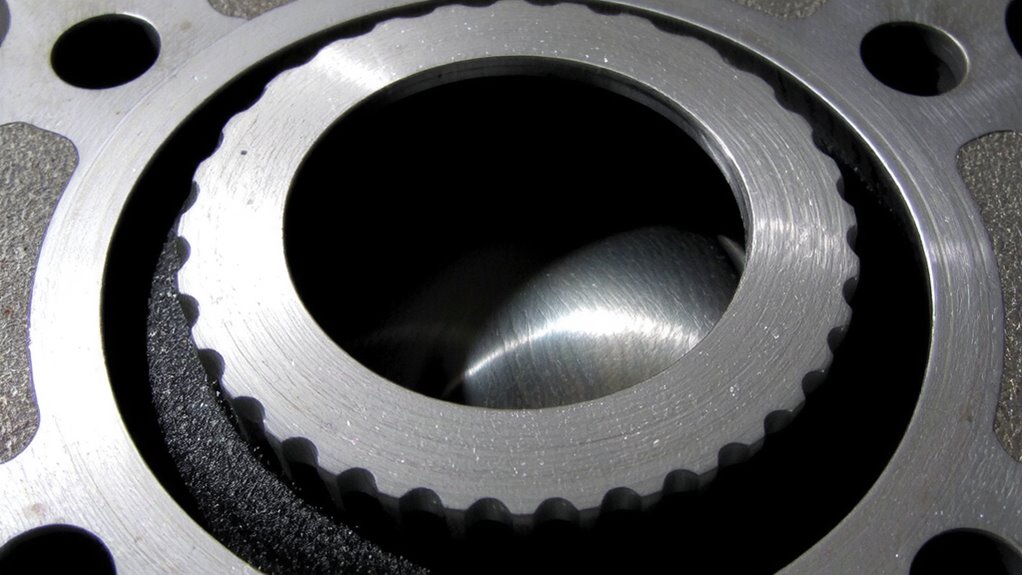
When cylinder pressures spike during combustion, you need a head gasket that won’t buckle-and MLS gaskets are built for this exact challenge. Their strength comes from multiple layers of high-tensile steel, typically 3 to 5 layers, each between 0.25 mm and 0.50 mm thick. The material elasticity of these steel layers allows them to compress slightly under load and rebound when pressure drops, maintaining clamp force. This elastic recovery resists permanent deformation, even at pressures exceeding 1,500 psi. Surface coatings like Viton or rubber aid in conforming to minor surface imperfections. Pressure dispersion is optimized through the layered design, distributing force evenly across the cylinder bore. This prevents localized stress points that could lead to blowouts. Unlike single-layer gaskets, MLS versions manage thermal cycling and extreme compression loads without losing integrity. You get repeatable performance under high-output conditions-critical in turbocharged and performance engines.
How Each Layer Works in an MLS Head Gasket
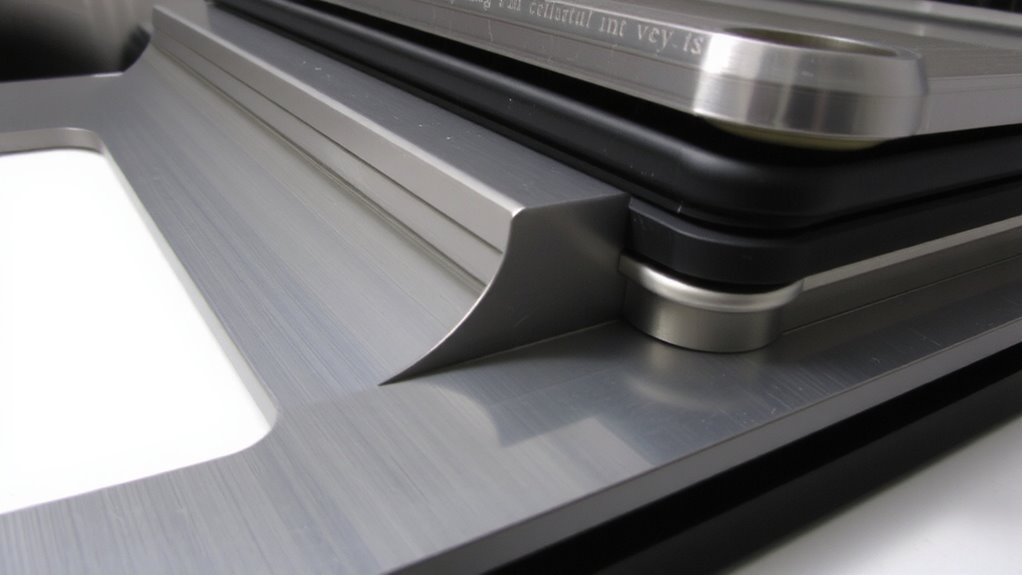
Think of each layer in an MLS head gasket as a specialized player on a high-performance team-each with a distinct role in sealing and durability. You rely on layer elasticity to maintain clamp load under thermal cycling. The outer layers, usually 0.25–0.30 mm thick, provide conformability to surface irregularities. They handle initial sealing and protect against blowouts. The inner layer, often spring-steel (0.15 mm), enables ideal force distribution across the bore. It rebounds under pressure, sustaining seal integrity.
| Layer Position | Function |
|---|---|
| Outer (1 & 3) | Conformability, initial seal |
| Middle (2) | Springback, force distribution |
| Coating | Friction control, adhesion |
| Substrate | Structural support, layer elasticity |
You benefit from precise force distribution and resilient layer elasticity-critical under combustion loads.
Why Surface Finish Is Critical for MLS Head Gaskets?
You can’t afford to overlook surface finish when installing an MLS head gasket-no matter how well-designed the layers are. Surface texture directly affects seal integrity. MLS gaskets rely on plated coating compression, not surface conformity, so the mating surfaces must be extremely flat and smooth. You need a surface finish between 20 and 50 RA (microinches). Anything rougher compromises the seal. Micro waviness-tiny peaks and valleys across the deck or block-creates leak paths under thermal cycling. Even if flatness is within spec, poor micro waviness prevents uniform clamp load distribution. This leads to gasket blowout or coolant leakage. Proper machining with honing or torquing plates guarantees ideal surface texture. A milled finish with excessive tool marks won’t seal, no matter how tight you torque the bolts. Surface prep isn’t optional-it’s critical for MLS performance.
MLS Vs. Composite Head Gaskets: Which Is Better?
Why do most high-performance and modern engines rely on multi-layer steel (MLS) head gaskets instead of composite ones? You’re dealing with extreme conditions where material fatigue and thermal cycling can wreck weaker designs. MLS gaskets use 3–5 layers of spring-steel, each coated with elastomers or Viton for seal integrity. They handle cylinder pressures over 1,500 psi and thermal shifts from cold start to redline. Composite gaskets, made of asbestos substitutes or graphite, compress permanently and degrade faster under repeated thermal cycling. Their softer core cracks or delaminates, causing leaks. MLS gaskets spring back, maintaining clamp load. In cast-iron blocks, composites work acceptably, but aluminum heads flex more-demanding the elastic recovery only multi-layer steel offers. For power, durability, and precision, you need MLS.
Installing MLS Head Gaskets: Torque Tips and Clamping Best Practices
Precision starts with preparation. You must clean the cylinder head and block surfaces to near-perfect flatness-warp beyond 0.002 inches causes leaks. Proper lubrication isn’t optional; use the manufacturer’s specified lubricant on bolt threads and under the bolt head. This guarantees accurate clamping force and prevents false torque readings. Dry bolts can overstretch, leading to failure. Always follow bolt sequencing-typically start in the center and spiral outward in stages. Torque in three to four incremental steps, never in one pass. For most MLS gaskets, final values range from 75 to 110 ft-lbs, depending on engine design. Reusing stretch bolts risks uneven clamping. Each bolt must engage cleanly, free of cross-threading. MLS gaskets need high, even clamp load across all layers to maintain seal integrity under combustion pressures exceeding 1,000 psi. Follow specs exactly.
On a final note
You rely on multi-layer steel (MLS) head gaskets to seal extreme combustion pressures-up to 1,500 psi in high-performance engines. The three-layer design features two outer embossed stainless steel layers and a compressed inner layer. Surface finish matters: aim for 30–50 RA microinches. Each layer distributes clamping force evenly, preventing blowouts. Proper torque to spec-usually 75–95 ft-lbs in multiple stages-ensures ideal sealing.