How Suspension Upgrades Affect ABS and Electronic Stability Control
Your suspension upgrade affects ABS and stability control by altering wheel speed sensor gaps and calibration. Factory sensor-to-ring clearance is 0.5–1.5 mm; even 10–15 mm of ride height change disrupts this. Coilovers or lowering can misalign sensors, causing false ABS triggers. Larger tires spin slower at the same speed, confusing the ECU with incorrect RPM data. ESC accuracy drops when yaw and lateral sensors no longer match factory geometry. Recalibration and adjustable mounts restore function-precision matters. You’ll discover how to fix these issues correctly.
Notable Insights
- Lowering a vehicle with coilovers can misalign wheel speed sensors, disrupting ABS signal accuracy due to improper gap with the tone ring.
- Ride height changes alter suspension geometry, potentially increasing sensor-to-ring air gap beyond the 0.5–1.5 mm tolerance and causing false ABS triggers.
- Larger aftermarket tires change wheel rotation dynamics, creating speed reading errors that may cause the ABS to activate unnecessarily.
- Suspension modifications affect ESC system accuracy by altering yaw and lateral acceleration sensor data relative to factory calibration.
- After modification, electronic recalibration or adjustable sensor mounts are often required to restore proper ABS and ESC functionality.
Why Ride Height Affects ABS Sensors
Why would changing your vehicle’s ride height impact something as critical as the ABS system? ABS relies on wheel speed sensors that detect rotation via a toothed tone ring. When you alter ride height, you change the sensor-to-ring gap, typically calibrated at 0.5–1.5 mm from the factory. If the gap exceeds specifications, signal interference occurs, weakening the sensor’s ability to read rotation accurately. Poor signal strength leads to delayed or incorrect ABS activation. Additionally, sustained misalignment may induce magnetic drift, where the sensor’s internal magnetic field degrades over time due to inconsistent pulse exposure. This reduces output voltage and introduces errors in speed calculations. Even minor ride height changes-just 10–15 mm-can push tolerances beyond safe limits. The result? Compromised braking performance and increased stopping distances during emergency maneuvers. Your safety systems depend on precision; altering suspension without sensor recalibration risks system integrity.
How Coilovers Alter Wheel Speed Readings
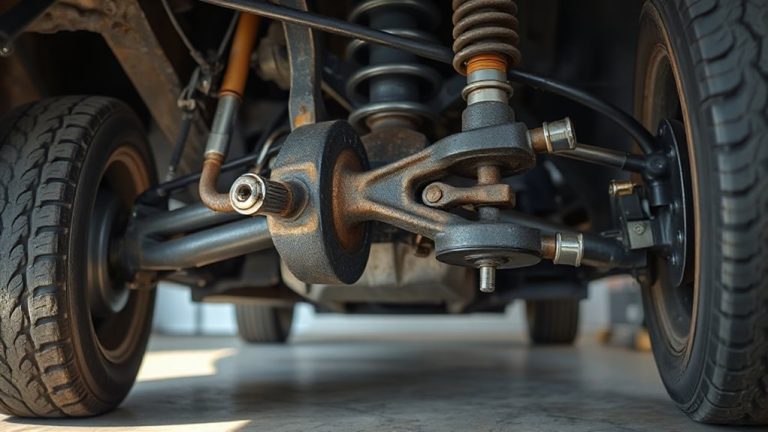
Installing coilovers changes your vehicle’s suspension geometry, and that directly affects wheel speed sensor performance. Proper sensor alignment is critical-coilovers alter ride height and suspension travel, potentially misaligning the sensor from the tone ring. Even a 1–2 mm gap shift can degrade signal accuracy. Misalignment introduces signal interference, causing erratic wheel speed readings. The ABS system relies on precise input; inconsistent signals may trigger false skid detection. Most OEM sensors operate within a 0.5–1.5 mm air gap tolerance. Coilovers that modify knuckle angle or hub position push components beyond this range. Aftermarket solutions often include adjustable sensor mounts to restore correct alignment. Always verify clearance and sensor position post-installation. A digital multimeter or oscilloscope can confirm signal strength. Without correction, compromised readings impair ABS and ESC operation, reducing braking efficiency and stability.
Big Tires, Wrong Speed Data: How ABS Gets Confused
How does your ABS system react when your tire size doesn’t match factory specs? Installing bigger tires changes the tire diameter, which directly affects wheel speed readings. Your ABS relies on accurate sensor calibration to detect skids. When the tire diameter increases, each revolution covers more ground, but the sensors still report factory-calibrated RPMs. That mismatch makes the system think wheels are slipping when they’re not. Incorrect speed data can trigger false ABS activation, especially at low speeds or during hard braking. Even a 10% increase in tire diameter skews readings enough to compromise safety. The ECU expects a specific number of wheel rotations per mile, and deviations disrupt communication between wheel speed sensors and control modules. Proper recalibration is required to match new tire dimensions. Without it, sensor calibration stays off, putting your braking performance and vehicle stability at risk.
Keeping ABS Functional With a Lowered Ride Height
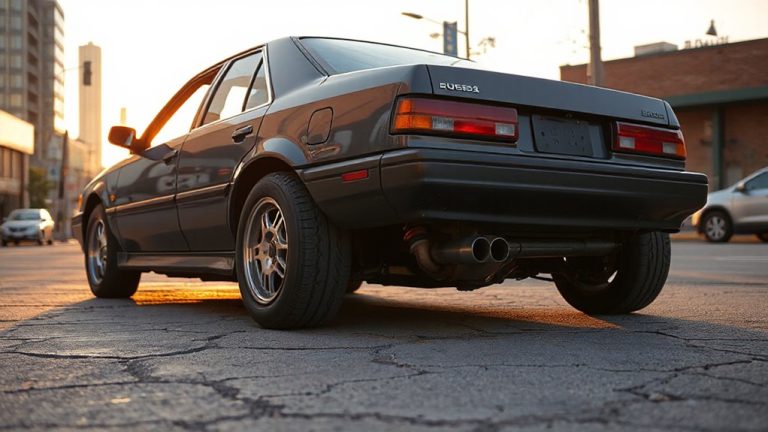
What happens to your ABS when you lower your car? Lowering your vehicle alters ride height calibration, which can disrupt ABS operation. The system relies on precise sensor alignment to monitor wheel speed accurately. When you reduce ride height, the distance between wheel speed sensors and tone rings changes, possibly creating air gaps beyond manufacturer specs-often as little as 0.5 to 1.5 mm tolerance. This misalignment may cause false ABS triggering or reduced responsiveness during hard braking. Aftermarket control arms or adjustable brackets help restore proper sensor alignment. Some tuners use calibrated spacers to maintain original sensor positioning. Always verify ABS function post-installation with a scan tool to check for wheel speed sensor codes. Correct ride height calibration guarantees the ABS module receives reliable data, maintaining safety and performance without compromise.
Maintaining ESC With Aftermarket Suspension
Even though you’ve upgraded your suspension for better handling, your vehicle’s Electronic Stability Control (ESC) system still relies on factory-calibrated parameters to function correctly. Altering ride height or suspension geometry affects yaw rate and lateral acceleration sensors, potentially causing incorrect ESC responses. Proper system integration is essential to maintain communication between the ESC module and modified components. You’ll often need electronic tuning to recalibrate sensor outputs, especially with significant drop kits or air ride systems. Some aftermarket ECUs offer built-in tuning profiles to adjust ESC thresholds dynamically. Others require professional scanning tools to modify OEM software parameters. Failure to address these changes reduces intervention accuracy during cornering or emergency maneuvers. Ensuring compatibility between your suspension and ESC prevents dangerous over- or under-correction. Correct electronic tuning preserves factory safety levels while letting you enjoy improved performance.
When Sensor Errors Trigger Dashboard Warnings
Why does your dashboard suddenly flash warnings after installing a new suspension setup? Changes in ride height alter wheel alignment and suspension geometry, disrupting sensor data used by ABS and ESC systems. Your vehicle relies on precise inputs from wheel speed sensors, steering angle sensors, and yaw rate sensors. Even a 10mm height change can trigger sensor errors, causing warning lights to appear. These alerts indicate system malfunctions or data inconsistencies, not necessarily component failure. Improper sensor calibration is often the culprit. When sensors operate outside calibrated ranges, the ECU flags faults. Warning lights for ABS, traction control, or ESC may illuminate immediately or after a diagnostic scan detects irregularities. Sensor miscalibrations compromise system responsiveness, increasing stopping distances or reducing stability in emergencies. Restoring accurate feedback guarantees safety systems function as designed.
How to Calibrate Sensors After Suspension Mods?
After modifying your suspension, recalibrating sensors guarantees your safety systems operate within design parameters. Incorrect sensor placement can skew data for ABS and stability control, leading to delayed or false interventions. Wheel speed sensors, typically mounted near each hub, must maintain precise air gaps-usually 0.5 to 1.5 mm-between the sensor and tone ring. If your lift or drop alters this gap, readings fail. Use OEM-specified calibration tools or a compatible scan tool to reset yaw and steering angle sensors. Many modern vehicles require a zero-point calibration performed on a level surface. Follow manufacturer procedures step by step-some systems demand ignition cycles or live data monitoring. Skipping proper recalibration risks triggering fault codes or disabling safety features. Always verify alignment and sensor function post-installation. Accurate calibration restores system confidence, ensuring split-second responses when traction changes.
On a final note
You must recalibrate ABS sensors after suspension changes. Altered ride height shifts wheel alignment and sensor-to-tone ring gaps, risking signal loss. Most systems allow 0.5–1.2 mm tolerance; exceeding it causes false triggers. Coilovers or large tires disrupt wheel speed data, confusing ESC. Use OEM-compatible sensors and follow factory specs. Post-mod, perform electronic calibration with a scan tool to reset tire circumference and suspension position values, ensuring ABS and ESC function accurately under braking and cornering.