How to Clean Paint Protection Film on Deployable Spoilers
Use a pH-balanced cleaner with a value between 6.5 and 7.5 to safely clean your PPF. Harsh chemicals can degrade the film, causing yellowing or delamination. Wash with a 300 g/m² microfiber cloth or soft nylon brush to prevent scratches. Rinse with water at 60–80°F and dry using straight strokes with a clean microfiber or rubber squeegee. Focus on edges and seams to prevent trapped debris. Weekly inspections help catch lifting or haze early. A monthly deep clean maintains long-term performance and clarity-further details reveal ideal tools and timing for each step.
Notable Insights
- Use pH-balanced cleaners with a neutral range of 6.5 to 7.5 to prevent PPF degradation.
- Wash with high-quality microfiber cloths (300 g/m² or higher) to avoid swirl marks and scratching.
- Rinse thoroughly with clean water (60–80°F) and dry using straight strokes with a microfiber towel or squeegee.
- Clean along spoiler edges and moving seams with a soft brush to prevent dirt buildup and water ingress.
- Inspect weekly for edge lifting or haze, addressing issues promptly with gentle heat and pressure.
Use pH-Balanced Cleaners Safe for PPF
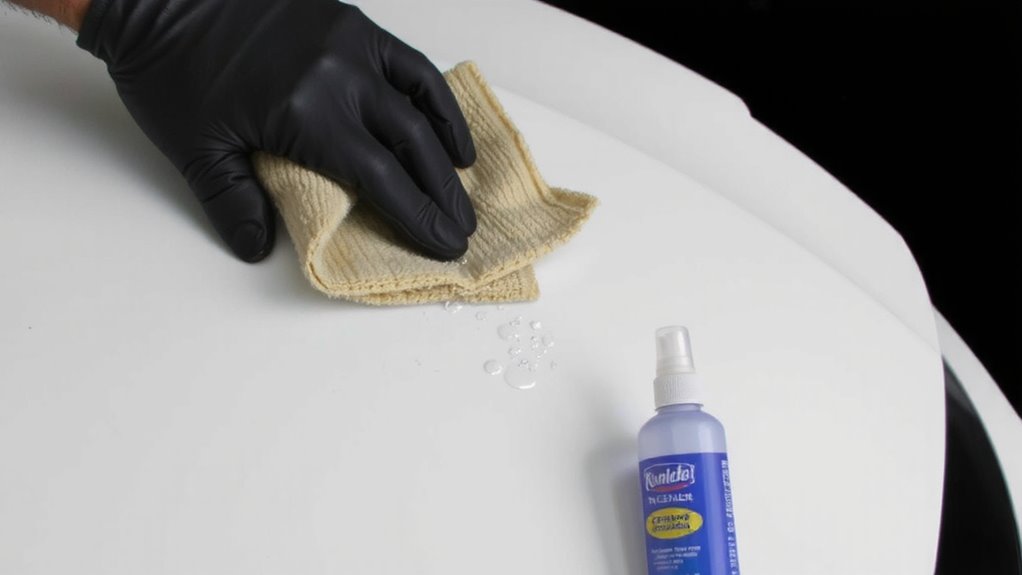
While many household cleaners seem harmless, using the wrong ones can degrade your paint protection film over time. Paint protection film (PPF) has chemical sensitivity, making it vulnerable to harsh detergents, especially those with high or low pH levels. Film degradation occurs when solvents or abrasive chemicals strip the film’s protective layer, leading to hazing, yellowing, or delamination. To prevent this, always use pH-balanced cleaners with a neutral range of 6.5 to 7.5. These formulas preserve the film’s integrity without weakening its adhesive bond or urethane structure. Products labeled “safe for PPF” or “safe for clear bra” typically meet these standards. Avoid ammonia-based or solvent-heavy cleaners commonly found in glass or interior cleaners. Applying a pH-neutral solution guarantees peak performance and extends your film’s lifespan. Always verify manufacturer recommendations-most support only neutral chemistry. For added protection after cleaning, consider applying a car paint sealant kit to enhance gloss and shield the film from environmental contaminants.
Wash PPF With Microfiber Cloths and Soft Brushes
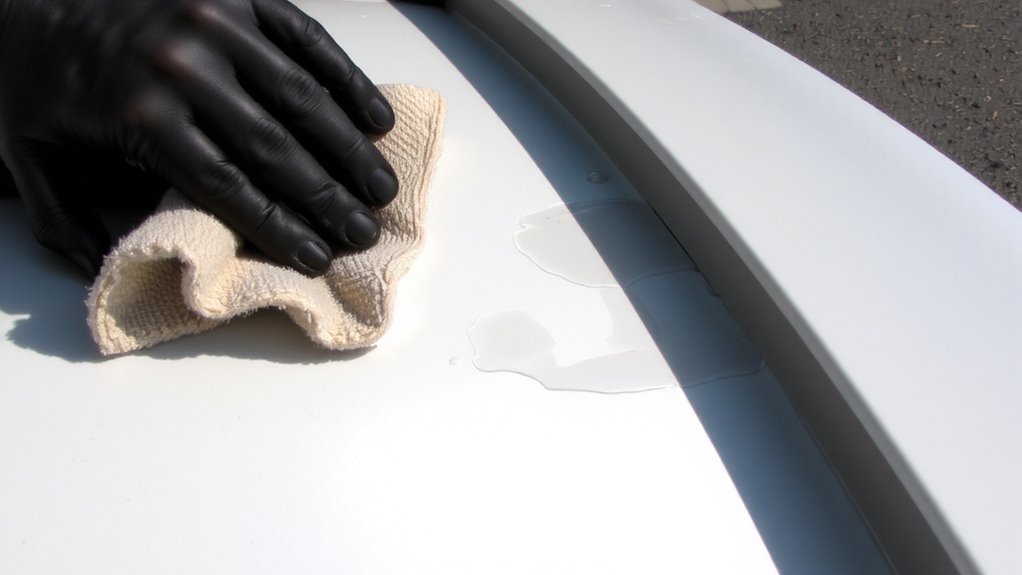
You must wash your paint protection film using only non-abrasive tools designed to avoid surface marring. Microfiber cloths with a pile density of at least 300 g/m² lift dirt without scratching. Their split fibers trap particles, reducing the risk of micro-abrasions that lead to film degradation. Avoid cotton or wool towels; they can leave lint and cause fine swirl marks. Use soft-bristle brushes made from polyethylene terephthalate (PET) or nylon, with bristle hardness below 60 Shore A. These effectively loosen grime from contours without damaging the film’s surface. Never use brushes with metal cores or stiff bristles, as they may remove adhesive residue improperly and compromise film adhesion. Always rinse brushes and cloths thoroughly before use to prevent grit transfer. Proper tool selection maintains optical clarity and prevents premature wear. For optimal results, choose best microfiber towels for car care that are specifically designed for delicate finishes.
Rinse and Dry PPF to Prevent Water Spots
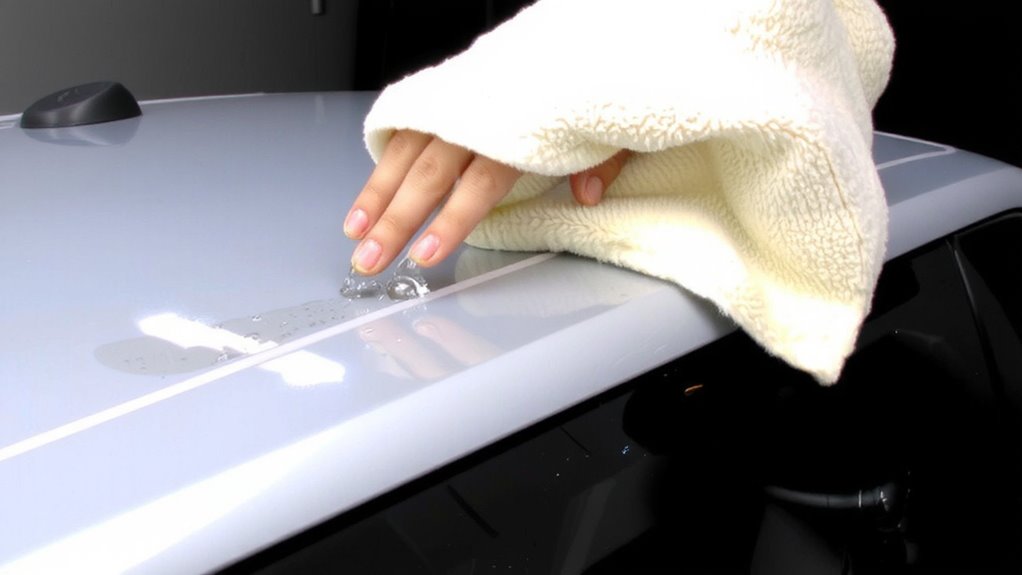
What happens if you let water evaporate naturally on your paint protection film? Mineral deposits and water spots form, dulling the surface and risking residue buildup. Always rinse thoroughly with clean water after washing. Use moderate water temperature-neither too hot nor too cold-to avoid thermal shock and guarantee effective runoff. High-pressure sprays help dislodge standing water, especially on contoured spoiler surfaces.
| Water Temperature | Drying Technique |
|---|---|
| 60–80°F (15–27°C) | Microfiber towel dry |
| Avoid extremes | Blade squeegee method |
Choose proper drying techniques to prevent micro-scratches. Use a clean, plush microfiber towel or a rubber-edged squeegee for consistent results. Dry in straight, overlapping strokes-don’t circle. This preserves the film’s clarity and hydrophobic properties, guaranteeing long-term protection and a showroom finish. For optimal vehicle maintenance, consider pairing your cleaning routine with high-performance all-terrain tires for 2500HD.
Clean Along Spoiler Edges and Moving Seams
Pay close attention to spoiler edges and moving seams, as these areas trap dirt and moisture that can compromise paint protection film (PPF) integrity over time. Use a soft microfiber brush to gently clean along edges without lifting the film. Proper edge alignment guarantees the PPF remains sealed against contaminants and maintains aerodynamic performance. Misaligned edges may allow water ingress, leading to delamination. Focus on seam tension-excessive tightness can stress the film during deployment, while too little reduces protective coverage. Maintain seam tension within manufacturer specs, typically 0.3 to 0.5 mm deflection under light pressure. Clean with a pH-neutral solution to prevent chemical breakdown at stress points. Avoid sharp tools or abrasives that could nick the film and disrupt seam continuity. Regular inspection preserves both edge alignment and seam tension, extending PPF life and protecting high-movement zones effectively. Perform checks monthly or after high-speed driving.
Remove Bug Splatter and Grime Immediately
When insects collide with a vehicle at speed, their residue bonds rapidly to paint protection film through heat and acidity, making prompt removal critical. You must act fast-delayed cleaning can etch stains into the surface. Immediate response prevents permanent damage and preserves optical clarity. Use a dedicated bug and tar remover with a pH-balanced formula; harsh solvents can degrade film integrity. Gently wipe with a microfiber towel, applying minimal pressure to avoid lifting edges. Prevention techniques include waxing the film every three months, which creates a sacrificial layer that eases contaminant removal. For daily drivers, rinse the front-facing areas after highway drives. The film’s elastomeric polymers resist abrasion, but prolonged exposure to organic acids compromises bond stability. Clean while cool-never under direct sun. This maintains adhesive performance and surface finish. Immediate action guarantees longevity and sustained protection.
Inspect PPF for Lifting or Haze Weekly
Regularly inspecting your paint protection film guarantees early detection of potential issues like edge lifting or surface haze. Check all edges weekly with a gloved hand; film lifting typically starts at corners or high-stress zones, where adhesion drops below 80 N/cm². If you feel a raised edge, act immediately-moisture and debris ingress accelerates delamination. Surface haze appears as a milky, diffused layer, often caused by plasticizer migration or UV-induced polymer breakdown. Inspect under direct sunlight or a 5,000-lumen LED light at a 45-degree angle for accurate assessment. Haze reduces optical clarity by up to 15% and compromises scratch resistance. Address minor lifting with a heat gun at 70–80°C and light pressure. Replace areas with advanced film lifting or persistent surface haze to maintain protection integrity.
Maintain PPF With Monthly Deep Cleans
Monthly deep cleaning preserves the structural integrity and optical clarity of your paint protection film. You should perform this maintenance every 30 days using pH-neutral cleaners, never exceeding 120°F water temperature. Aggressive chemicals or abrasive pads compromise adhesive integrity, which can lead to edge lifting. Film longevity depends on removing bonded contaminants before they degrade the surface. Use a microfiber applicator with two gallons of water mixed with one ounce of specialized PPF cleaner. Gently wipe in straight lines, avoiding circular motions that spread grime unevenly. Rinse thoroughly with distilled water to prevent mineral deposits. Dry with a clean, lint-free cloth. Inspect for hazing or residue, indicators of early polymer breakdown. Proper technique maintains hydrophobic properties and preserves factory-applied coatings. You’re not just cleaning-you’re reinforcing durability, ensuring the film lasts up to 10 years as engineered. This routine safeguards both appearance and performance.
On a final note
You must maintain your PPF’s integrity with consistent, proper care. Use only pH-neutral cleaners (pH 5.5–8.5) to prevent film degradation. Clean with plush microfiber cloths (minimum 300 g/m²) and non-abrasive brushes. Rinse thoroughly with deionized water to eliminate mineral deposits. Dry using a silicone squeegee followed by a clean microfiber. Address contaminants immediately to avoid etching. Inspect weekly for edge lifting or optical haze. Perform a monthly deep clean with a PPF-safe detailing spray for maximum clarity and longevity.