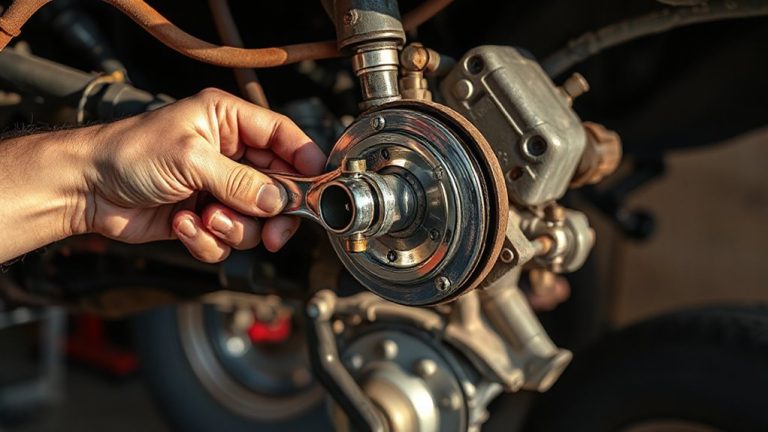
How to Properly Torque Bell Housing Bolts During Manual Transmission Reinstallation
You must torque bell housing bolts to 25–35 ft-lbs using a calibrated torque wrench for accuracy. Use Grade 8.8 or 10.9 metric bolts sized 8mm to 12mm, lubricated lightly with oil. Follow a crisscross pattern in three stages: 25%, 50%, then 100% of final torque. Start from the center and work outward to guarantee even clamping force. Avoid overtightening, thread contamination, or mixing bolt grades to prevent housing distortion. Verify alignment pin fit and bolt integrity-proper torque prevents input shaft deflection and bearing failure. Key details on sequence and bolt specs guarantee long-term reliability.
Notable Insights
- Use a calibrated torque wrench and follow the OEM-specified torque range, typically 25–35 ft-lbs, for proper bell housing bolt tightening.
- Tighten bolts in a crisscross pattern starting from the center to ensure even clamping force and prevent housing distortion.
- Torque bolts in three stages: 25%, 50%, then 100% of the final specification to achieve accurate and consistent tension.
- Verify bolt specifications: use correct grade (8.8 or 10.9), size, and length, and replace any stretched or damaged bolts before installation.
- Clean bolt holes, apply light oil to threads, and install alignment pins to ensure proper seating and accurate torque application.
Why Bell Housing Torque Prevents Transmission Damage
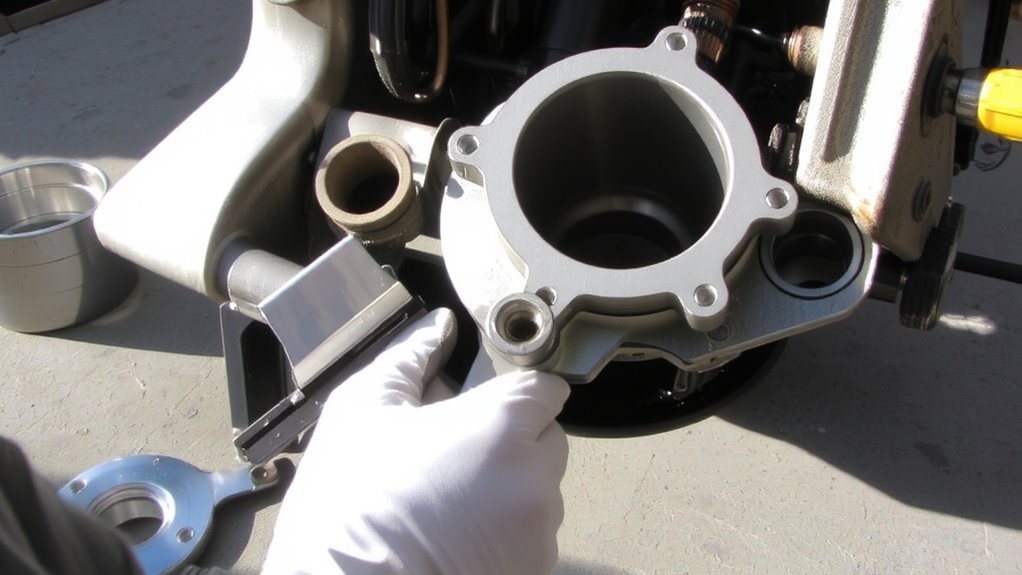
While improper torque can lead to costly transmission failures, correctly tightening bell housing bolts guarantees precise alignment between the engine and transmission. You must apply 25–35 ft-lbs of torque in a crisscross pattern, as specified by most manufacturers, to prevent misalignment. Proper torque maintains accurate gear alignment, reducing gear wear and preventing grinding during shifts. Without it, input shaft deflection can occur, leading to premature bearing failure. Correct bolt tension also stabilizes clutch engagement, maintaining smooth, consistent pedal response. Uneven torque causes clutch drag or incomplete disengagement, increasing wear on the release bearing and flywheel. Think of the bell housing as the foundation of a house-any warp or tilt compromises the entire structure. Use a calibrated torque wrench and follow OEM specs to maintain structural integrity. Precision here prevents driveline vibrations and extends transmission life notably.
Find And Identify Your Bell Housing Bolts

Start by locating the bell housing bolts, which secure the transmission to the engine block at the rear. These fasteners vary by vehicle, so identifying the correct bolt types is essential for proper fit and torque retention. Most applications use Grade 8.8 or Grade 10.9 metric bolts, ranging from 8mm to 12mm in diameter, with lengths between 50mm and 110mm. Always check your service manual for OEM specifications.
Apply thread lubrication evenly to guarantee accurate torque readings and prevent galling. Dry bolts can lead to over-torquing, while excessive grease causes under-tensioning.
| Bolt Type | Diameter | Typical Torque (ft-lbs) |
|---|---|---|
| M8 | 8mm | 22–25 |
| M10 | 10mm | 35–40 |
| M12 | 12mm | 55–60 |
Mismatched bolt types or incorrect lubrication compromise joint integrity. Inspect each bolt for stretching or thread damage before installation.
Torque the Bell Housing in the Right Sequence
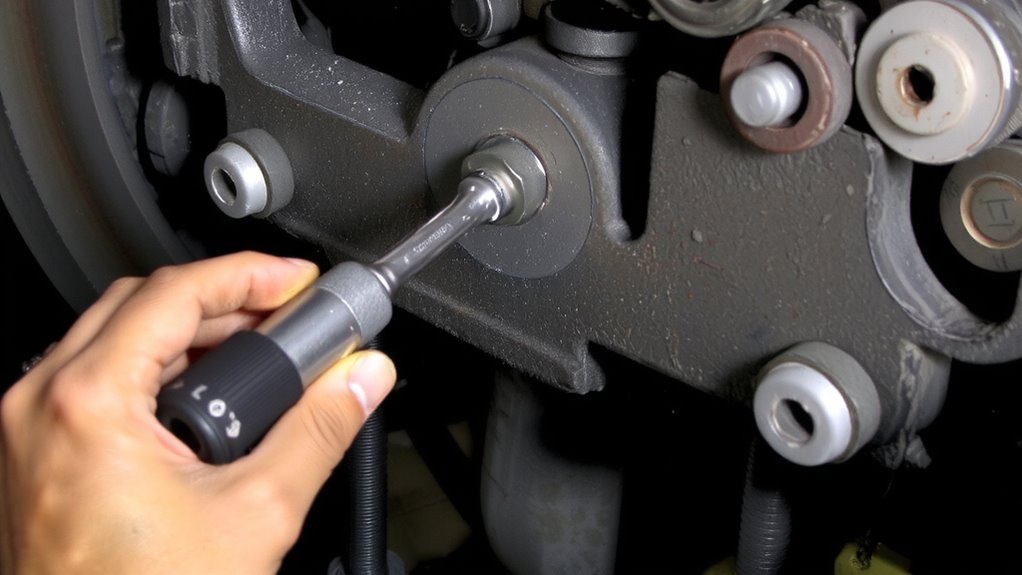
Use a crisscross pattern to torque the bell housing bolts, beginning with the center fasteners and working outward-this guarantees even clamping force across the mating surfaces. Skipping this sequence risks warping the housing or misaligning the transmission. Always torque incrementally in three even stages: first to 25% of final spec, then 50%, and finally 100%. For most applications, the final torque value ranges from 25 to 35 ft-lbs, depending on bolt grade and manufacturer specs. Follow the crisscross pattern in each stage to maintain balanced pressure. This method mimics how cylinder heads are torqued, ensuring uniform load distribution. Uneven tightening can cause transmission misalignment, leading to input shaft binding or clutch drag. Use a calibrated torque wrench and never guess. Stick to the recommended sequence and torque incrementally-there’s no room for shortcuts. Precision here prevents costly damage later. Investing in a high-quality torque wrench ensures consistent accuracy and long-term reliability.
Avoid These 5 Bell Housing Installation Mistakes
Getting the torque sequence right is only part of the battle-skipping small details during bell housing installation can still lead to big problems down the line. Overtightening bolts is a common error; it distorts the housing, risking transmission misalignment and crankshaft damage. Use a calibrated torque wrench and follow factory specs-typically 25–35 ft-lbs for most steel bolts. Misaligned threads reduce clamping force and can strip aluminum mounts. Always start bolts by hand to guarantee straight engagement. Never use power tools for initial threading. Another mistake is mixing bolt types-grade 8.8 and 10.9 bolts have different tensile strengths; using the wrong one affects joint integrity. Skipping thread locker on specified bolts increases risk of loosening under vibration. Clean all debris from bolt holes, as even minor contamination affects torque accuracy and seating.
Check Alignment and Bolt Security Before Final Assembly
Once the bell housing bolts are torqued to spec, it’s critical to verify both alignment and bolt security before proceeding with final assembly. Misalignment can lead to transmission damage or premature clutch wear. Always confirm the alignment pin fit before tightening-it guarantees precise bell housing positioning. Poor fit increases stress on bolts and can distort the housing. Check for bolt stretch, as excessive elongation means the bolt is compromised and must be replaced. Torque specs rely on proper bolt condition.
| Component | Spec Range | Importance |
|---|---|---|
| Alignment Pin Fit | 0.001–0.003″ clearance | Prevents housing shift |
| Bolt Stretch Limit | 0.002″ max | Guarantees clamp load integrity |
| Final Torque (M8) | 18–22 lb-ft | Prevents loosening |
| Thread Lubrication | Light oil applied | Maintains torque accuracy |
On a final note
You must torque bell housing bolts correctly to prevent misalignment and transmission damage. Use a calibrated torque wrench and follow the manufacturer’s specification, typically 25–30 ft-lbs for most OEM steel bolts. Tighten in a crisscross pattern gradually, applying even pressure. This guarantees uniform clamping force across the mating surfaces. Always verify bolt length and thread condition-overtightening can strip aluminum threads. Final check with a dial indicator confirms alignment within 0.005 inch tolerance.